Istituto Svizzero dedicates this digital space to its Fellows in Rome, Milan, and Palermo. Through a variety of editorial formats, including commissioned essays, interviews, and short Q&As, the platform offers the public an opportunity to engage with their ongoing research, practices, and reflections, highlighting the diverse perspectives that inform the residency programme.
The temporary column titled “Close Up” is the result of a collaboration between Flash Art Italia and Istituto Svizzero, and focuses on editorial hosting as a practice of sharing research. “Close Up” is conceived as an editorial space that hosts texts by writers invited by Istituto Svizzero to engage with and reflect on the practices of the artists in residence participating in the Roma Calling 2025/2026 programme.
Paul Hutzli (1992) is an artist based in Geneva. His work investigates the relationship between the individual and the social environment, exploring how the latter shapes personal identity. He studied at ESAM in Caen and at HEAD – Genève, and has exhibited at Kunsthalle Bern, the Centre d’Art Contemporain Geneva, Halle Nord, and the Dzielna Foundation in Warsaw. In Rome, he delved into the study of trompe-l’œil in baroque churches and carnival symbolism as part of a site-specific installation.
“It would be extremely interesting to write a history of laughter.”
(Mikhail Bakhtin opens his book Rabelais and His World (1965) with this quote by the Russian philosopher Aleksander Herzen.)
Have you ever walked through the streets of a city in the hours immediately following the end of Carnival? I have particularly vivid childhood memories of the Viareggio Carnival, walking along the seafront promenade on my way home, perhaps after a sudden spell of cold rain had brought the festivities to an early close. The paper from confetti and streamers, mixed with dust and windblown sand and soaked through by rain, formed a shapeless mass that stuck to the soles of shoes and to the trailing hems of costumes. There is something both melancholic and intensely physical in that substance: the residue of celebration, what remains once the play structures dissolve and the body returns to being simply a body walking in the rain. Carnival has fulfilled its task, and what it leaves scattered on the ground is paper, colour, water, sand – particulate matter carried into the air by the wind and brought back down to earth by gravity.
These images came back to me while speaking with the artist Paul Hutzli in his studio at the Swiss Institute in Rome. We found our first bit of common ground in Mikhail Bakhtin’s essay on François Rabelais’s Gargantua and Pantagruel, a key reference in Hutzli’s Master’s thesis on the Basel Carnival. We both share the conviction that carnival grotesque constitutes a social and political phenomenon worthy of study, a lens through which to revisit and reactivate the space of folklore, so often relegated to a minor or vulgar status, a repository “where traditions are museified”, as the artist remarked, finding me in perfect agreement.
For Bakhtin, Carnival is the moment when the symbolic order of power is overturned, when high and low exchange places, when the body – with its openings, its secretions, its hunger – returns to centre stage. It is an epistemology of fleeting inversion: it ends when the masks are removed, yet nonetheless carries within it a potential for renewal and re-emergence elsewhere. Looking at Paul Hutzli’s works, I felt inclined to place them precisely in that aftermath, within that residue not yet reclaimed, where the materials and subjects he employs are themselves sediments of a past rebellion to which no one pays much attention anymore. “Often,” he told me during our conversation, “wherever there is political tension or violence, Carnival becomes a way of giving it form. Not of resolving it, but of giving it a form.”
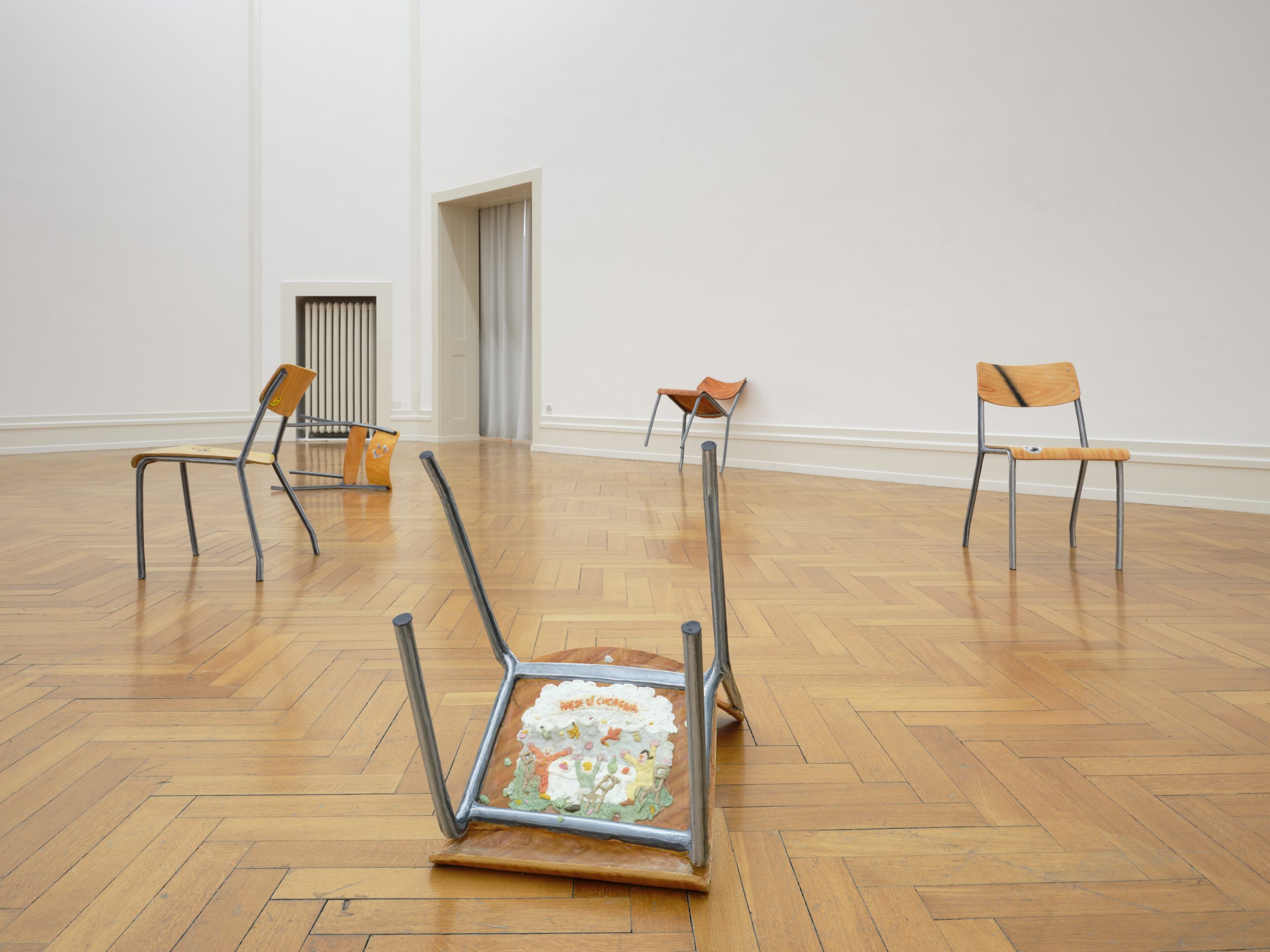
Schoolchairs (2025), for instance, is an installation composed of school chairs reproduced by the artist in papier-mâché and distributed around the exhibition space in a deliberately chaotic manner. The chairs faithfully replicate a model commonly found in Swiss and Italian schools, with a tubular chrome-plated metal frame and warm-honey-orange moulded plywood seat and backrest. The reproduction – wood grain, contours of the surfaces, proportions of the legs – is accurate enough to fool the eye at a distance. But Hutzli also appropriates the gestures of micro-rebellion that students typically leave on such chairs – stickers, inscriptions, scratches, and chewing gum stuck to the bottom of the seat – and transforms them into artistic interventions. One of the chairs is overturned to reveal its underside and a depiction of Cockaigne, the mythical medieval utopia in which food falls from the sky and people are finally freed of the burden of labour. Cockaigne, the land of contraries, is the opposite of the work ethic that schools are tasked with transmitting, and placing it on the underside of a school chair, at the very point where corporal discipline is exercised most directly, is a gesture with the precision of a syllogism and the lightness of a laugh.
Speaking of laughter, Mikhail Bakhtin opens his book on Rabelais with a quotation from the Russian philosopher Alexander Herzen – the same quotation that opens this text. In doing so, he points to a gap in the historicization of laughter, to a form of repression. Laughter is an instrument of cultural and social emancipation, a mode of knowledge that the official mindset has always sought to marginalize, to reduce – at best to satire or entertainment –, to neutralize by dissolution in the vast and amorphous realm of folklore. To write a history of laughter would therefore mean writing the history of everything that power has systematically attempted to dismiss as unserious, but which – through recurring acts of rebellion – has continued to survive, to be transmitted, and to re-emerge wherever cracks open in the structures of order.
The papier-mâché that Hutzli employs in many of his works is the quintessential carnival medium, as ephemeral as Carnival’s brief recurrence in the calendar. The artist learned the technique directly from the artisans of the Basel Carnival, who use it to make the masks known as Larven, from the Latin larva, meaning spectre, ghost, but also mask. The mask reveals a truth that the everyday face cannot afford to disclose and can embody what Bakhtin called “ambivalent laughter”: a form of mockery that is at once joyful and serious, capable of exercising social critique through irony. It is precisely within this tension, I believe, that Hutzli’s work on school chairs is situated. These papier-mâché chairs are not accusatory vis-à-vis the school – an institution in which Hutzli himself taught for several years – but rather “wear” it like a mask, looking at it from within, turning it upside down for a moment in order to glimpse what might lie on the other side.
This attitude, which might be described as carnivalesque not because of any thematic analogy but because of its underlying structure, recurs throughout Hutzli’s practice, where techniques of trompe-l’œil and gentle deception become means of triggering continual reversals of meaning. Such is the case with the series Plates (2023), inspired by eighteenth-century French Niderviller faience and reproduced in papier-mâché, featuring scenes out of medieval folklore associated with food or openly revolutionary figures antagonistic to the aristocratic class for whom these ceramics were originally produced. Here Hutzli’s irony is directed at a quintessentially bourgeois object – the decorative serving plate – emptied of its original motifs and filled instead with counter-narratives reflecting on the hunger endured by the poorest social classes. The plate that once held the master’s meal thus becomes the support for narrating a world turned upside down, one in which food becomes a tool for redressing the systemic injustices that characterize relations between classes.
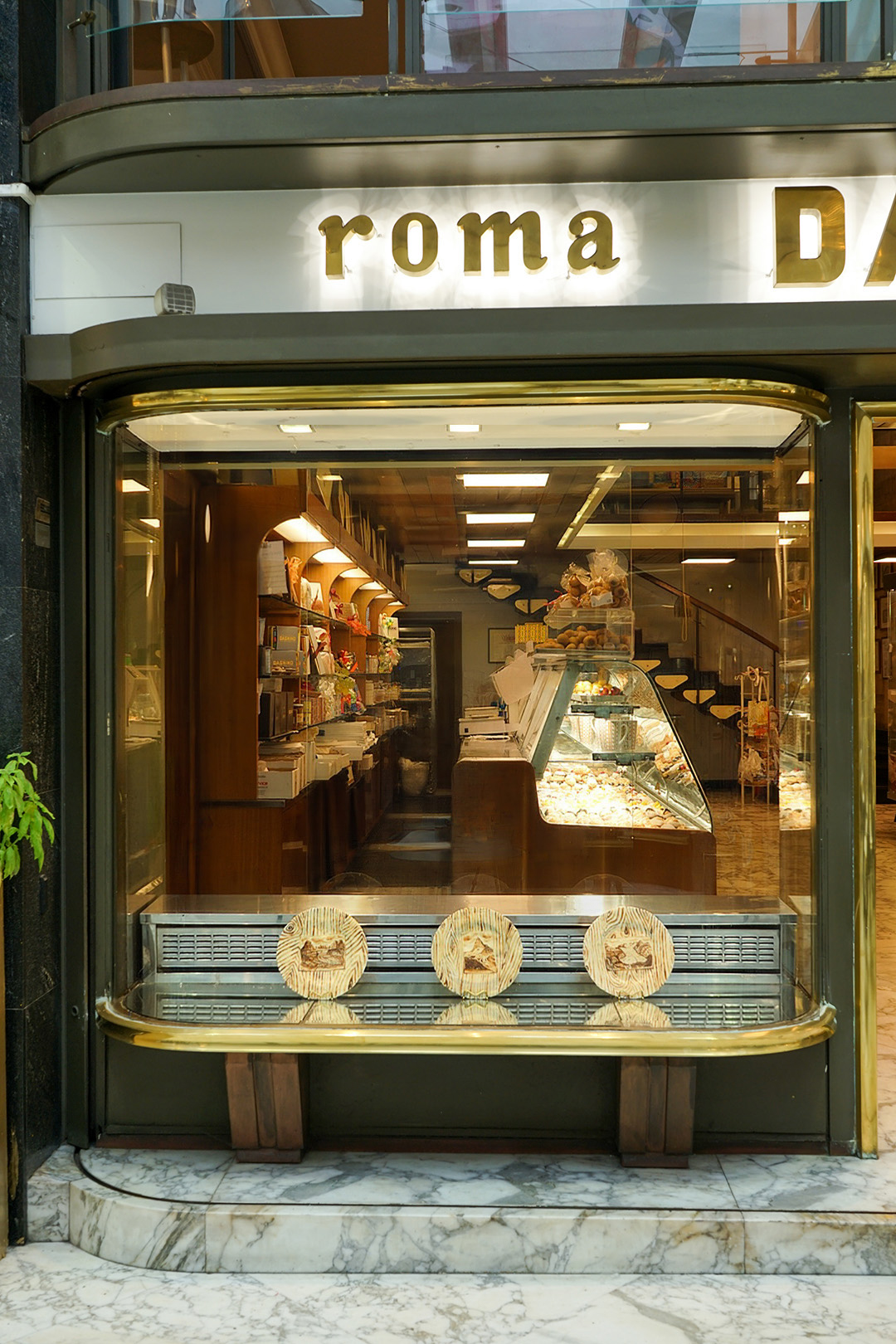
In another series of plates, Switzerland Sweet Switzerland (2025), this time made of chocolate and produced for an exhibition that lasted only a few days at Rome’s Dagnino pastry shop, the same approach is deployed through a gesture made even more explicit by the perishability of the work itself. Swiss chocolate is one of the country’s great national myths, built upon a marketing narrative that has deliberately shifted attention away from Brazilian cocoa plantations exploited through Swiss colonial extraction and towards milk production in the pure air of the Alps. With an annual per-capita consumption of eleven kilograms of chocolate, Switzerland consumes enormous quantities of a raw material that does not grow there and whose production entails significant emissions that the official narrative prefers not to address. Hutzli uses chocolate to depict stereotypical Swiss landscapes on the plates – cows grazing in alpine meadows – fully aware that they will melt, just like the glaciers that populate postcard-perfect Swiss scenery and are now threatened by the climate crisis. Installed within the Roman pastry shop, the work becomes a small theatrical device that, for the duration of the chocolate’s melting process, reveals the capitalist contradiction underlying a supposedly quintessential Swiss product, one that the artist chooses to mock in both form and substance.
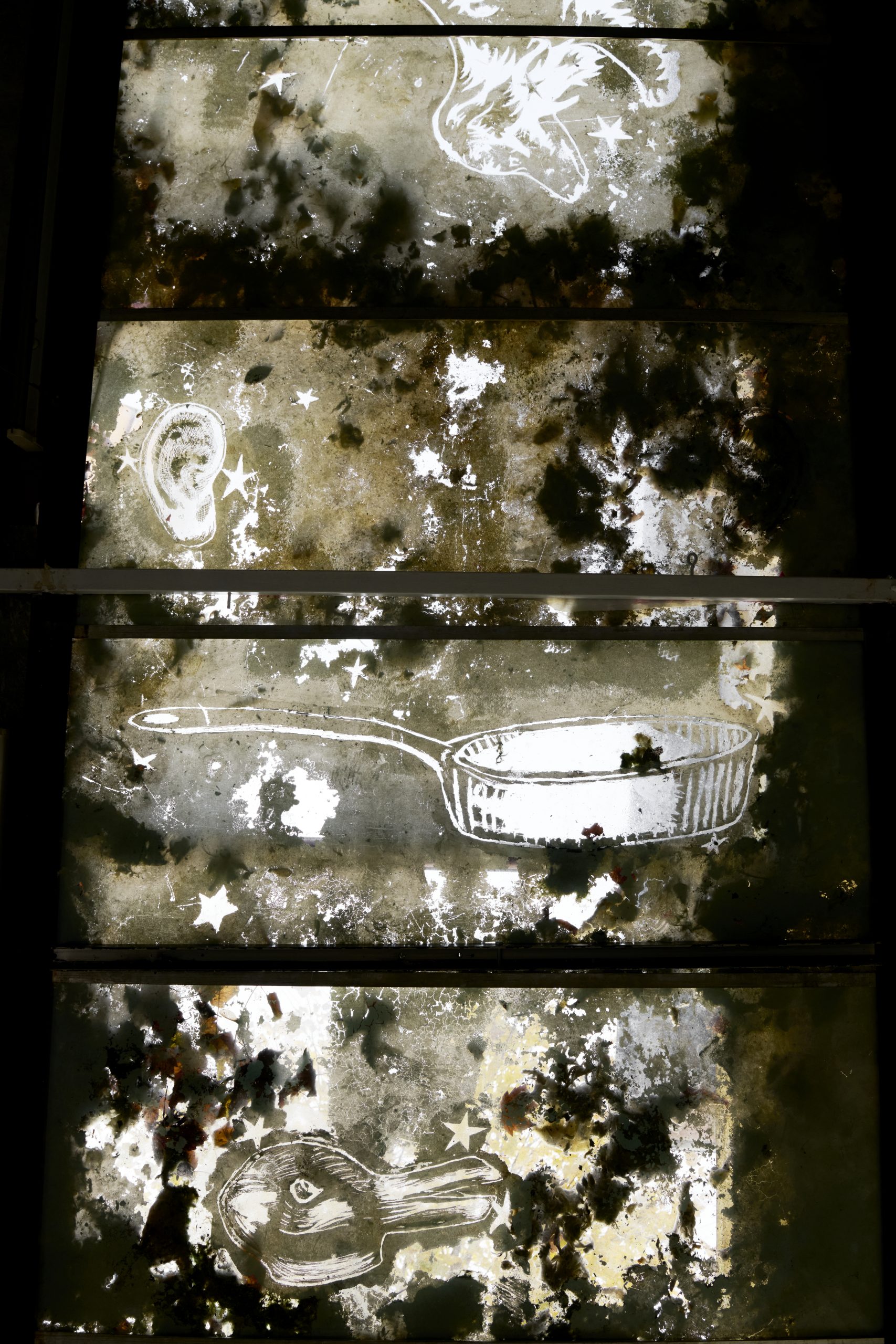
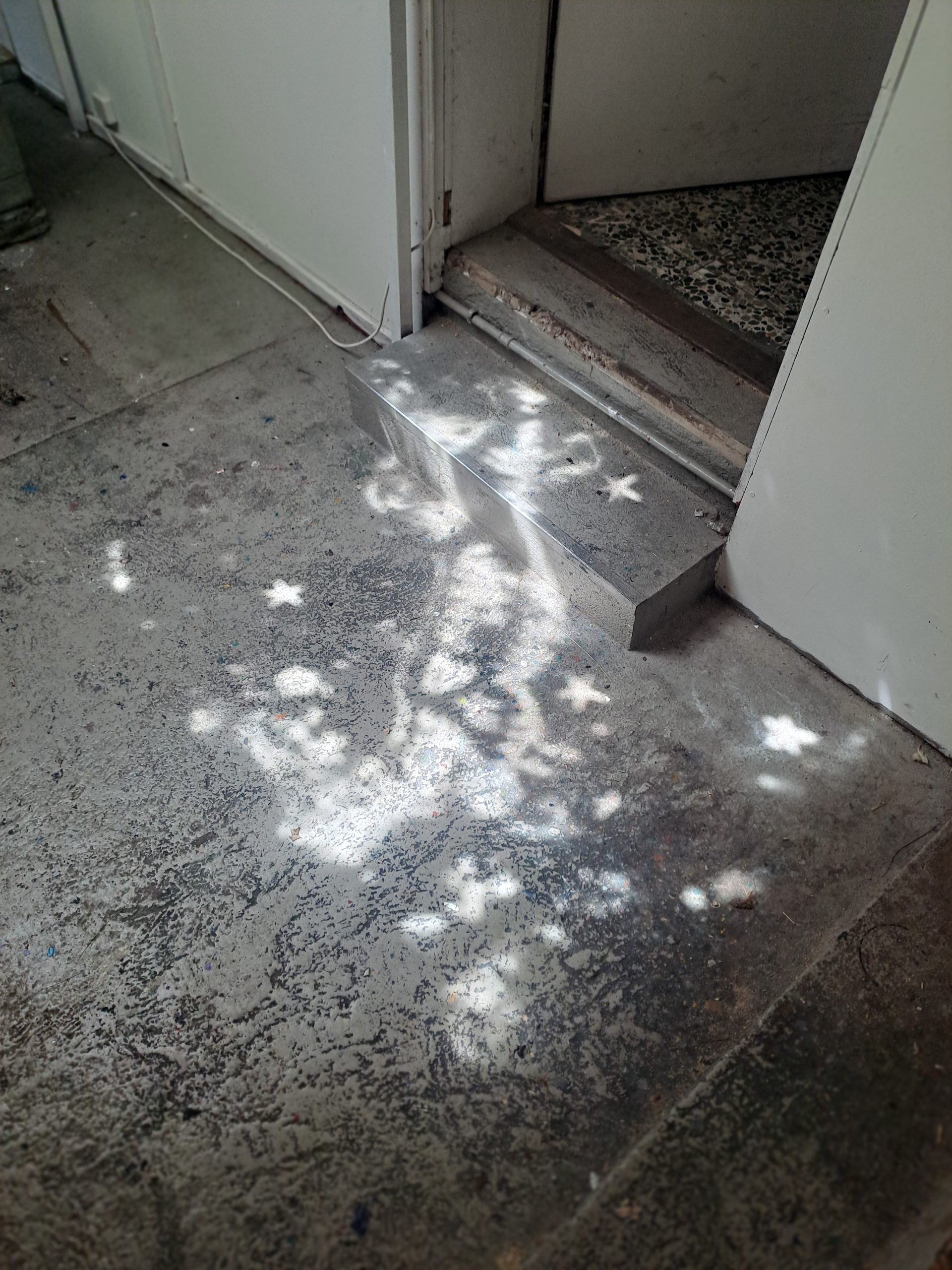
In Lausanne, in a house that had long belonged to an artist and then stood abandoned for some thirty years, Hutzli found a skylight entirely covered by a layer of dust and encrusted grime, where decades of accumulation had all but blocked the passage of light. Rather than removing this sedimentation, the artist chose to inscribe within it a temporary image. He etched a map of the Lausanne sky into the layer of dirt, introducing invented elements: a dog – in tribute to the now-deceased pet that once lived in the house –, a frying pan, an ear, a duck. It was much like when he was a child and his paediatrician would give him sheets filled with stars to connect, and he would project the images of his own inner world onto them. Hence the title Rohrschachsterne (2024), a play on words combining the imagery of the Swiss psychologist Rorschach’s ink blots with the German word for stars (Sterne).
Creating the lines of his drawing by removing the dirt, Hutzli allowed light to pass through, projecting a luminous array of stars onto the floor that would remain visible only until more dust accumulated. The work is founded on the idea of discovering a form capable of emerging at the intersection between the history of a building and the artist’s personal history, like an epiphany made possible through the destabilization of the meaning we ordinarily attribute to waste. If I were to connect this work to one of my own childhood memories, I would perhaps think of the potential contained within that shapeless mass of confetti, dust, and sand that gathered beneath my feet as a child on my way home from Carnival.
Paul Hutzli is an artist whose practice embraces papier-mâché, stop-motion animation, sculpture, environmental installation, and numerous other techniques capable of generating illusion, while finding in Carnival – not as a subject, but as a method – its gravitational centre. To work in the time immediately following Carnival is therefore to acknowledge that one is operating within a residual and ephemeral space, where subversion resides in the gesture of giving temporary form to the ambivalence of the things that populate everyday life. Papier-mâché is fragile, chocolate melts, engraved dust is eventually covered by new particulate matter, yet attempting to give form to immateriality remains a rebellious act: one that protects laughter from museification while still striving to write a possible history of it.
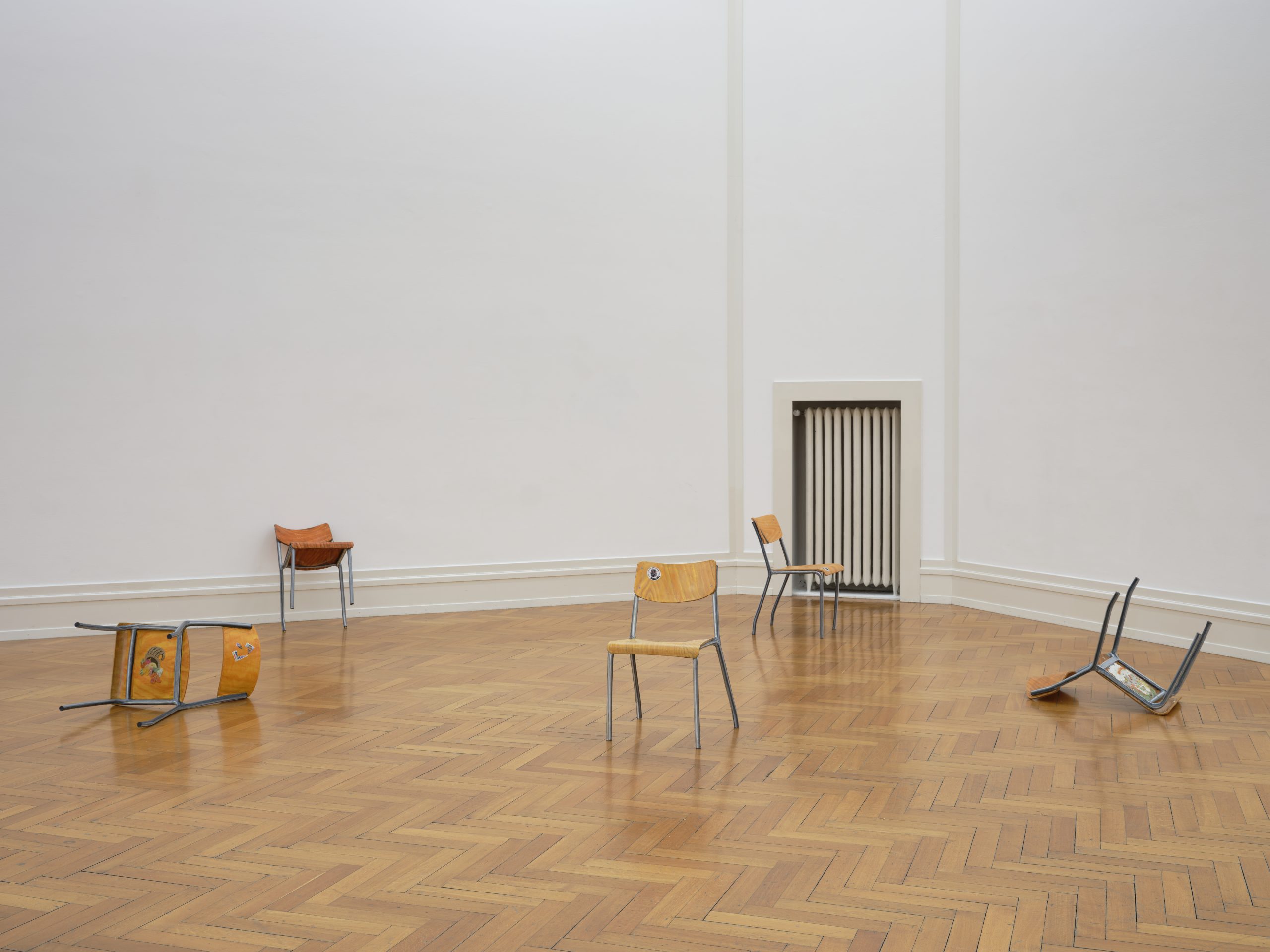
Chaises d’ecole
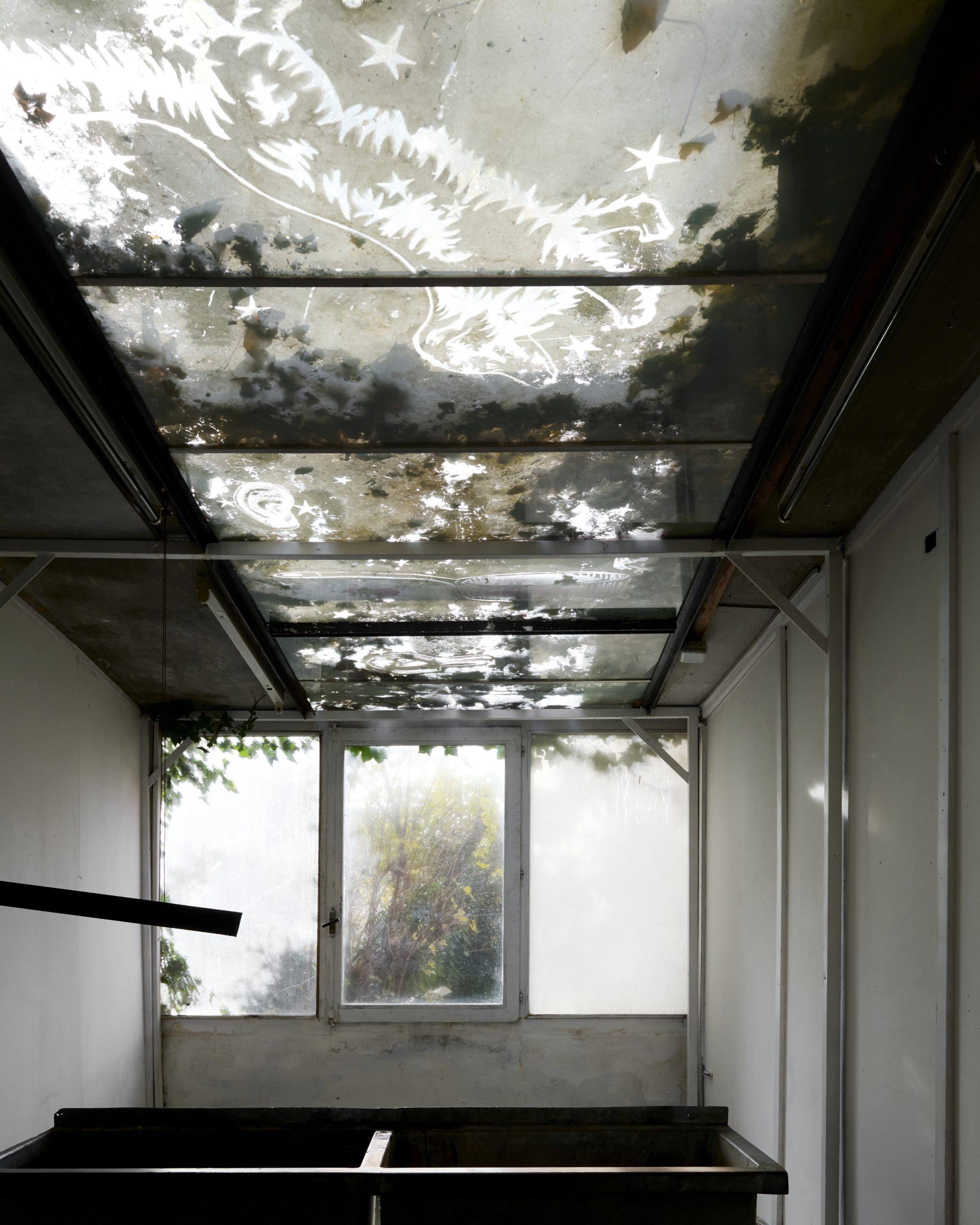
Rohrschachsterne
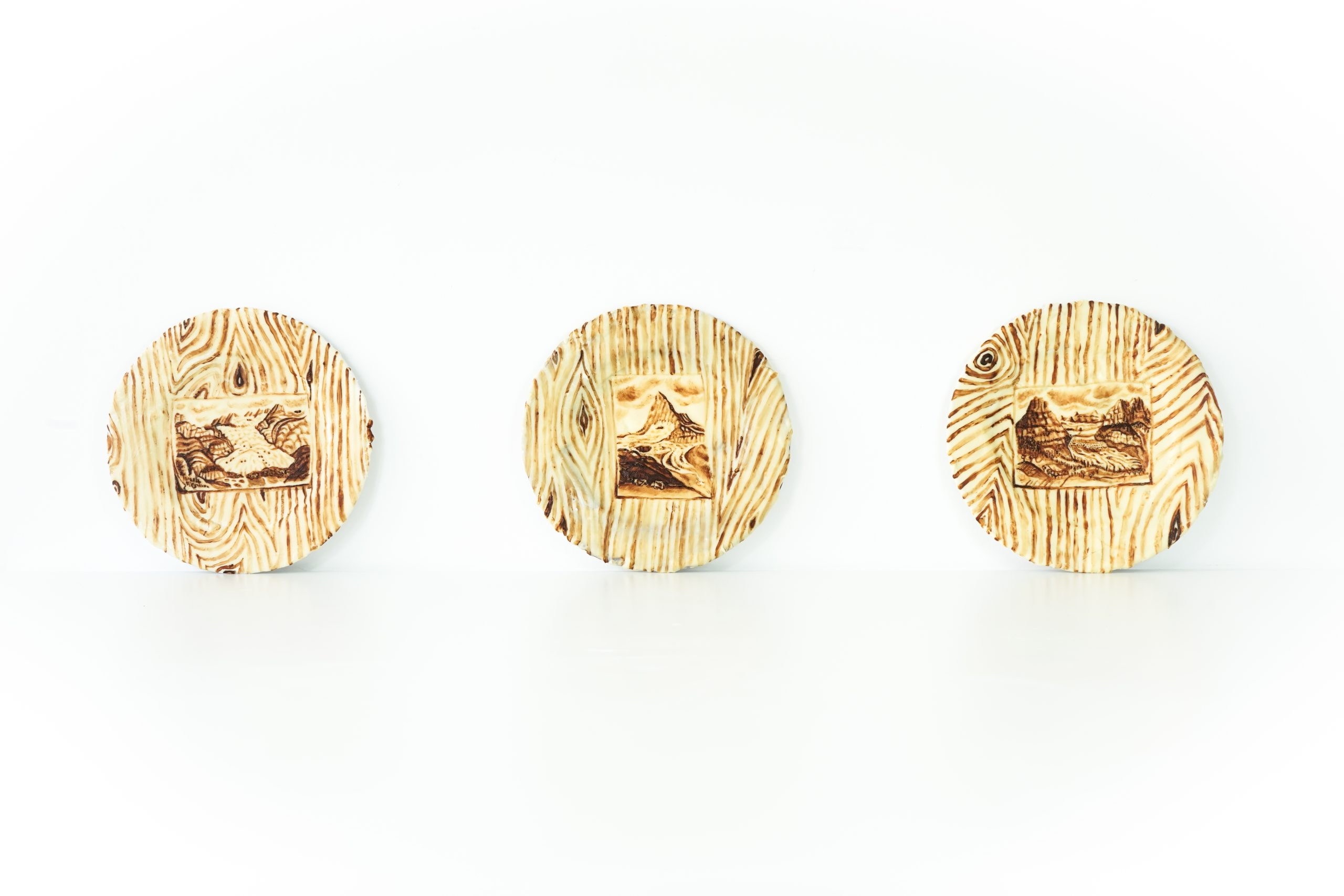
Switzerland sweet Switzerland
The temporary column titled “Close Up” is the result of a collaboration between Flash Art Italia and Istituto Svizzero, and focuses on editorial hosting as a practice of sharing research. “Close Up” is conceived as an editorial space that hosts texts by writers invited by Istituto Svizzero to engage with and reflect on the practices of the artists in residence participating in the Roma Calling 2025/2026 programme.
Gabriel Stöckli (1991) is an artist living between Milan and the Canton of Ticino. His work employs raw materials and found objects to reassign meaning to the everyday. After studying at CSIA in Lugano and NABA in Milan, he has co-directed the Sonnenstube art space in Lugano since 2014. In 2023, he took part in the Cité Internationale des Arts residency in Paris and published his first monograph, supported by the Cahiers d’Artistes award from Pro Helvetia. He regularly exhibits in Switzerland and abroad. In Rome, he developed „That’s Entertainment“, a project that reconstructs miniature environments at full scale as interdisciplinary participatory spaces, exploring the relationship between visual art, music, and field recording, with a particular focus on the work of Alvin Curran.
I have always wondered whether a studio full of things – books, notes, scattered traces – encourages the flourishing of artworks, as though creation were a matter of accumulation, waiting for ideas to overflow. Or perhaps the exact opposite is true: maybe an uncluttered atelier allows thought to move more freely, avoiding the conditioning of other images, words, and signs. Gabriel Stöckli seems to belong to the category of those who prefer to have empty space around them. The studio the artist is temporarily occupying at Istituto Svizzero in Rome resembles more a small office, tidy and somewhat anonymous, as though he had wanted to keep the city’s proverbial disorder outside his room.
The condition in which his workspace presents itself would seem to stand in open contradiction to the works Stöckli creates. His practice often manifests through assemblages of materials accumulated over time: scraps of paper, residual elements, objects of the most disparate kinds. These appear in the series titled Cassetto (Drawer). They are containers – small-format boxes – left half-open: despite their industrial appearance, the “drawers” were handmade by the artist, who assembled the various parts and positioned lights and all sorts of objects inside them. The viewer is invited to peek into these miniature worlds, anomalous dioramas before which one almost wishes to become a Lilliputian and step inside. A compulsive yet selective accumulator, Stöckli told me that the objects used to “furnish” these microspaces had been set aside over many years.
In other works as well, the artist has elevated the residual element into an essential component. One example is All’entrata dell’occhio (At the Entrance of the Eye), an existential freight train: photographs, erasers, and scraps are piled into the wagons of this tiny locomotive, endlessly moving in circles without a destination. The artist imagined that this work could also be seen from outside the exhibition space where it was presented – Spazio Lampo in Chiasso – which features a large street-facing window. Stöckli, however, screened the window with tracing paper and, by directing a light onto the train and its tracks, caused their image to filter outward in the form of shadows – a phantasmagoria – exploiting the principle of the magic lantern. All’entrata dell’occhio thus lives through a double vision: one more distant, almost akin to Plato’s cave, based on the projection of shadows that emphasize the train’s scale and circular movement; and another at close range, where the theatrical machinery reveals both its functioning and its actual dimensions.
Both of the works we have discussed – the Cassetto series and All’entrata dell’occhio – were exhibited on the occasion of Gabriel Stöckli’s latest solo show. The entire exhibition can be read as a light and poetic monument dedicated to childhood, to distant memories resurfacing like shards in the form of familiar objects. Accumulation and fragmentation are undoubtedly two defining traits of the artist’s poetics, although the fragility that characterizes the works is carefully controlled: Stöckli’s works are permeated by a spontaneous grace that allows even the most precarious compositions not to collapse. This seems to me one of the fortunate ambiguities upon which the artist’s practice rests.
When I speak of “ambiguity”, I mean tensions internal to the work, disorientations, small perceptual stumbles. Let us return again to All’entrata dell’occhio: the possibility that the same work presents itself in different forms depending on the viewer’s point of view belongs precisely to the intellectual framework we have just mentioned. Stöckli achieves this result through an analogue special effect based on lighting and veiling, creating, as mentioned, a sort of magic lantern. It is thanks to this device that the view from outside and from inside the exhibition space differ: from outside we see the simulacrum of the little train, from inside its actual appearance. The problem of vision – if one may call it that – also concerns Cassetto. As we have noted, it is a work to spy on, requiring close proximity and intimate contact. Here too Stöckli proposes a concealment: the drawer – by definition a place sheltered from indiscreet gazes – is not completely open, and its contents remain opaque. The same applies to Paper Bag, a grocery paper bag in which Stöckli has opened a small window (not an irregular tear, but a rather precise cut, once again returning to the balance between formalization and precariousness). Inside, a short amateur video loops endlessly, showing a pianist struggling with a piece vaguely reminiscent of Hallelujah by Leonard Cohen. Once again, we are presented with a semi-hidden content that the artist invites us to spy on rather than simply observe.
The inversion of scale is another of the devices Stöckli constantly employs. Beyond the little train of All’entrata dell’occhio (large from the outside, resized once inside the exhibition space), we find it in an alternative version of Paper Bag: here the bag is enlarged out of proportion, yet the photograph portraying it is taken from a perspective that makes it appear tiny. Scala Via Peschiera offers yet another optical illusion: in the photograph, the artist holds a cement model of a staircase that, once again through a trompe-l’œil effect, seems to extend the steps of a real staircase in the background.
What strikes me in Stöckli’s work is another aspect running throughout his entire production: its irreducible DIY (Do It Yourself) dimension. Every work – truly every one – is self-produced, sometimes based on the reuse of materials and, more generally, embracing an economy of means and resources. The analogue special effects I have already mentioned are achieved through explicitly simple techniques, almost appropriating the tricks of tourists’ photographs in which people pretend to hold up the Leaning Tower of Pisa or lift the Great Pyramid of Giza by grasping its tip. In other cases, the work emerges through a process of stripping away: in Seven Layers, for example, the artist removed layers from skateboard decks to reveal their innermost core, where unexpected patterns emerge, a sort of unconscious painting generated by the industrial production of the object.
The references I seem to read in these works are rather conscious; above all Marcel Duchamp, from whom Stöckli borrows a certain attraction to the readymade, to reduced formats and portability (one need only think of Boîte-en-valise), and finally to the hidden side of things, which may lead to forms of voyeurism (after all, the Cassetto series and even the video contained within Paper Bag are experienced in a manner not entirely unlike Étant donnés with its peepholes). Yet beyond any formal aspect or model, I have wondered what matrix of thought underlies Stöckli’s practice. I am fairly convinced that, at the base of his work, there lies an eminently generational question: in the small scale, in the economy of means, in the precariousness of materials, in the recourse to memory as refuge, I find the expression of the existential condition of those who today are between thirty and forty years old in a declining West. A condition forced to contend with apparently limitless possibilities of choice and the sense of frustration deriving precisely from betrayed expectations, economic fragility, ideological uncertainty, and emotional instability.
Stöckli reacts in his own way, recreating miniature worlds in which one might imagine finding shelter. His practice brings to mind that of a stubborn, visionary bricoleur with a touch of shyness. In a recent group exhibition, his work – a pair of canvas sneakers frozen in the act of rising onto their toes, resting on a cardboard box – occupied the corner of the room: I cannot help but think of this piece as a self-portrait à la Gino de Dominicis, self-ironic and invisible. It would, all things considered, seem entirely plausible on the part of the most Italian Swiss person I have ever met.
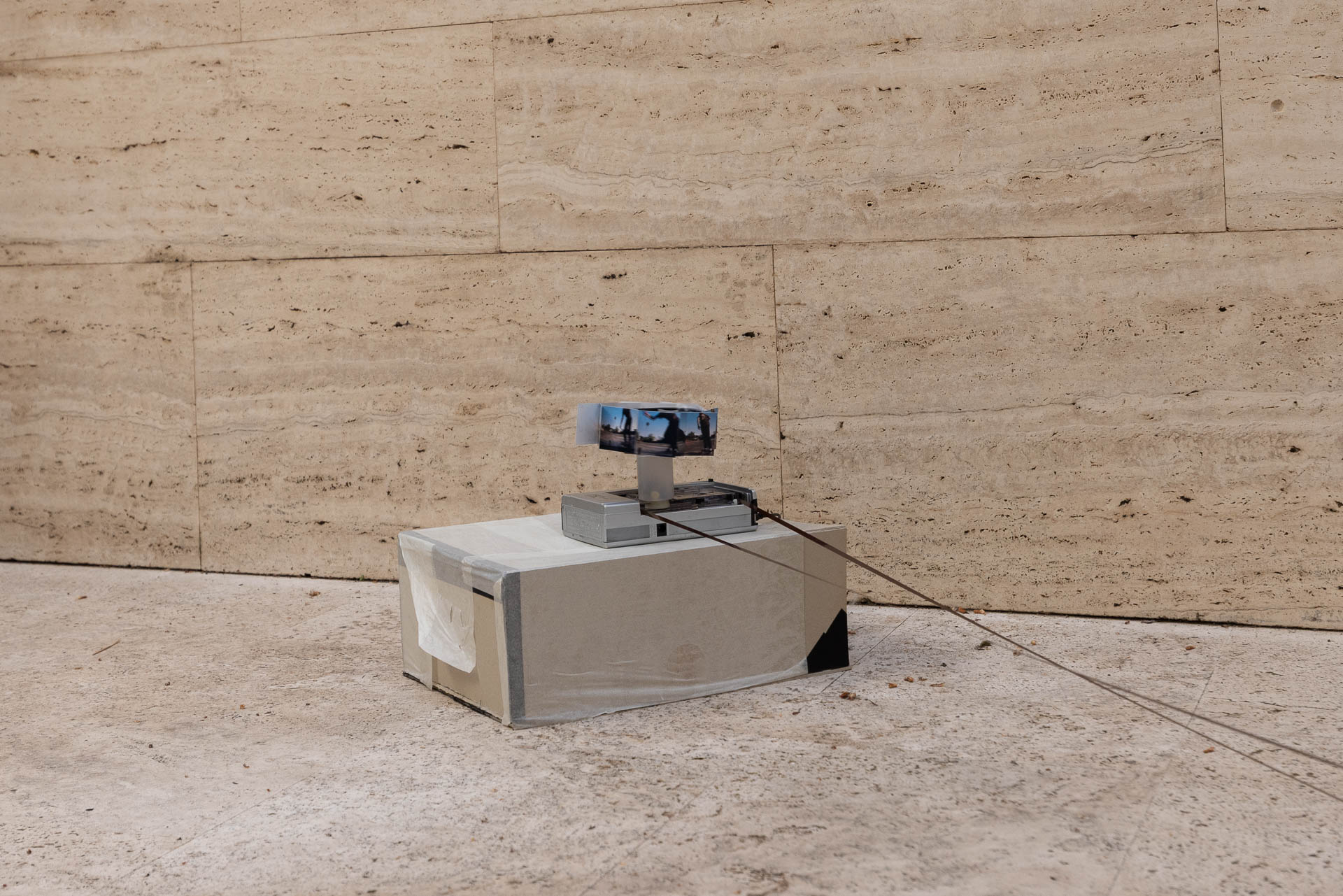
Work in progress, Istituto Svizzero, Roma, 2026 Photo: Davide Palmieri
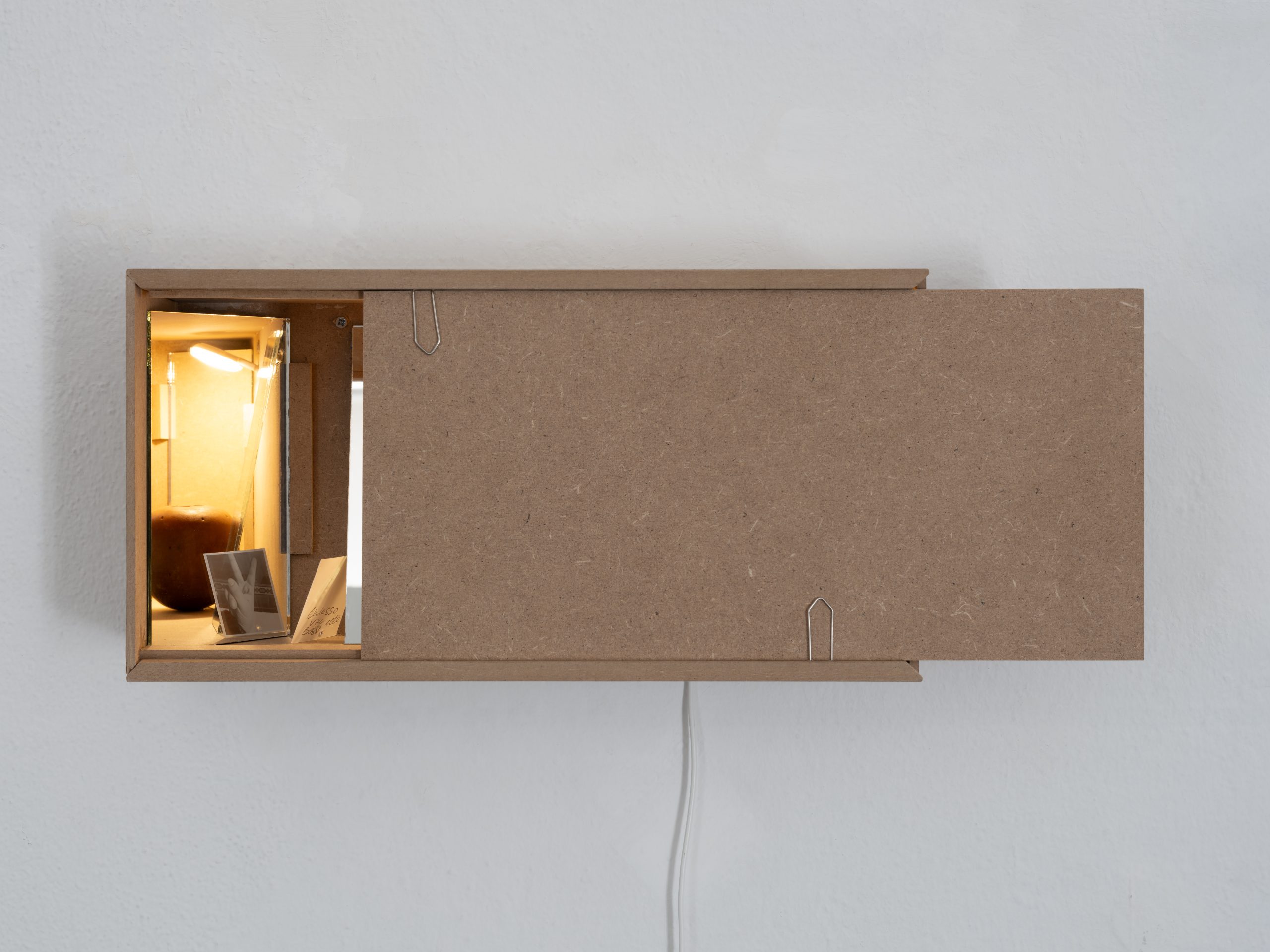
Cassetto 4, 2024, Photo: Alessandro Zambianchi
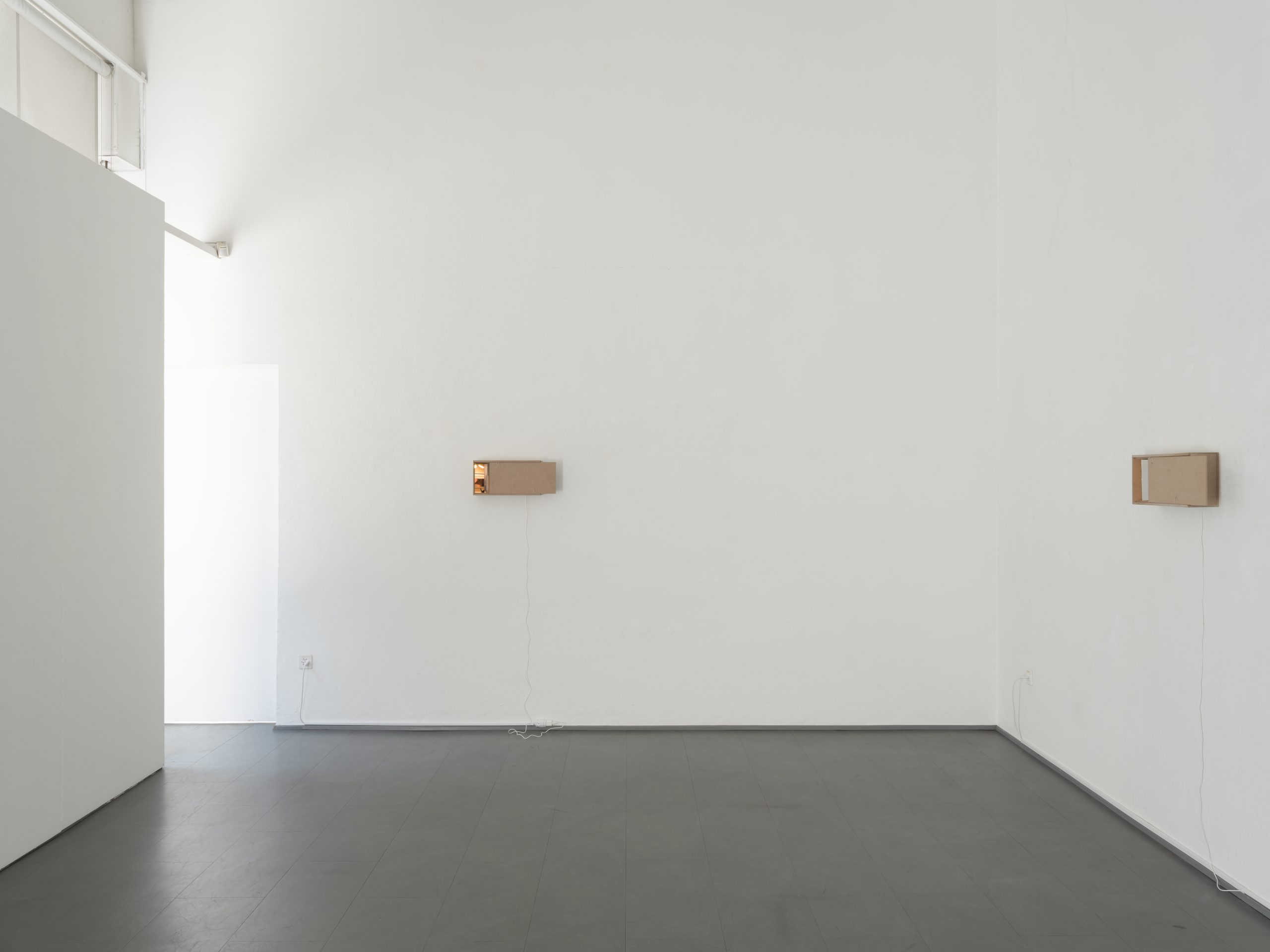
Installation view that’s entertainment, Studio Dabbeni, Lugano, 2024 Photo: Alessandro Zambianchi
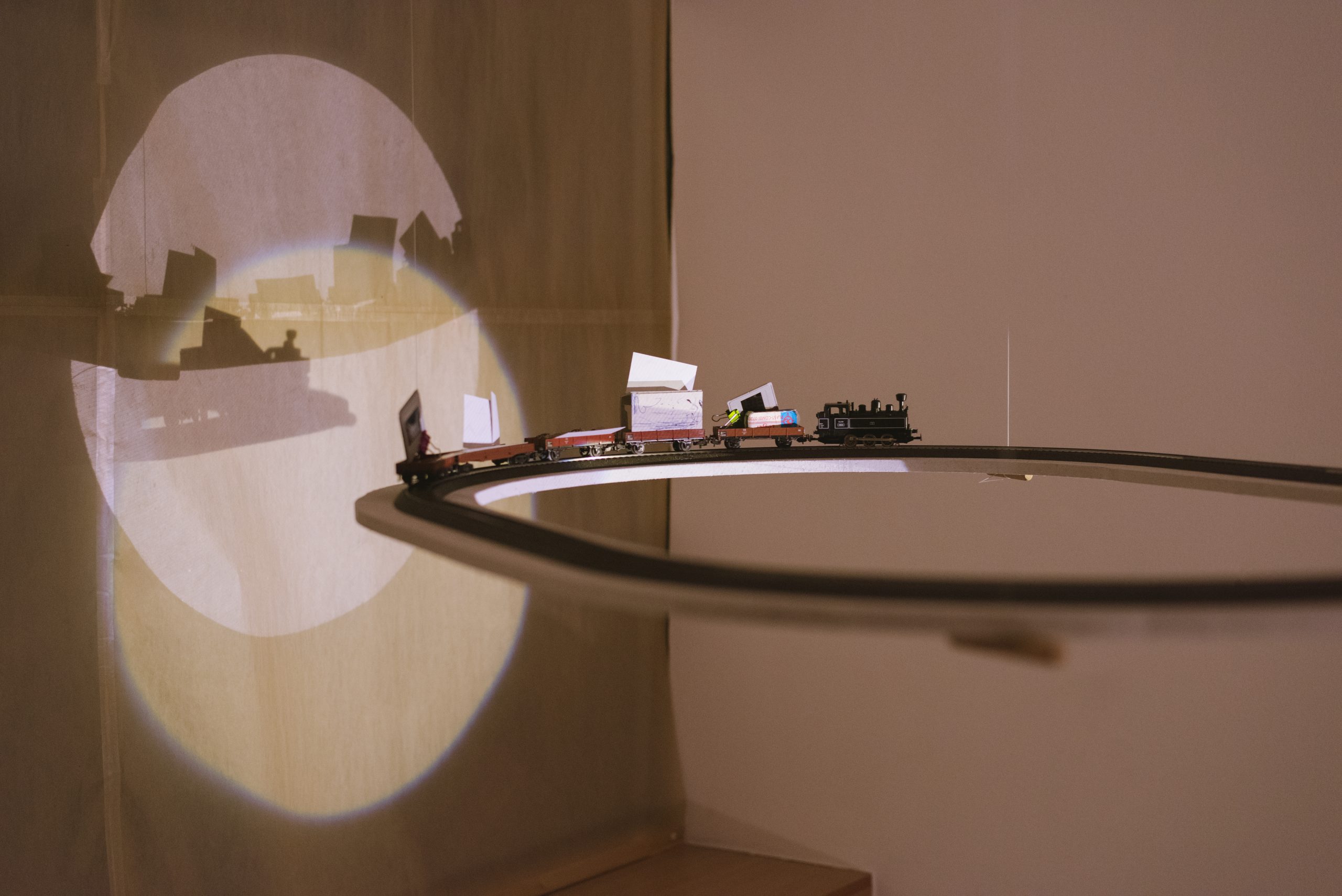
All’entrata dell’occhio, Spazio Lampo, Chiasso, 2025 Photo: Sarah Mathon
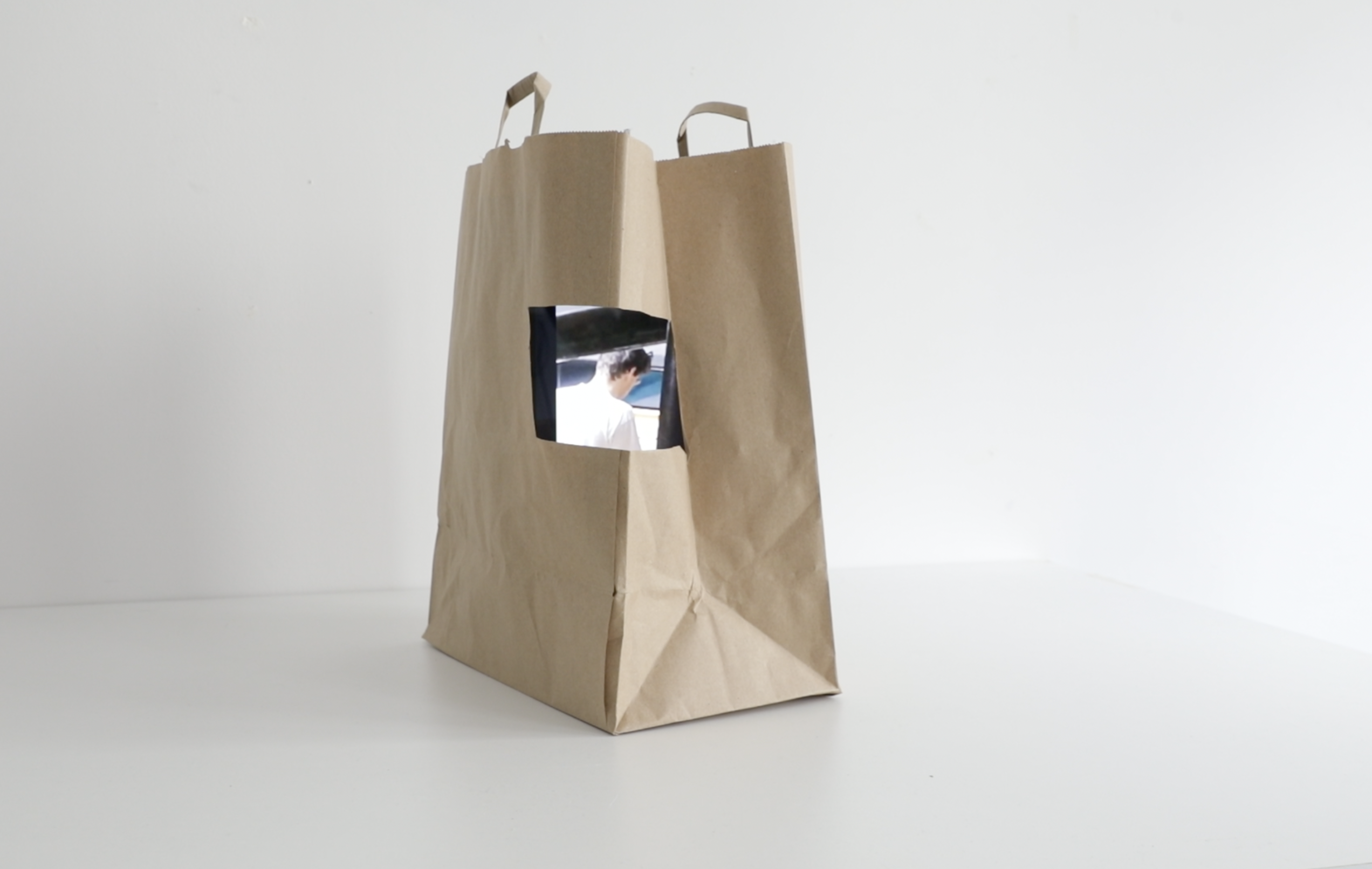
Paper Bag, 2023
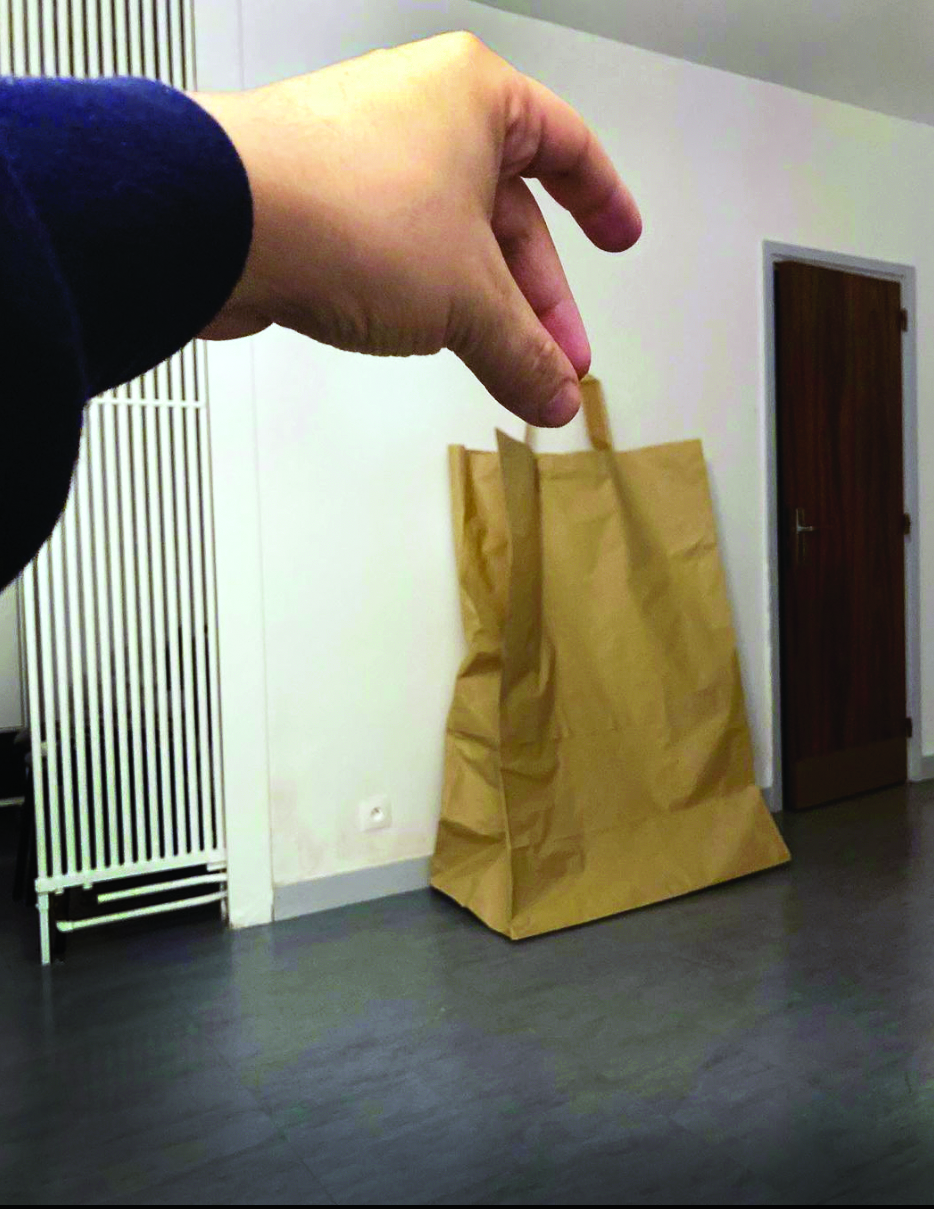
Paper Bag, Cité Internationale des Arts, Paris, 2023
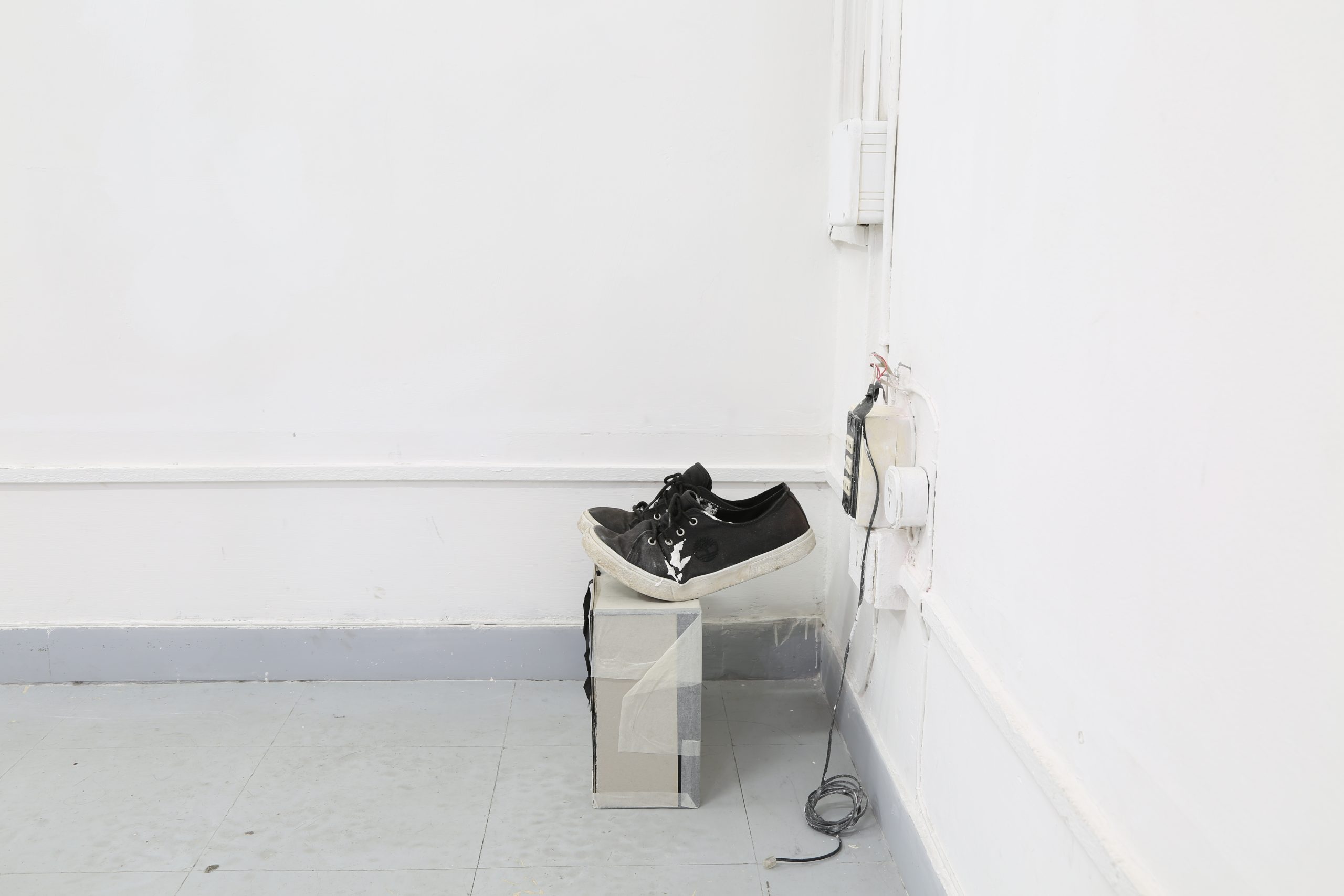
Scarpe, gesso e titubanza, Lateral, Roma, 2026 Photo: Jacopo Rinaldi
The temporary column titled “Close Up” is the result of a collaboration between Flash Art Italia and Istituto Svizzero, and focuses on editorial hosting as a practice of sharing research. “Close Up” is conceived as an editorial space that hosts texts by writers invited by Istituto Svizzero to engage with and reflect on the practices of the artists in residence participating in the Roma Calling 2025/2026 programme.
Viola Leddi (1993) is an artist based in Geneva. Her practice, which moves between painting and sculpture, explores the processes of vision and their aesthetic and political implications in Western modernity. Inspired by feminist epistemologies, her works challenge the modernist canon of representation, which is based on a disembodied and dominating gaze. She completed the Work.Master program at HEAD – Genève and has exhibited at FRAC Champagne-Ardenne, Pace Gallery in Geneva (2023), Ordet in Milano, Triennale Milano (2023), and Liste Art Fair Basel (2022). She is a co-founder of the Altalena collective. In Rome, she engaged a group of young artists in a workshop that interweaves materials from local archives with self-narration practices, creating a work that questions the city’s historical memory.
Across her painterly and sculptural practice, Viola Leddi is often engaged in navigating the socio-political formations that shape feminine identities and behaviours through the lens of the so-called Western canon of art history. She does so not without a sense of estrangement from the factors behind the lasting presence of certain images and the parlous fascination they exert, but also with a belief in the possibility of reusing them to make space for what has been repressed, specifically through their reproduction. After all, that very canon, like any other process of retrospective legitimization of an origin story, is inseparable from the society which created it (in this case, a Eurocentric, patriarchal society) and Leddi has a specific interest in the works of male painters during the Fascist regime in Italy.
The setting of Leddi’s “Post Show” series (2025) is a nondescript exhibition space in the aftermath of an unspecified exhibition. White plinths are disseminated in and before all three paintings, which are seen from above in a quasi-forensic, aerial point of view. Even if they are empty, the plinths bear the traces of their function, i.e., the support of an artist’s work and its institutional accrual of value, in the form of bits of dry tape or exhausted nails left above them. Marks on the linoleum floor tell of heavy bodies that have been dragged across it – an innuendo of violence reinforced by the disembodied limbs at work there, either holding an intangible veil or putting their weight, with weightless grace, on a small cube. Both cite portions of Felice Casorati’s painting Il concerto [The Concert, 1924], where the representation of a group of naked women looks like a ruse to stage a dramatic sculpting of forms and light rather than the intention of telling a story, let alone their story. As if to say, carelessly, their bodies function as props as much as the plinths do. Fragments of torn paper stipple the floor, sometimes coalescing in piles of impossibly transparent sheets where one may or may not recognise a drawing of a floor sculpture by Carl Andre and of a body silhouette by Ana Mendieta, or perhaps a drawing of a 3D model of a face… or is it a metaphysical mannequin? Among them, the presence of a drawing by Vera Molnár, where she deconstructed the lines of Albrecht Dürer’s signature logo and recombined them into her own, is indicative of Leddi’s allegorical approach to the canon, one that substitutes the original meaning with a reframing that shifts forms and implications.
Since the 1970s, feminist art historians have pointed to the structures and discourses at play in the phallocentric history of Western art. For example, Lynda Nead has argued that the (always female) nude has been transformed into a shorthand for “Art,” where “natural matter” (the unruly and unformed characteristics of women and paint) is tamed into a cultural form (a sealed, pleasant whole to the gaze). Griselda Pollock and Rozsika Parker have written about the central role that “a negated femininity” has had in the confirmation of the male creative genius together with the idea that art is the expression of an ungendered individual with only formal intentions. The aforementioned painting by Casorati shows well the purpose of this critique: there, a sovereign subject, insofar as female, can be differentiated into an object of languid contemplation at the hands of the male painter, who is both producer of the image and its consumer. Similarly, Lucy R. Lippard has noted how media such as embroidery or quilting have been relegated to craft-making unless a male artist such as Claes Oldenburg employed it, even if the sewing was done by his then wife Patty Muschinski, an artist and poet.
Leddi’s poetics operates at a symbolic level in the linearity of the canon by sliding a multitude fragments into an ideal wholeness, herstories into History, the creativity of the collective into that of the individual, what has been called “women’s hobby” into “fine art.” In fact, the composite imagery in Leddi’s works is drawn mainly from personal memories of her friends, pictures chosen and painted together (each in her own brushstrokes) with artists Kelechi Amaka Madumere and Melissa Steenman, who are collaborators in Leddi’s Geneva studio, beauty accessories, and tools for hobby crafts. In this process of remaking, notions of value and authorship are put to the test in reciprocal loops of reification and distribution, always in the name of their ideological deconstruction. It is a process where Leddi openly embodies her role as director and spectator of her meditative vistas.
Close to the Pictures Generation, her collagist practice brings together materials that are copied on the canvas: never the real “thing” but its mediated mediation. This is made possible via the postmodernist use of many techniques in intricate layers: drawing, photography, digital manipulation, 3D modelling, painting, that all build up in strata of manual and mechanical means of reproduction, of the painterly and the projected-photographic, of the free gestures and the use of masks and stencils. The hazy atmosphere is conferred in the final step, the airbrush, a tool introduced in the late 19th century to retouch photographs. In Leddi’s hands, it becomes a way of painting at a distance, like a hovering ghost, a shadow that briefly darkens the scene, time deposited as dust particles. The result is an artificially homogenized space obtained through an almost cinematic edit, via sprayed modulations of light and shadow. Under such a canopy, the photographic realism of the scenes, where objects and images are not scaled up but only transferred onto the canvas via puffs of paint, is belied by the multiple dimensional planes occupied by the objects, as if to say: everything around you has fallen apart.
Interestingly enough, another series of Leddi’s paintings suggests they are set in the aftermath of some event. However, what remains here is mostly an eerie feeling. Indeed, the scenes are constructed around a void, around an absence instead of a presence, around the moment before a frightening question. Patterns of Translation and Patterns of Recognition (all works, 2024) are views of her wooden-floored room in Geneva, again seen from a foreshortened aerial point of view, with the dramatic vignetting suggesting that the scenes have been briefly illuminated by a flashlight. Here the artist has portrayed herself for the first time, as a pair of legs reflected in a free-standing mirror or as a half-bust shadow stretching across the floor. There, the marks seem less incidental and more deliberate, with one of them resembling an eye, the other resembling an optics diagram. Pieces of torn paper feature conceptual works by Hanne Darboven, scribbles of butterflies and fairies, Toyen’s painting Le Reste de la Nuit (1934), cutting dies for hobby craft, but also little acts of rebellion such as a graffitied rat-king. Here and elsewhere, personal objects such as a hair clip or decorative elements such as an empty heart-shaped photo holder are brought together. The suspended and alienated ambience coalesces the dreamy sweetness of Magic Realism with the disquieting crunch of digital surveillance.
It is tempting to try and collect all the pieces, to try and recompose the identity of the subjects of Leddi’s paintings, but this effort would be pointless. Because in her mostly blue compositions, both in colour and in emotional tone, Leddi gathers as much as she disperses, reveals as much as she complicates, represents as much as she destroys. Her works seem engaged in a laborious reckoning with the past and its long shadow on the present, in acknowledging the violence that accompanies being sculpted by a culture and sculpting oneself.
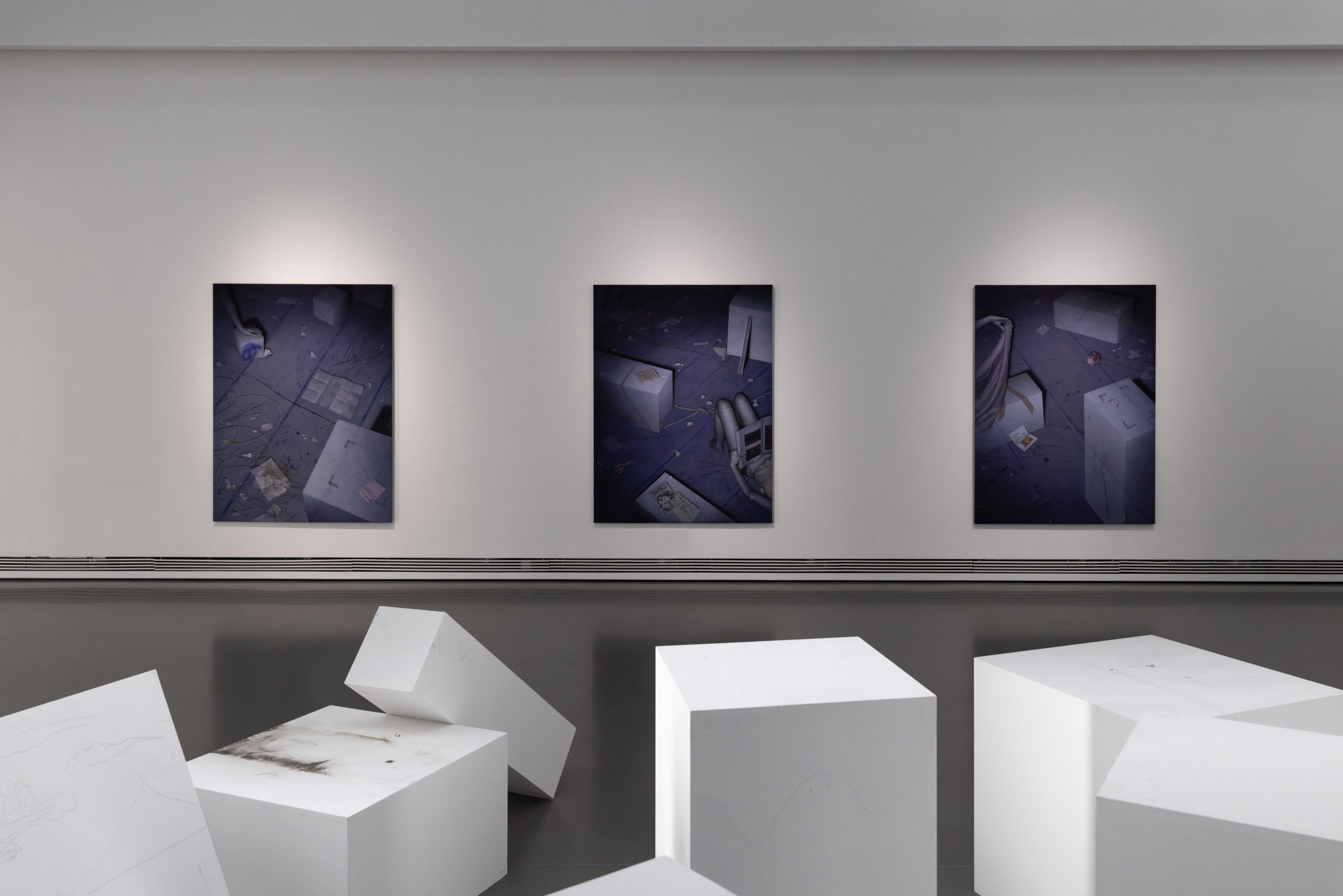
Dear Hateful Spirits, installation view at TAG Art Museum, Qingdao, 2025, ph. Shaoli Huang, courtesy TAG Art Museum and VIN VIN Vienna
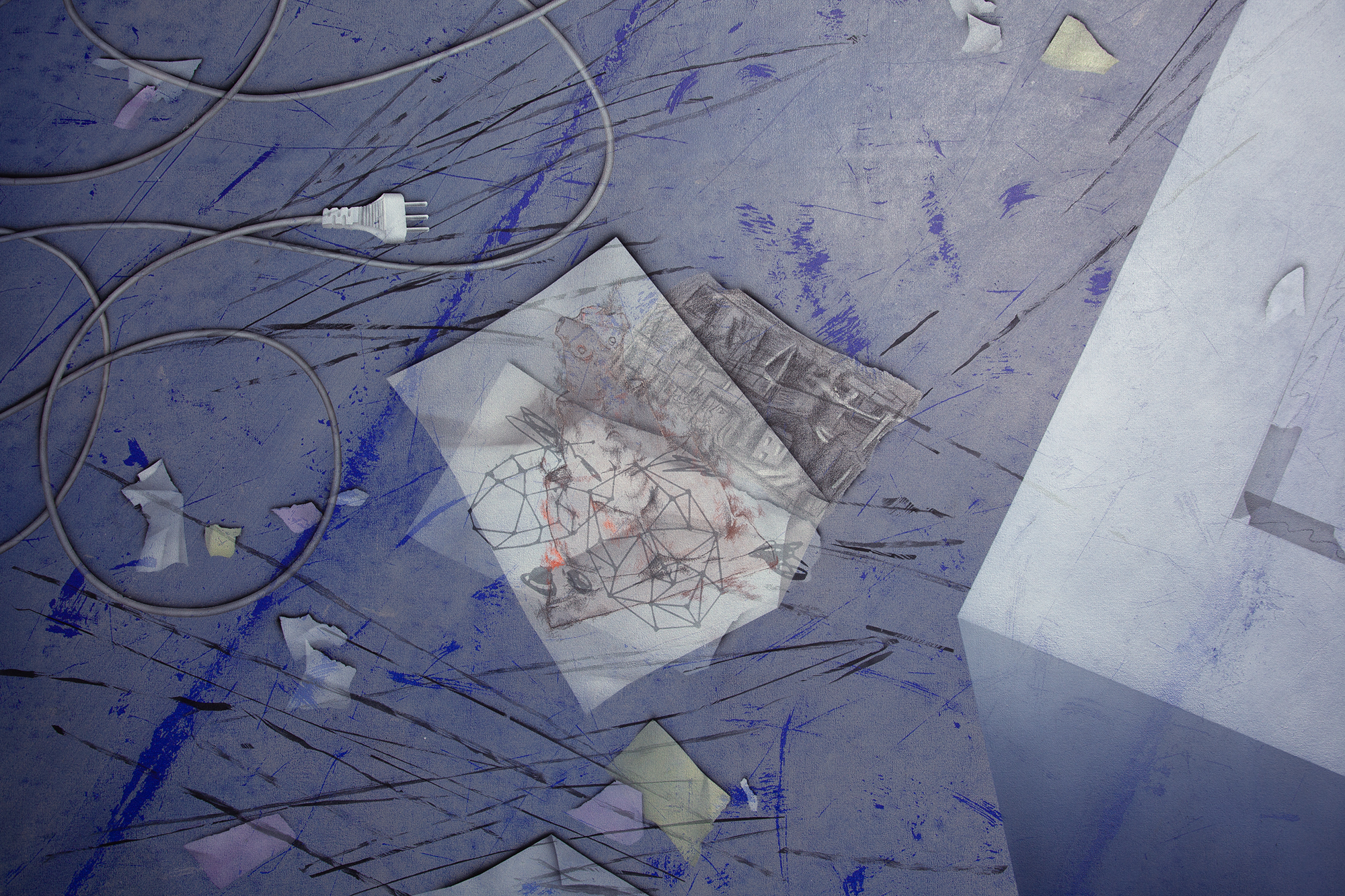
Post Show 1, 2025, detail, ph Viola Leddi Studio, courtesy the artist and VIN VIN Vienna
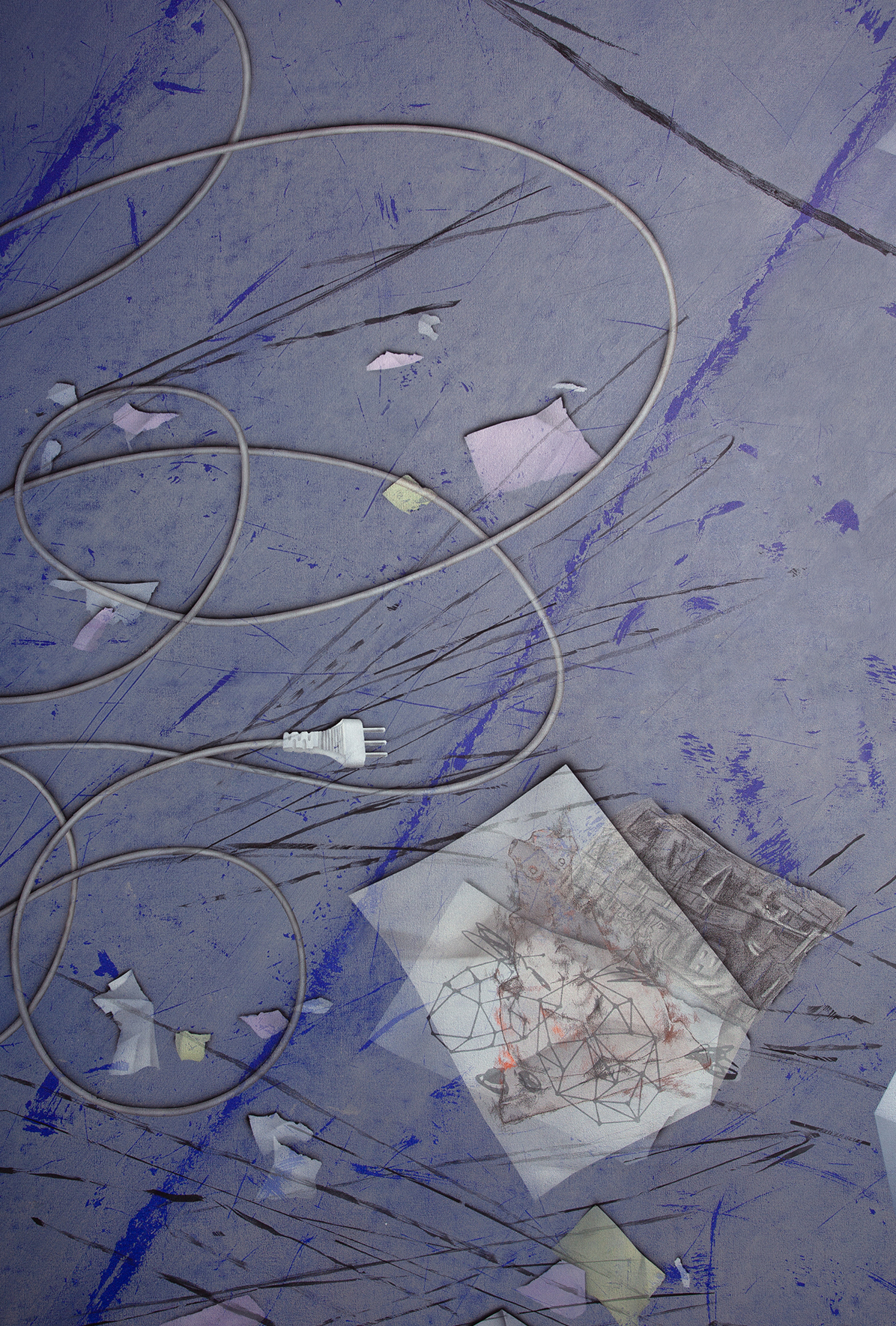
Post Show 1, 2025, detail, ph Viola Leddi Studio, courtesy the artist and VIN VIN Vienna
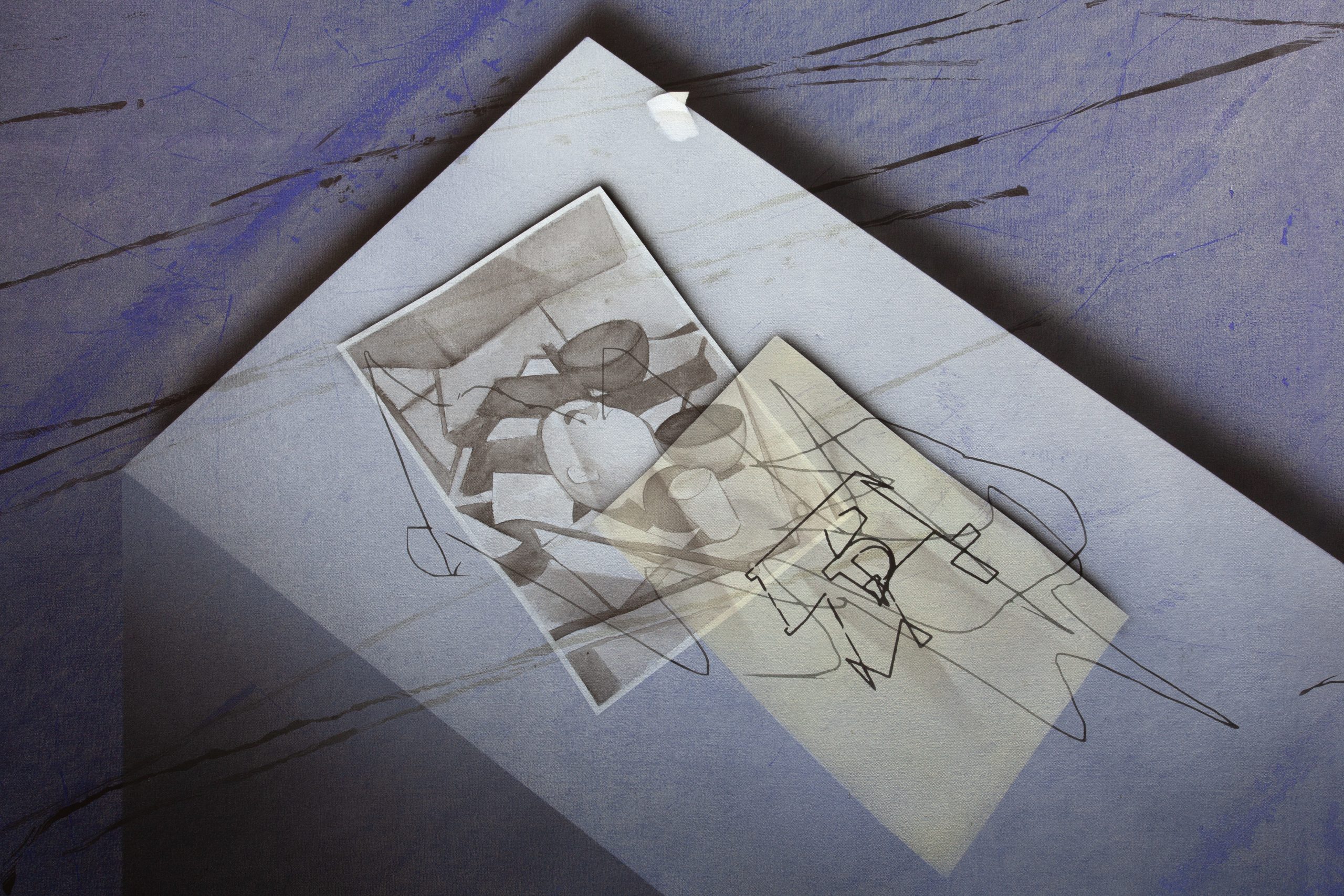
Post Show 2, 2025, detail, ph Viola Leddi Studio, courtesy the artist and VIN VIN Vienna
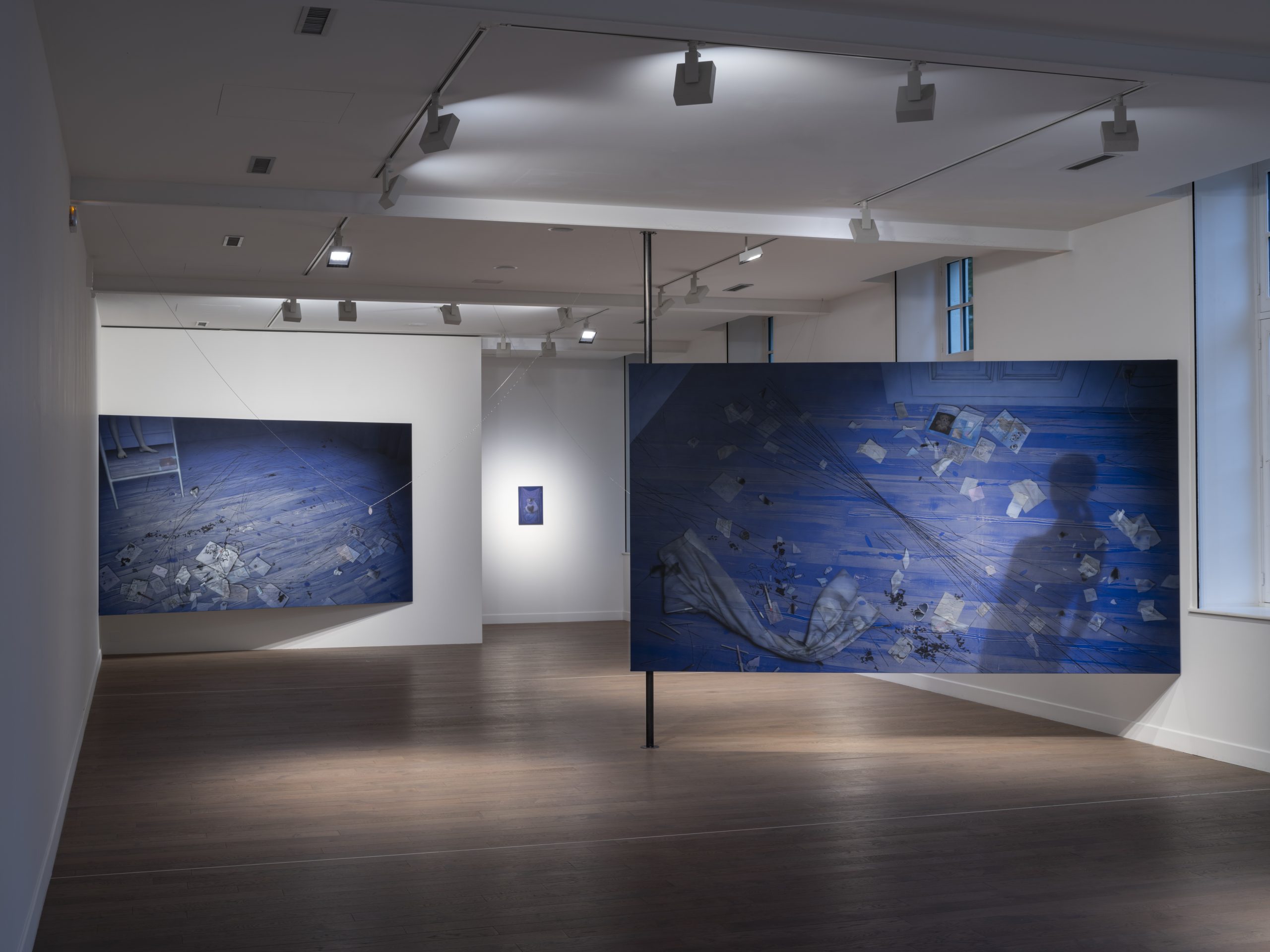
Pupille, installation view at FRAC Champagne Ardenne Riems, 2024 ph. Martin Argyroglo, courtesy FRAC Champagne Ardenne and VIN VIN Vienna
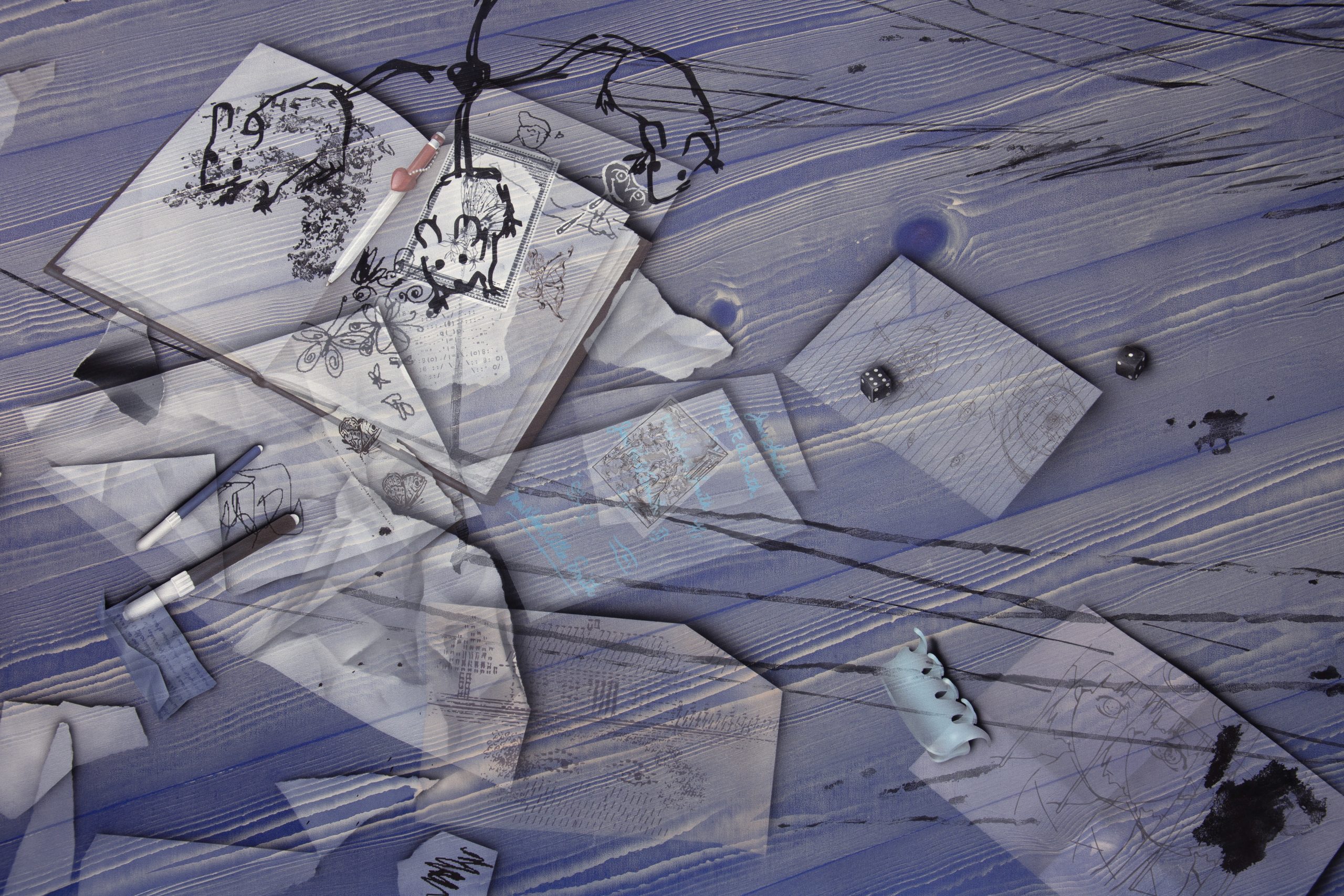
Patterns of Translation, 2024, detail, ph. Viola Leddi Studio, courtesy the artist and VIN VIN Vienna
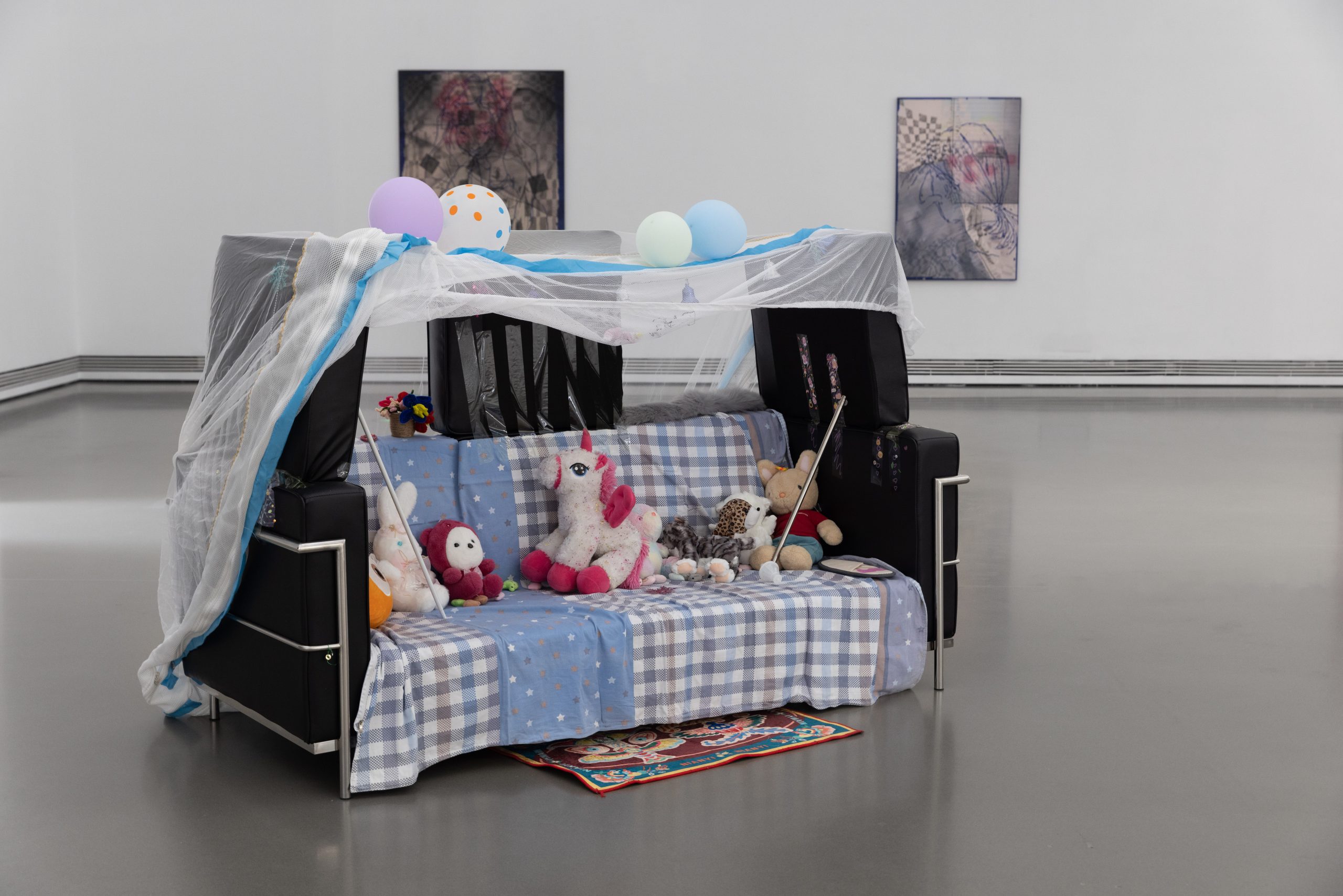
Dear Hateful Spirits, installation view at TAG Art Museum, Qingdao, 2025, ph. Shaoli Huang, courtesy TAG Art Museums and VIN VIN Vienna
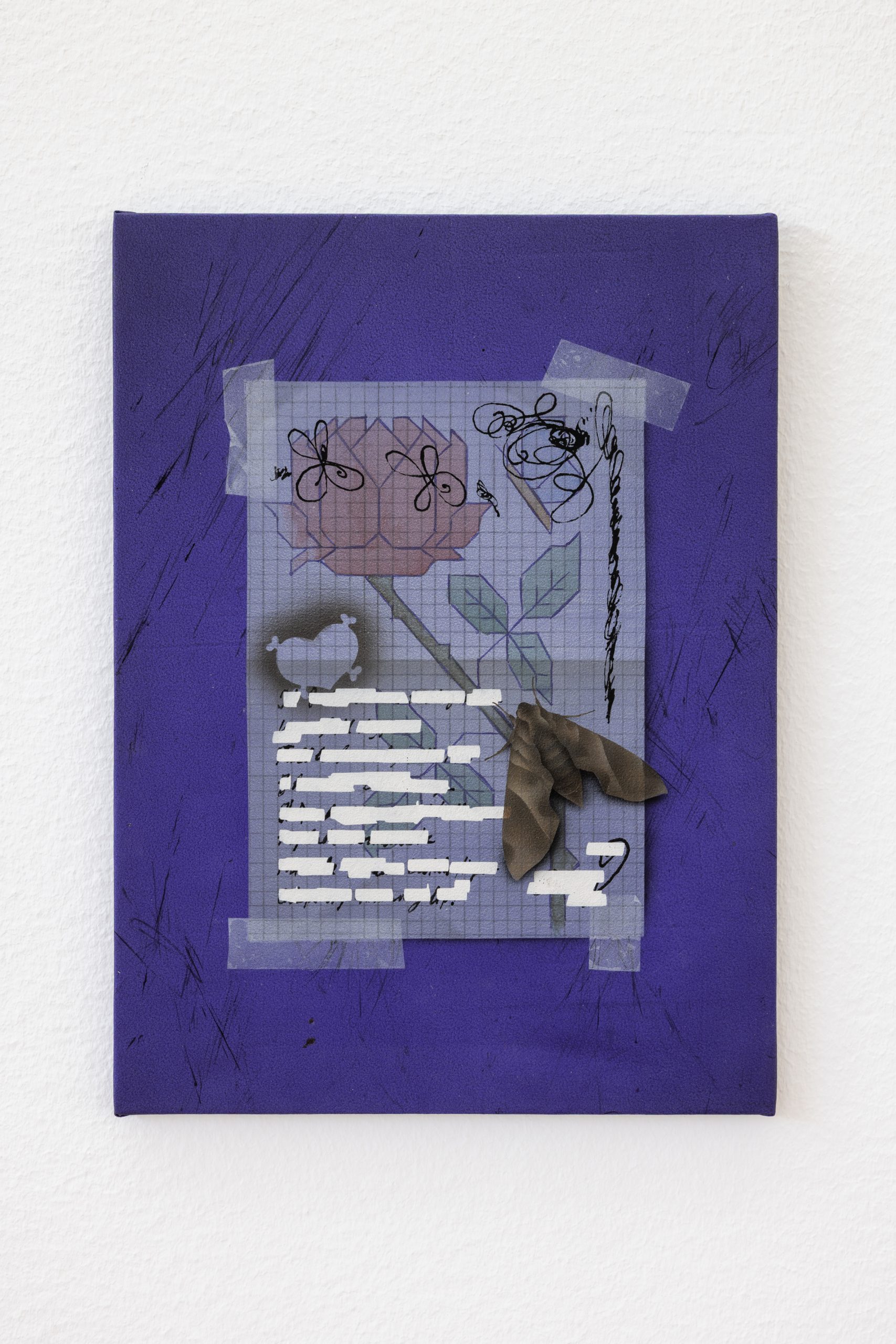
Untitled, 2025, ph. Roberto Marossi, courtesy MAC Lissone and VIN VIN Vienna