The temporary column titled “Close Up” is the result of a collaboration between Flash Art Italia and Istituto Svizzero, and focuses on editorial hosting as a practice of sharing research. “Close Up” is conceived as an editorial space that hosts texts by writers invited by Istituto Svizzero to engage with and reflect on the practices of the artists in residence participating in the Roma Calling 2025/2026 programme.
margaretha jüngling (1988) is an artist and cook based in Zurich. Her research uses food as a poetic tool to reflect on contemporary ecological, economic, and social crises, questioning Western norms and practices. Everyday cooking becomes a way to rethink food systems and their environmental impact. She has an MA in Transdisciplinarity in the Arts from ZHdK Zurich. In recent years, margaretha’s work has been shared at Kunsmuseum Chur, Kunsthalle Friart Fribourg, Belluard Bollwerk Fesitval, Gessnerallee, Triennale Klöntal (Diesbach) and Ménagerie de verre (Paris). In Rome, she focused on the maritozzo, a traditional Roman pastry, analyzing its origins, transformations, and socio-political meanings through artistic and culinary practices.
But underneath it all as I was growing up, home was still a sweet place
somewhere else (…) my truly private paradise of blugoe and breadfruit
hanging from the trees, of nutmeg and lime and sapadilla, of tonic beans and red and yellow Paradise plums.
– Audre Lorde, Zami
margaretha jüngling’s artistic practice invites us to pay attention to the many meanings and stories that every food carries within it; or to how a story can be told through food. Her work investigates symbols and aesthetics connected to unprocessed ingredients, recipes, and culinary traditions, observing how cultural and social codifications, as well as relations of power that regulate our shared lives, are reflected and revealed in eating habits.
margaretha’s creative and intellectual process often unfolds through accumulation, combining numerous references and different layers of reflection during the research phase. Her gaze tends to linger on zones of ambiguity or contradiction, intervals of space where different narratives and interpretations overlap and confront one another. During a conversation we had while I was preparing this text, margaretha pointed out to me the paradox that defines the very act of eating: an activity we spontaneously associate with conviviality and sharing, which nevertheless remains, in its fulfilment, an inescapably individual experience. Eating is an intimate process, internal and opaque to the gaze of others, and yet one that opens us to a radical relationship with everything surrounding us. As margaretha explained, when we eat we swallow pieces of the world and at the same time become the world: digestion reveals itself, in this sense, as an energy of physical transformation that connects us to reality, linking micro and macro scales, bacteria and humans. It is a perspective close to the post-humanist and neo-materialist approaches of certain contemporary feminist thinkers, such as Donna Haraway or Anna Tsing, who recognize and describe the subject as a relational, composite, multispecies, and “contaminated” entity.
When I first met margaretha, I was reading Zami, the autobiographical novel in which the poet Audre Lorde recounts her coming-of-age journey from childhood to early adulthood. Speaking with margaretha helped me focus on the central role food plays in Lorde’s book, in the narration of the process of exploring and defining her identity. In Zami, food is an erotic and political stimulus connecting memory, cultural inheritance, and the carnal dimension of the body. These three different planes also intertwine in margaretha’s artistic practice: in her works, our bodies taste, smell, touch, and through these perceptual stimuli enter into relation with traces of memories, habits, and imaginaries that speak of the inheritances, stories, and values of the contexts in which the artist intervenes.
Food acts as a device of evocation, but also at times of disorientation, for example through the activation of a contrast between visual element and gustatory experience. I am thinking of the braided strands of fermented beetroot in red curtain (2026), hung from butcher hooks and dripping onto a white tablecloth like red filaments of raw flesh. In this work, margaretha reactivated the memory of the original use of the building housing the Quartier Général Centre d’art contemporain in La Chaux-de-Fonds, formerly a slaughterhouse. The audience was invited to cut and eat the braids, staining themselves and marking the linen cloth spread across the table with red. Beetroot is a food historically associated with contexts of poverty, later integrated into systems of intensive farming and eventually reabsorbed into the diets of wealthier classes; margaretha used its history and blood-like consistency to propose a reflection on meat consumption and the aesthetics of the grotesque. red curtain triggered a sense of disturbance in viewers, whose reactions ranged from attraction to repulsion. I believe that one of the fundamental questions accompanying margaretha’s research concerns precisely what happens when we come into contact with experiences that lead us beyond the boundary defining what is “decorous” and therefore visible, when they bring us closer to the invisible territories of disgust and repulsion. How do we fill the new spaces of meaning opened before us? What purpose does that line of demarcation serve?
There are certain foods with particularly dense and layered symbolic meanings that tend to recur throughout margaretha’s installations and performances, such as the egg, the apple, or bread. Bread itself – a sweet bun, the maritozzo – lies at the centre of the research project margaretha developed during her residency at Villa Maraini. Following her habitual methodological approach, margaretha gathered a vast amount of data, stories, and recipes, getting to know the city of Rome through the history of this pastry, originally tied to Carnival rites of reversal but also to the performance of gender roles within heterosexual marriage (One of the narratives explaining the origin of the maritozzo (the name derives from marito, husband, with the suffix -ozzo, which has a playful effect somewhat analogous to calling a husband a “hubby”) refers to a tradition whereby, on the first Friday of March, fiancés ready to pop the question would hide an engagement ring or another gold object inside this sweet bread as a mechanism for proposing.); born as a popular snack and now transformed into a gourmet product. Reconstructing the intertwining of religious, popular, and class-related aspects surrounding narratives of the maritozzo, margaretha’s reflection interrogates the ways in which food contributes to shaping regional and national identities; but it also observes the involvement of culinary traditions within the dynamics of contemporary consumption. This perspective seems particularly significant to me in a context such as Italy, where processes of commercializing an “Italian-ness” to be consumed are redefining tourism economies and the image of cities such as Rome, Naples, or Bologna.
In March 2026, on the occasion of the first public sharing of her maritozzo research at the independent space Lateral Roma, margaretha cooked fermented red beetroot buns, proposing a savoury reinterpretation of the recipe. Arranged on a small white cloth spread on the floor, the buns were presented together with an almond cream contained in a bowl suspended from the ceiling in a crocheted basket, recalling a liturgical censer in both shape and display. The audience intervened by breaking the bread, dipping it, mixing the red of the beetroot with the white cream, eating and staining. This ritual of consumption expanded the process of transformation of forms, ingredients, and gestures of tradition underlying the work into a symbolic and collective reshuffling of meanings.
As at Lateral Roma or at the Centre d’art contemporain in La Chaux-de-Fonds, the participatory activation of margaretha’s installations is often introduced by readings of poetic texts that offer keys to approaching the works. In margaretha’s practice, writing does not serve a descriptive function, nor does it provide explanations; rather, it constitutes a parallel and complementary space of creative elaboration, where more intimate and personal narrative elements often find a place. The relationship in margaretha’s work between writing and cooking, between food and verbal language, makes me think of the mouth as a cavity for chewing both words and dishes: of food as language, but also of writing as food, by which margaretha nourishes herself. Her theoretical and literary references range from Sara Ahmed to Georges Bataille, from bell hooks to Simone Weil, from adrienne maree brown to Ursula K. Le Guin. I also found Audre Lorde in margaretha’s library.
In 1980, Lorde founded, together with Barbara Smith, Beverly Smith, and Cherríe Moraga, the Kitchen Table Press, a publishing house active for more than a decade and created with the aim of publishing texts by racialized, lesbian, and otherwise marginalized women writers excluded from the white publishing market (including feminist publishing). The name Kitchen Table Press speaks precisely of books as nourishment, but above all underlines the importance of social and shared structures such as the kitchen table for the circulation of forms of knowledge situated outside the boundaries of hegemonic culture. margaretha’s approach shares with this experience the value attributed to exchange, to commoning, to the questioning of knowledge, and a sensibility that brings cultural production back into direct contact with everyday life as a form of claim and affirmation. In her artist statement we read: “it is always still food, deeply embedded in the everyday.”
margaretha’s work belongs to a broad and ramified genealogy of artistic practices oriented toward sharing and community, developed from at least the 1960s to the present. I am thinking of experiences and methodologies that have questioned the boundaries of art, both in an interdisciplinary sense and as a form of social engagement. The political value of margaretha’s trajectory begins with the very choice to use and resignify gestures, materials, and codes of cooking – an activity of care, part of the cycle of social reproduction, central to feminist claims and struggles and to the experiences of other subjects marginalized by dominant politics. Like many practices within this large family, her approach is also grounded in dynamics of participation that radically shift the centre of art from object to process, from linguistic-formal research to the opening of spaces of experience. What is particularly significant in her specific case, however, is the role occupied by the body within this context. margaretha’s work expresses and fulfils itself in the activation of relational conditions, but above all in the sensory and sensual involvement of the body through food – good food! As if to say that we do not have to renounce a practice of pleasure even while thinking critically and politically. Following the path indicated by the author and activist adrienne maree brown, perhaps we can think of margaretha’s works as collective exercises helping us learn to align our pleasure with our values.
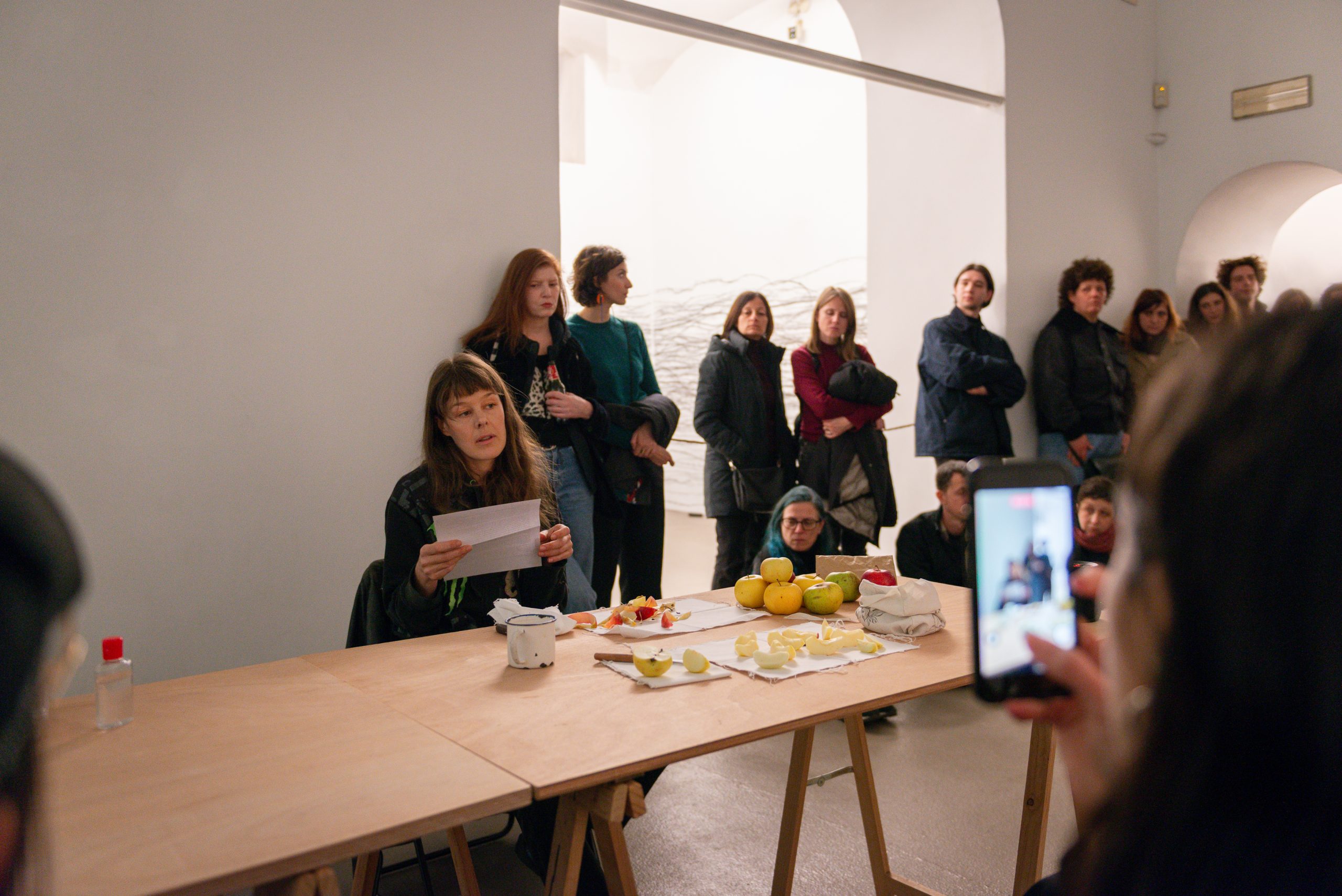
service gestures between layers at Fondazione Giuliani, Rome © Roberto Apa
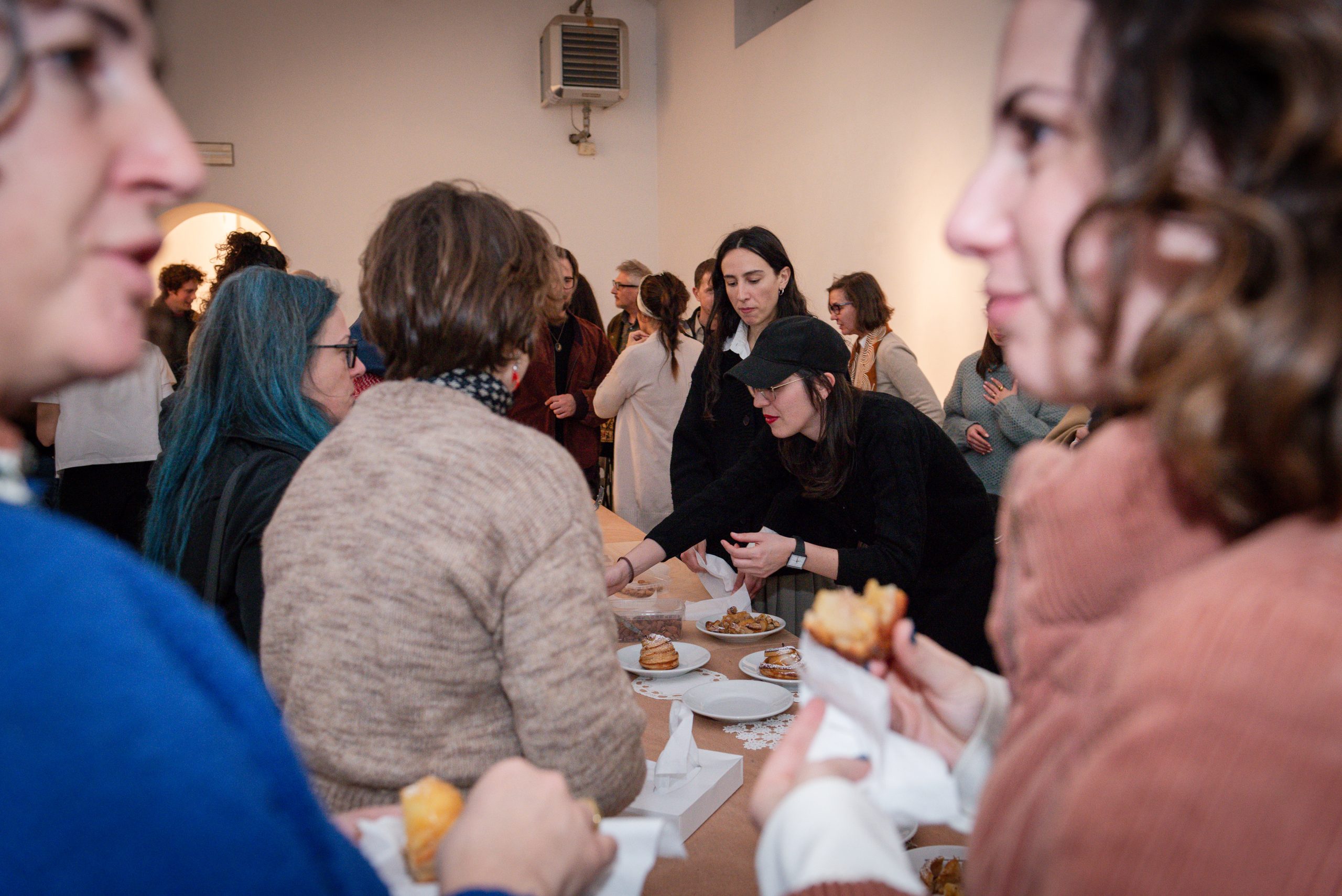
service gestures between layers at Fondazione Giuliani, Rome © Roberto Apa
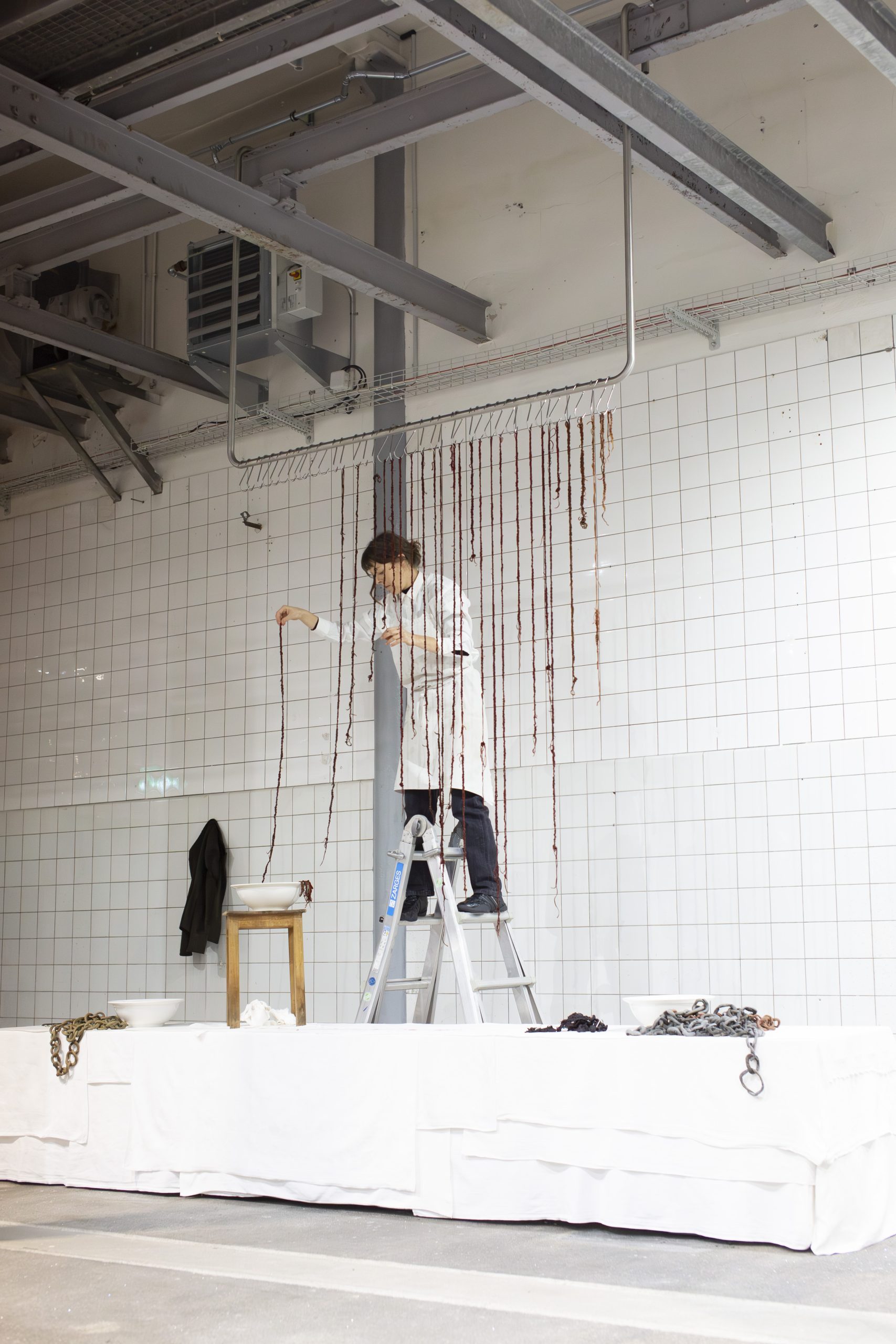
red curtain at Quartier General La Chaux de Fonds © Jessie-Schaer
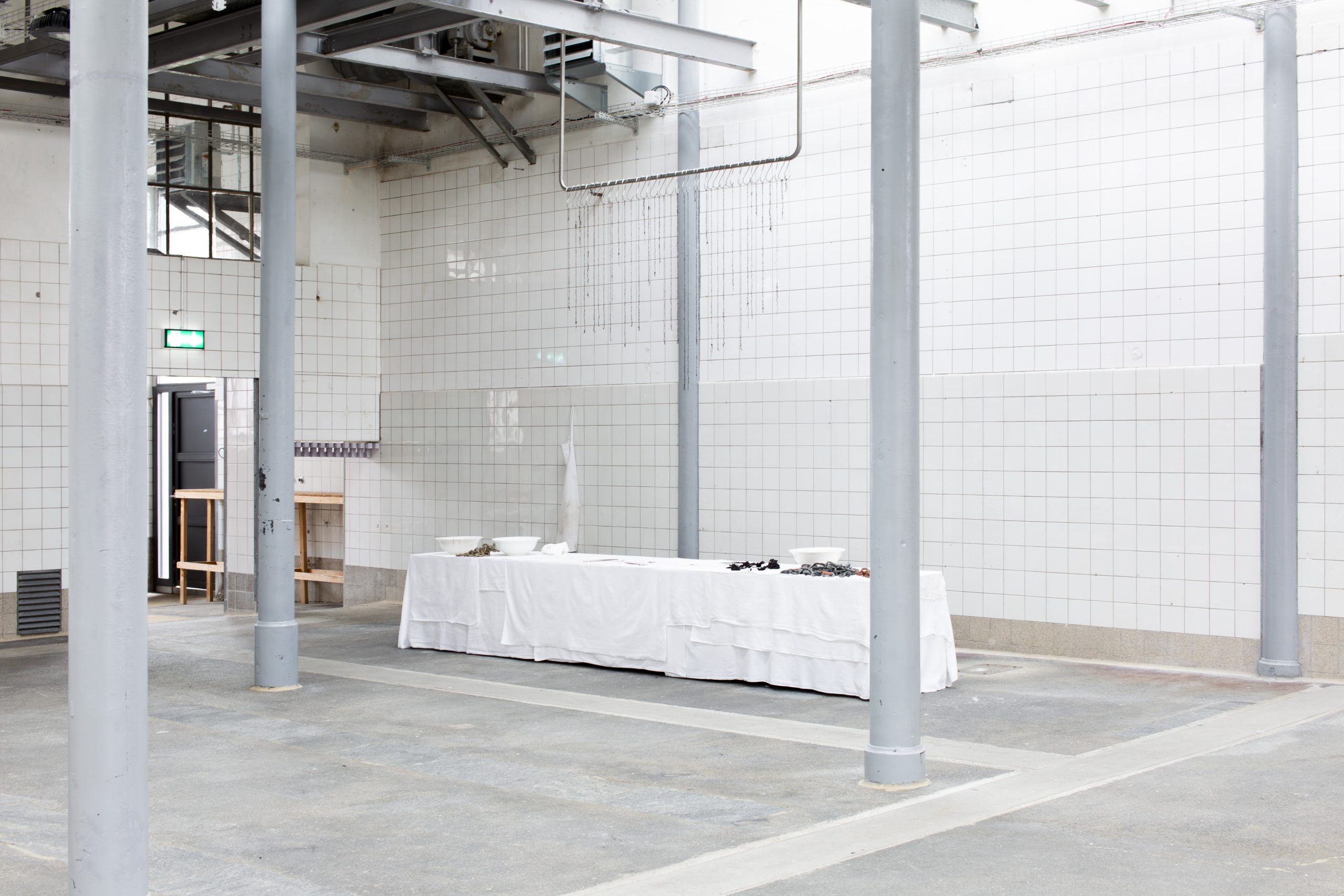
red curtain at Quartier General La Chaux de Fonds © Jessie-Schaer
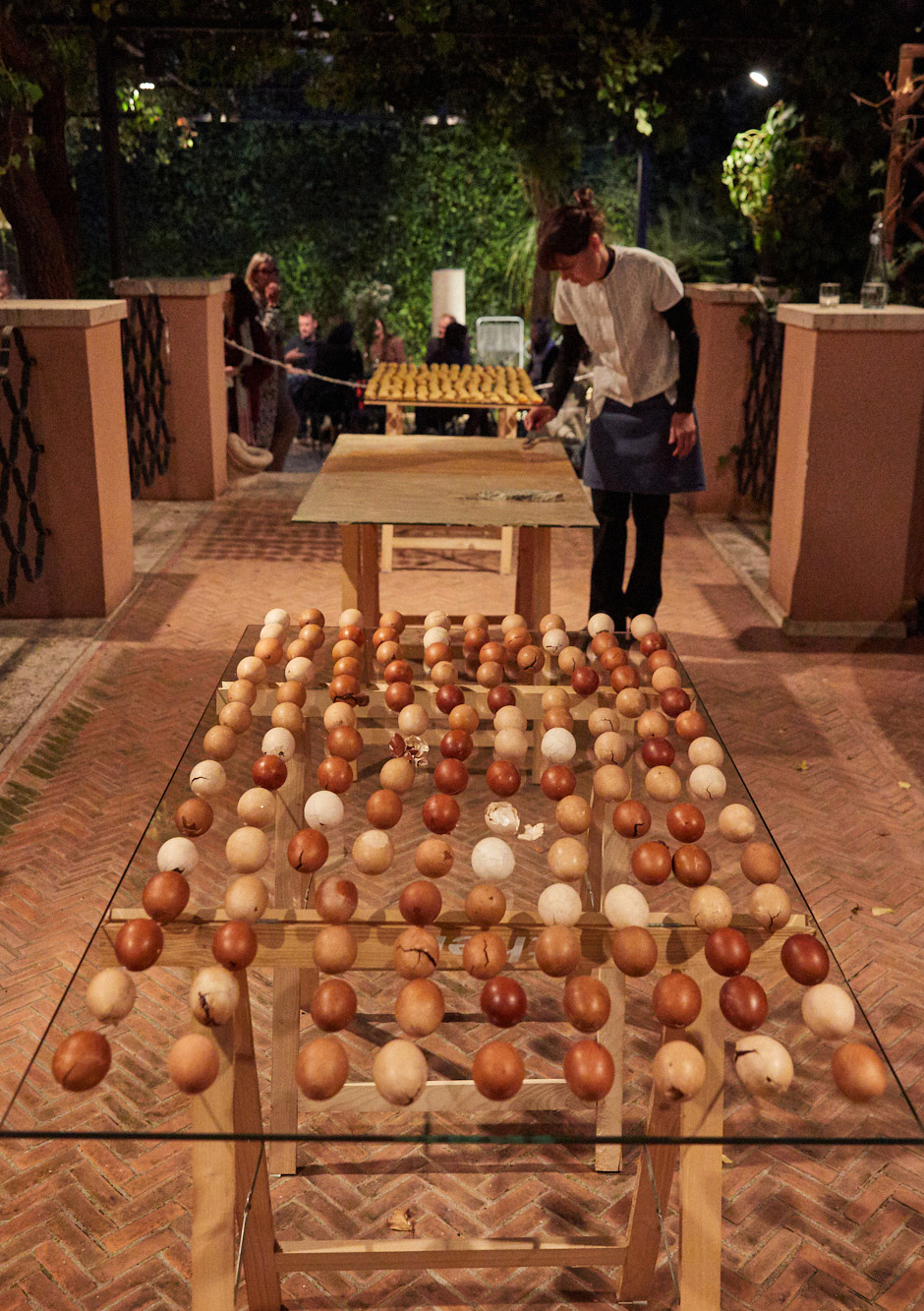
their remains remember at Biblioteca Hertziana Max Planck Institute Rome © Enrico Fontolan
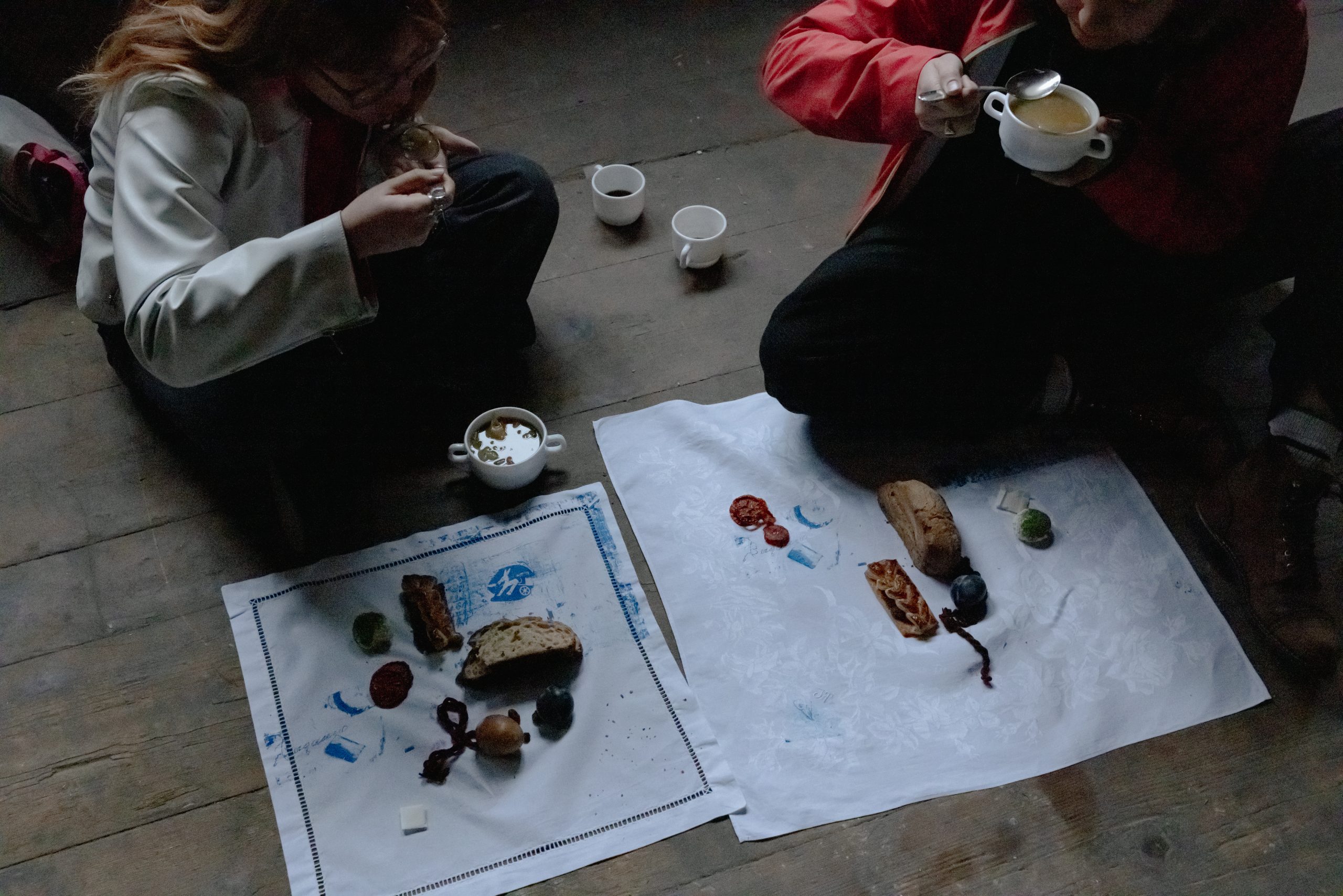
pause at Klontaler Triennale Diesbach © Binta Kopp
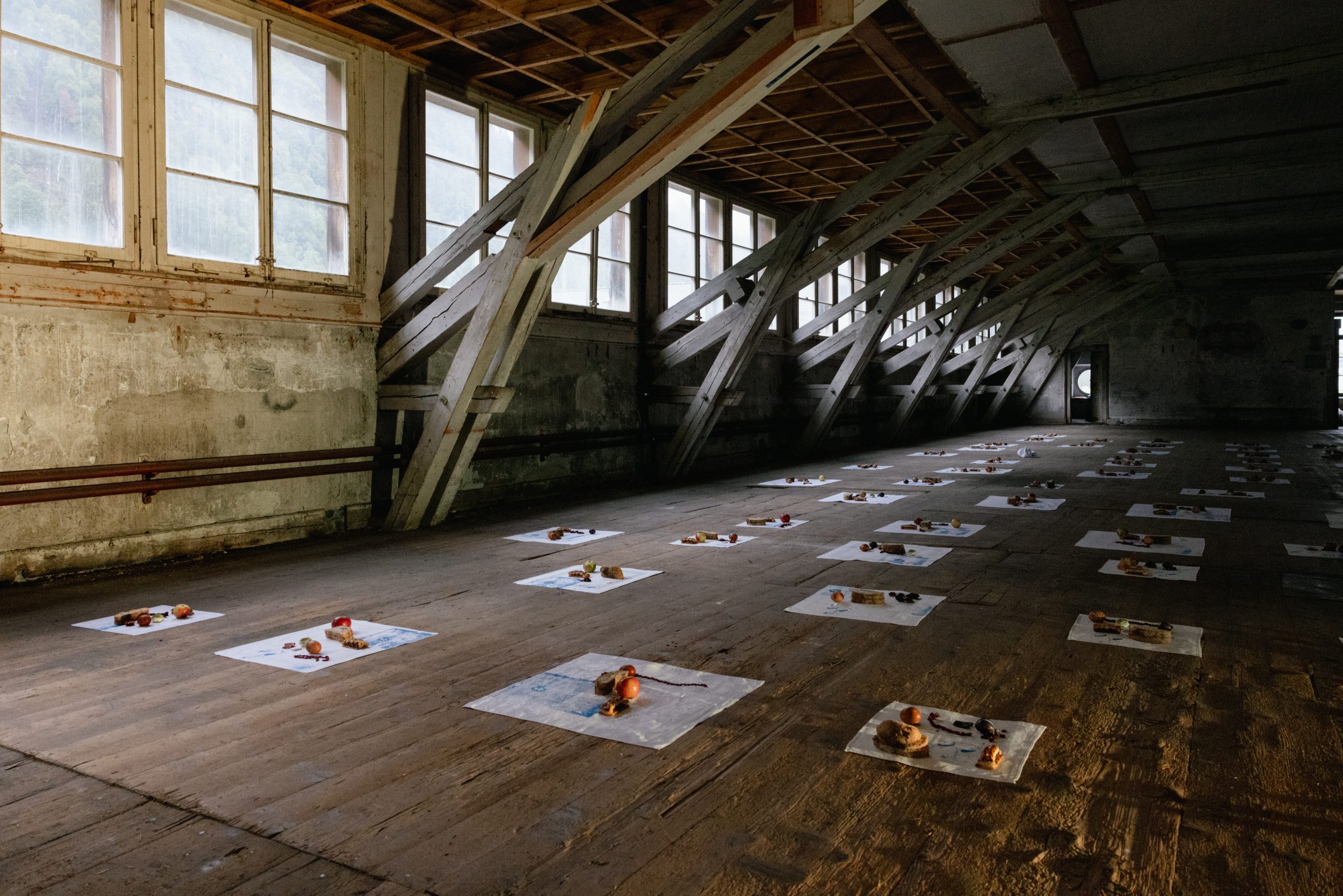
pause at Klontaler Triennale Diesbach © Binta Kopp
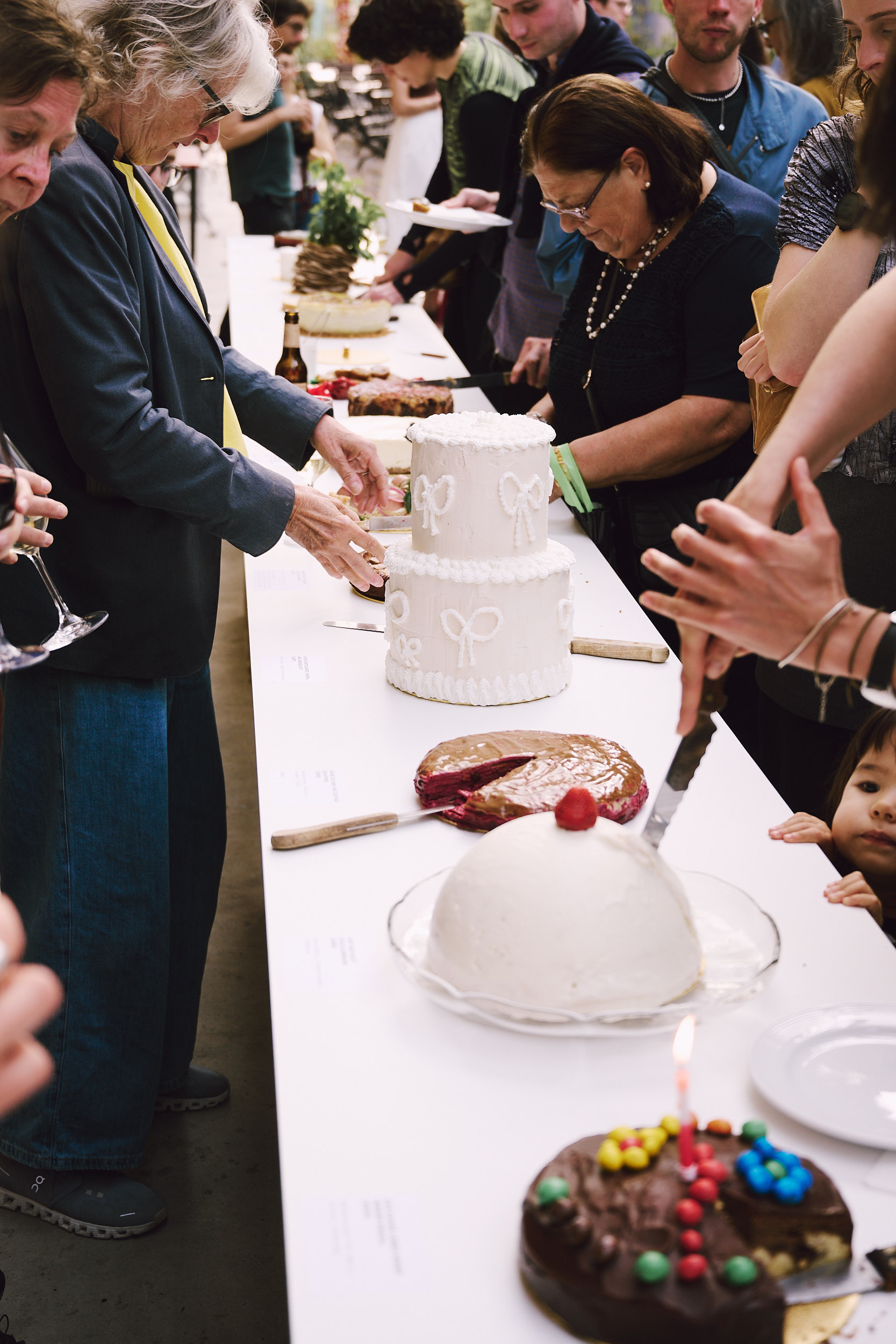
archive cakes Kunst Halle Sankt Gallen 1985, 2025 at Kunst Halle Sankt Gallen © Romain Mader