Istituto Svizzero dedicates this digital space to its Fellows in Rome, Milan, and Palermo. Through a variety of editorial formats, including commissioned essays, interviews, and short Q&As, the platform offers the public an opportunity to engage with their ongoing research, practices, and reflections, highlighting the diverse perspectives that inform the residency programme.
The temporary column titled “Close Up” is the result of a collaboration between Flash Art Italia and Istituto Svizzero, and focuses on editorial hosting as a practice of sharing research. “Close Up” is conceived as an editorial space that hosts texts by writers invited by Istituto Svizzero to engage with and reflect on the practices of the artists in residence participating in the Roma Calling 2025/2026 programme.
margaretha jüngling (1988) is an artist and cook based in Zurich. Her research uses food as a poetic tool to reflect on contemporary ecological, economic, and social crises, questioning Western norms and practices. Everyday cooking becomes a way to rethink food systems and their environmental impact. She has an MA in Transdisciplinarity in the Arts from ZHdK Zurich. In recent years, margaretha’s work has been shared at Kunsmuseum Chur, Kunsthalle Friart Fribourg, Belluard Bollwerk Fesitval, Gessnerallee, Triennale Klöntal (Diesbach) and Ménagerie de verre (Paris). In Rome, she focused on the maritozzo, a traditional Roman pastry, analyzing its origins, transformations, and socio-political meanings through artistic and culinary practices.
But underneath it all as I was growing up, home was still a sweet place
somewhere else (…) my truly private paradise of blugoe and breadfruit
hanging from the trees, of nutmeg and lime and sapadilla, of tonic beans and red and yellow Paradise plums.
– Audre Lorde, Zami
margaretha jüngling’s artistic practice invites us to pay attention to the many meanings and stories that every food carries within it; or to how a story can be told through food. Her work investigates symbols and aesthetics connected to unprocessed ingredients, recipes, and culinary traditions, observing how cultural and social codifications, as well as relations of power that regulate our shared lives, are reflected and revealed in eating habits.
margaretha’s creative and intellectual process often unfolds through accumulation, combining numerous references and different layers of reflection during the research phase. Her gaze tends to linger on zones of ambiguity or contradiction, intervals of space where different narratives and interpretations overlap and confront one another. During a conversation we had while I was preparing this text, margaretha pointed out to me the paradox that defines the very act of eating: an activity we spontaneously associate with conviviality and sharing, which nevertheless remains, in its fulfilment, an inescapably individual experience. Eating is an intimate process, internal and opaque to the gaze of others, and yet one that opens us to a radical relationship with everything surrounding us. As margaretha explained, when we eat we swallow pieces of the world and at the same time become the world: digestion reveals itself, in this sense, as an energy of physical transformation that connects us to reality, linking micro and macro scales, bacteria and humans. It is a perspective close to the post-humanist and neo-materialist approaches of certain contemporary feminist thinkers, such as Donna Haraway or Anna Tsing, who recognize and describe the subject as a relational, composite, multispecies, and “contaminated” entity.
When I first met margaretha, I was reading Zami, the autobiographical novel in which the poet Audre Lorde recounts her coming-of-age journey from childhood to early adulthood. Speaking with margaretha helped me focus on the central role food plays in Lorde’s book, in the narration of the process of exploring and defining her identity. In Zami, food is an erotic and political stimulus connecting memory, cultural inheritance, and the carnal dimension of the body. These three different planes also intertwine in margaretha’s artistic practice: in her works, our bodies taste, smell, touch, and through these perceptual stimuli enter into relation with traces of memories, habits, and imaginaries that speak of the inheritances, stories, and values of the contexts in which the artist intervenes.
Food acts as a device of evocation, but also at times of disorientation, for example through the activation of a contrast between visual element and gustatory experience. I am thinking of the braided strands of fermented beetroot in red curtain (2026), hung from butcher hooks and dripping onto a white tablecloth like red filaments of raw flesh. In this work, margaretha reactivated the memory of the original use of the building housing the Quartier Général Centre d’art contemporain in La Chaux-de-Fonds, formerly a slaughterhouse. The audience was invited to cut and eat the braids, staining themselves and marking the linen cloth spread across the table with red. Beetroot is a food historically associated with contexts of poverty, later integrated into systems of intensive farming and eventually reabsorbed into the diets of wealthier classes; margaretha used its history and blood-like consistency to propose a reflection on meat consumption and the aesthetics of the grotesque. red curtain triggered a sense of disturbance in viewers, whose reactions ranged from attraction to repulsion. I believe that one of the fundamental questions accompanying margaretha’s research concerns precisely what happens when we come into contact with experiences that lead us beyond the boundary defining what is “decorous” and therefore visible, when they bring us closer to the invisible territories of disgust and repulsion. How do we fill the new spaces of meaning opened before us? What purpose does that line of demarcation serve?
There are certain foods with particularly dense and layered symbolic meanings that tend to recur throughout margaretha’s installations and performances, such as the egg, the apple, or bread. Bread itself – a sweet bun, the maritozzo – lies at the centre of the research project margaretha developed during her residency at Villa Maraini. Following her habitual methodological approach, margaretha gathered a vast amount of data, stories, and recipes, getting to know the city of Rome through the history of this pastry, originally tied to Carnival rites of reversal but also to the performance of gender roles within heterosexual marriage (One of the narratives explaining the origin of the maritozzo (the name derives from marito, husband, with the suffix -ozzo, which has a playful effect somewhat analogous to calling a husband a “hubby”) refers to a tradition whereby, on the first Friday of March, fiancés ready to pop the question would hide an engagement ring or another gold object inside this sweet bread as a mechanism for proposing.); born as a popular snack and now transformed into a gourmet product. Reconstructing the intertwining of religious, popular, and class-related aspects surrounding narratives of the maritozzo, margaretha’s reflection interrogates the ways in which food contributes to shaping regional and national identities; but it also observes the involvement of culinary traditions within the dynamics of contemporary consumption. This perspective seems particularly significant to me in a context such as Italy, where processes of commercializing an “Italian-ness” to be consumed are redefining tourism economies and the image of cities such as Rome, Naples, or Bologna.
In March 2026, on the occasion of the first public sharing of her maritozzo research at the independent space Lateral Roma, margaretha cooked fermented red beetroot buns, proposing a savoury reinterpretation of the recipe. Arranged on a small white cloth spread on the floor, the buns were presented together with an almond cream contained in a bowl suspended from the ceiling in a crocheted basket, recalling a liturgical censer in both shape and display. The audience intervened by breaking the bread, dipping it, mixing the red of the beetroot with the white cream, eating and staining. This ritual of consumption expanded the process of transformation of forms, ingredients, and gestures of tradition underlying the work into a symbolic and collective reshuffling of meanings.
As at Lateral Roma or at the Centre d’art contemporain in La Chaux-de-Fonds, the participatory activation of margaretha’s installations is often introduced by readings of poetic texts that offer keys to approaching the works. In margaretha’s practice, writing does not serve a descriptive function, nor does it provide explanations; rather, it constitutes a parallel and complementary space of creative elaboration, where more intimate and personal narrative elements often find a place. The relationship in margaretha’s work between writing and cooking, between food and verbal language, makes me think of the mouth as a cavity for chewing both words and dishes: of food as language, but also of writing as food, by which margaretha nourishes herself. Her theoretical and literary references range from Sara Ahmed to Georges Bataille, from bell hooks to Simone Weil, from adrienne maree brown to Ursula K. Le Guin. I also found Audre Lorde in margaretha’s library.
In 1980, Lorde founded, together with Barbara Smith, Beverly Smith, and Cherríe Moraga, the Kitchen Table Press, a publishing house active for more than a decade and created with the aim of publishing texts by racialized, lesbian, and otherwise marginalized women writers excluded from the white publishing market (including feminist publishing). The name Kitchen Table Press speaks precisely of books as nourishment, but above all underlines the importance of social and shared structures such as the kitchen table for the circulation of forms of knowledge situated outside the boundaries of hegemonic culture. margaretha’s approach shares with this experience the value attributed to exchange, to commoning, to the questioning of knowledge, and a sensibility that brings cultural production back into direct contact with everyday life as a form of claim and affirmation. In her artist statement we read: “it is always still food, deeply embedded in the everyday.”
margaretha’s work belongs to a broad and ramified genealogy of artistic practices oriented toward sharing and community, developed from at least the 1960s to the present. I am thinking of experiences and methodologies that have questioned the boundaries of art, both in an interdisciplinary sense and as a form of social engagement. The political value of margaretha’s trajectory begins with the very choice to use and resignify gestures, materials, and codes of cooking – an activity of care, part of the cycle of social reproduction, central to feminist claims and struggles and to the experiences of other subjects marginalized by dominant politics. Like many practices within this large family, her approach is also grounded in dynamics of participation that radically shift the centre of art from object to process, from linguistic-formal research to the opening of spaces of experience. What is particularly significant in her specific case, however, is the role occupied by the body within this context. margaretha’s work expresses and fulfils itself in the activation of relational conditions, but above all in the sensory and sensual involvement of the body through food – good food! As if to say that we do not have to renounce a practice of pleasure even while thinking critically and politically. Following the path indicated by the author and activist adrienne maree brown, perhaps we can think of margaretha’s works as collective exercises helping us learn to align our pleasure with our values.
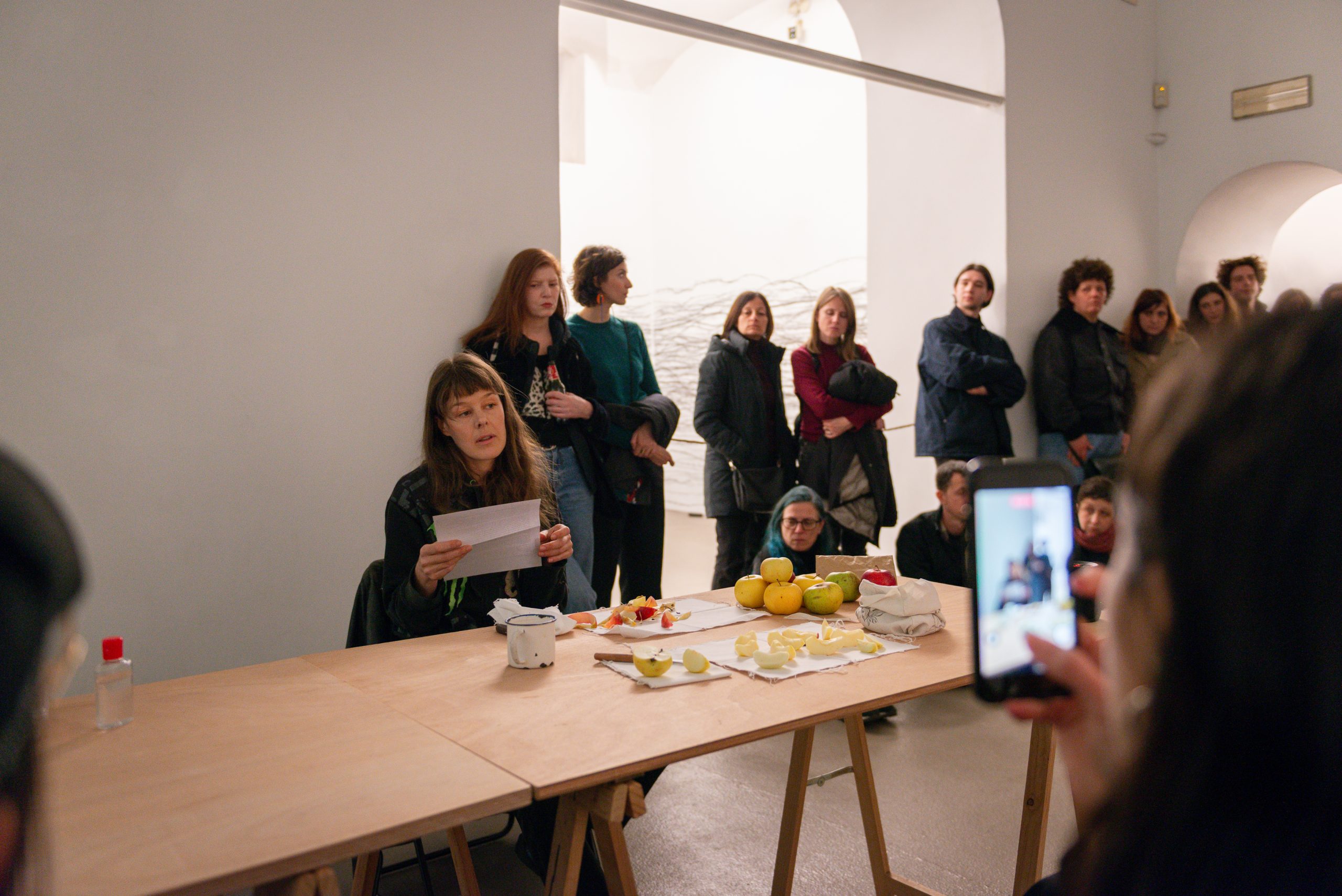
service gestures between layers at Fondazione Giuliani, Rome © Roberto Apa
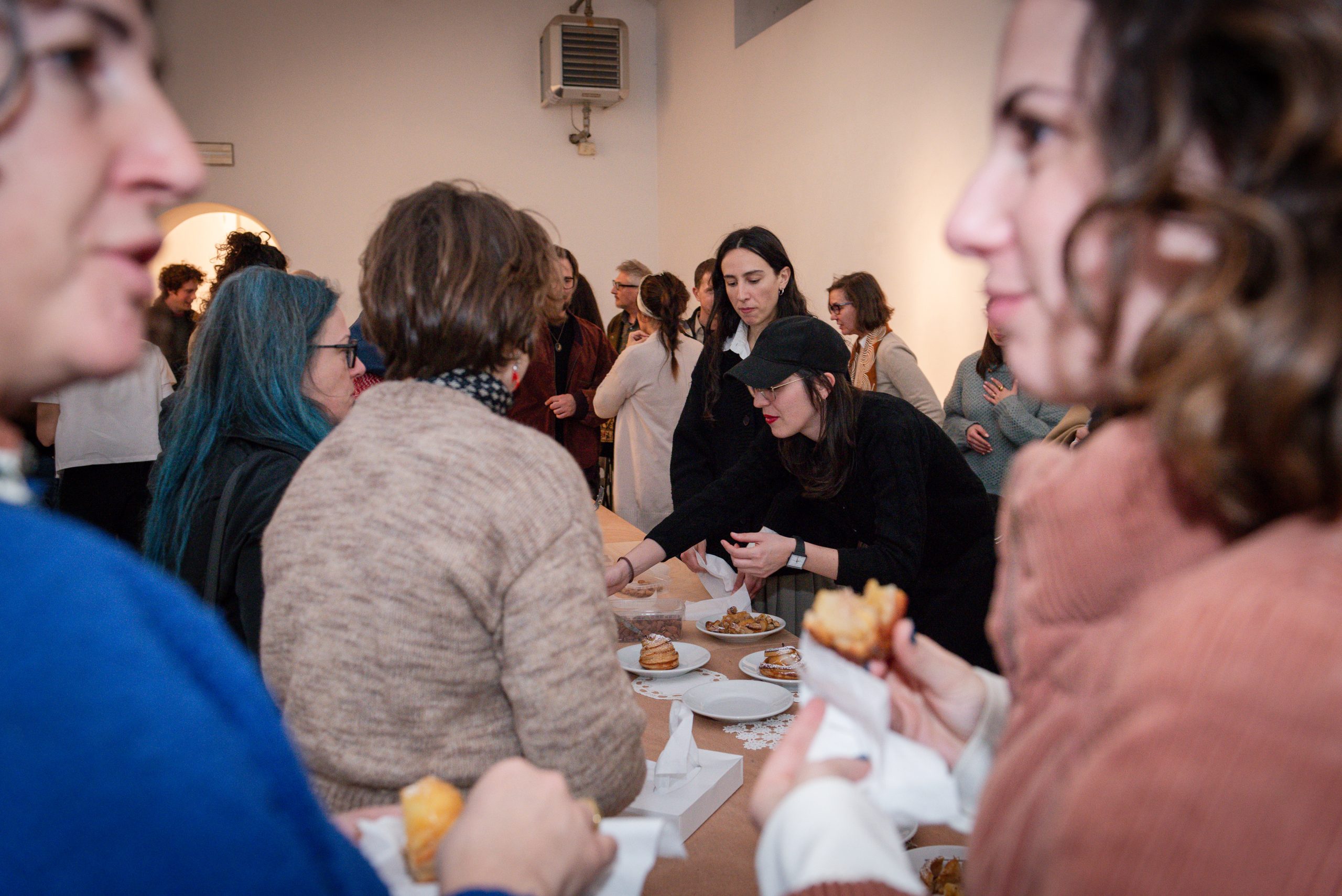
service gestures between layers at Fondazione Giuliani, Rome © Roberto Apa
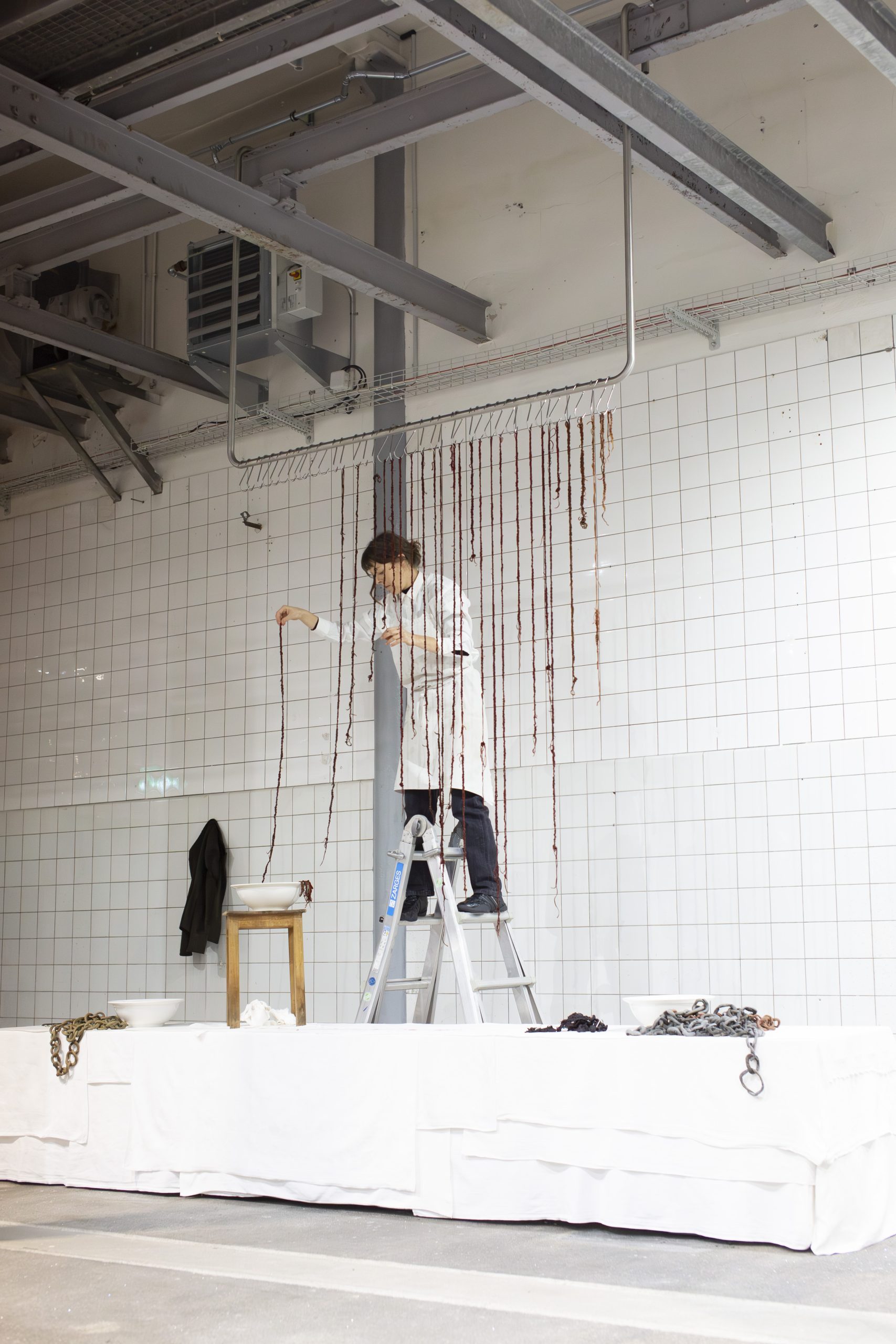
red curtain at Quartier General La Chaux de Fonds © Jessie-Schaer
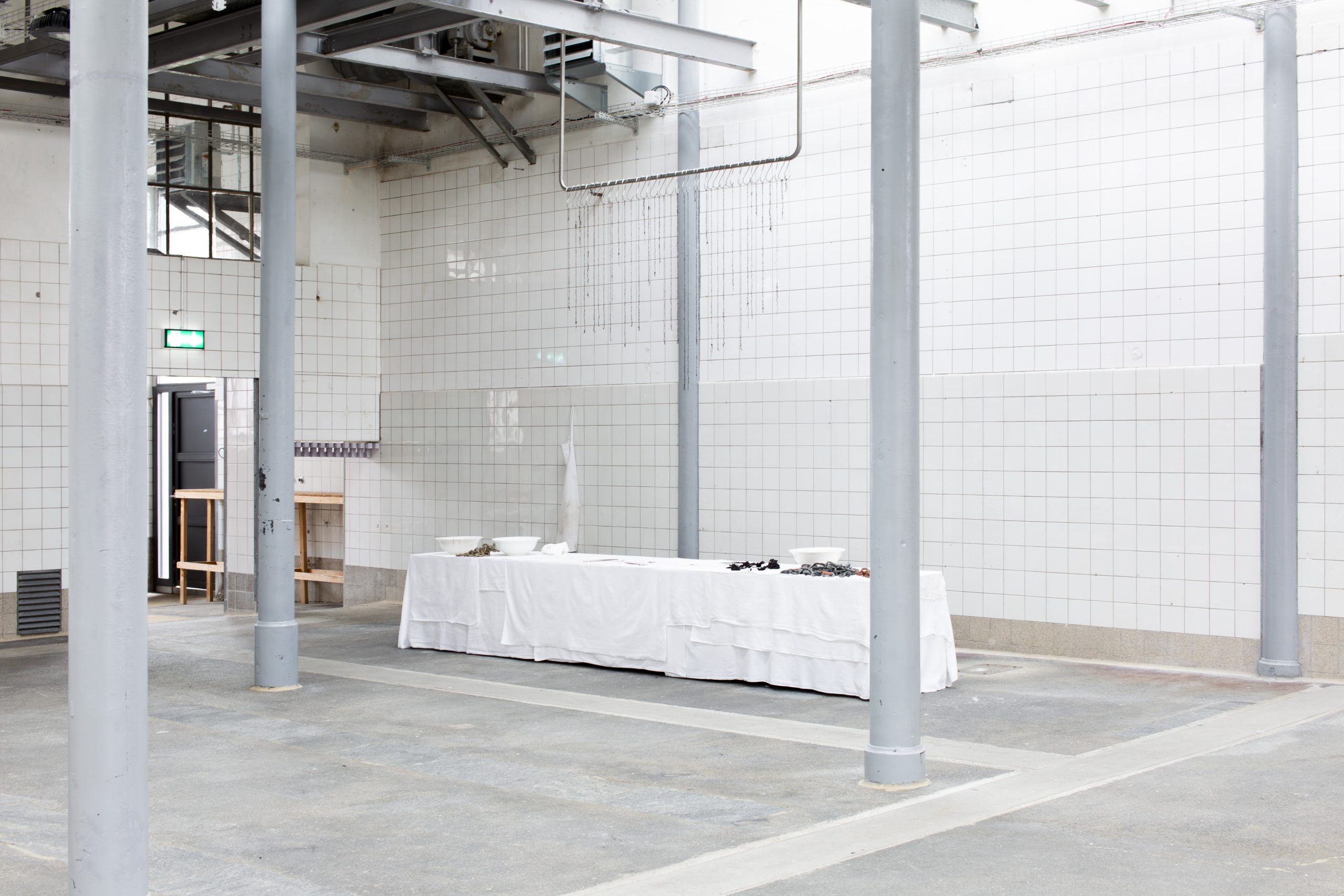
red curtain at Quartier General La Chaux de Fonds © Jessie-Schaer
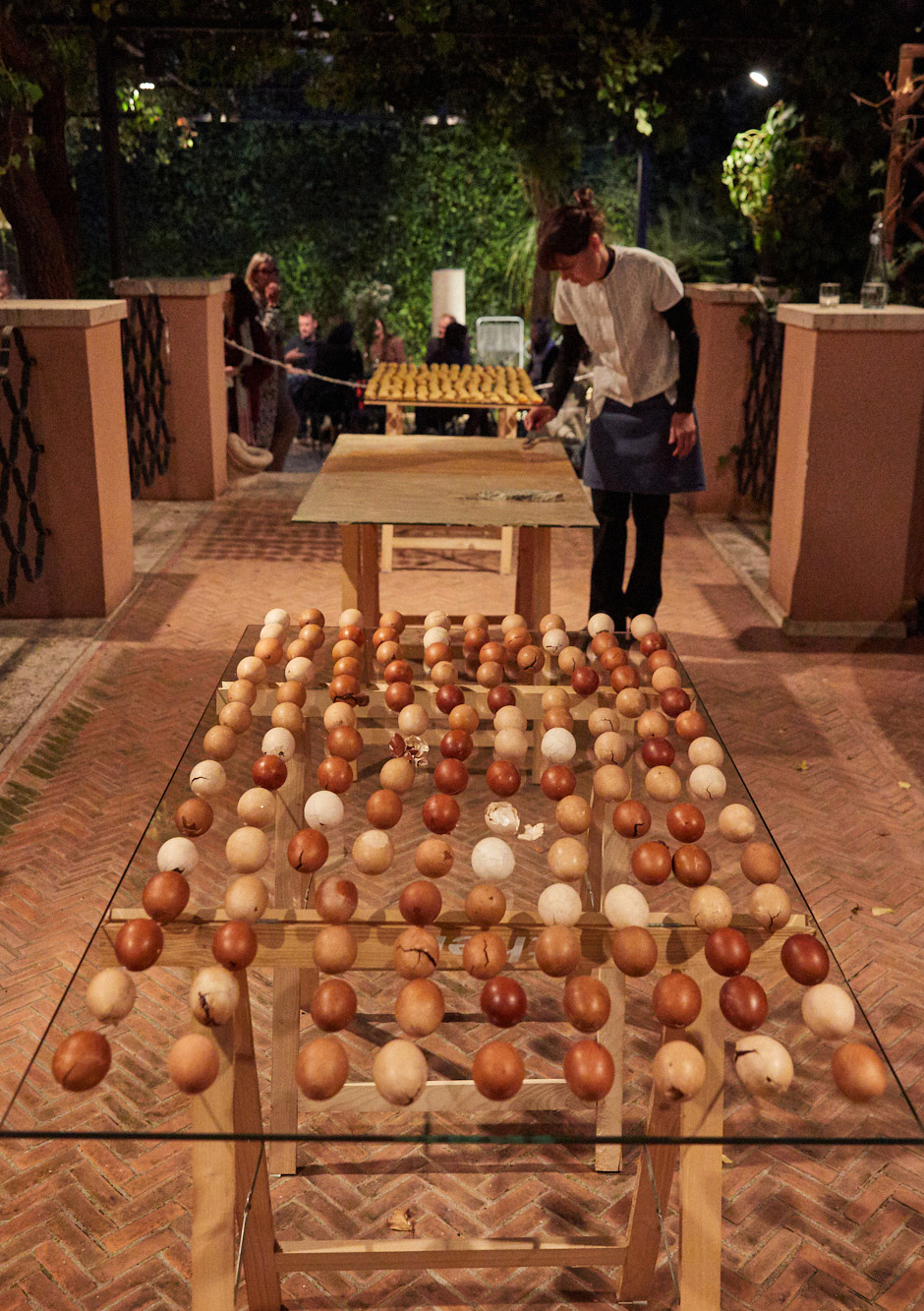
their remains remember at Biblioteca Hertziana Max Planck Institute Rome © Enrico Fontolan
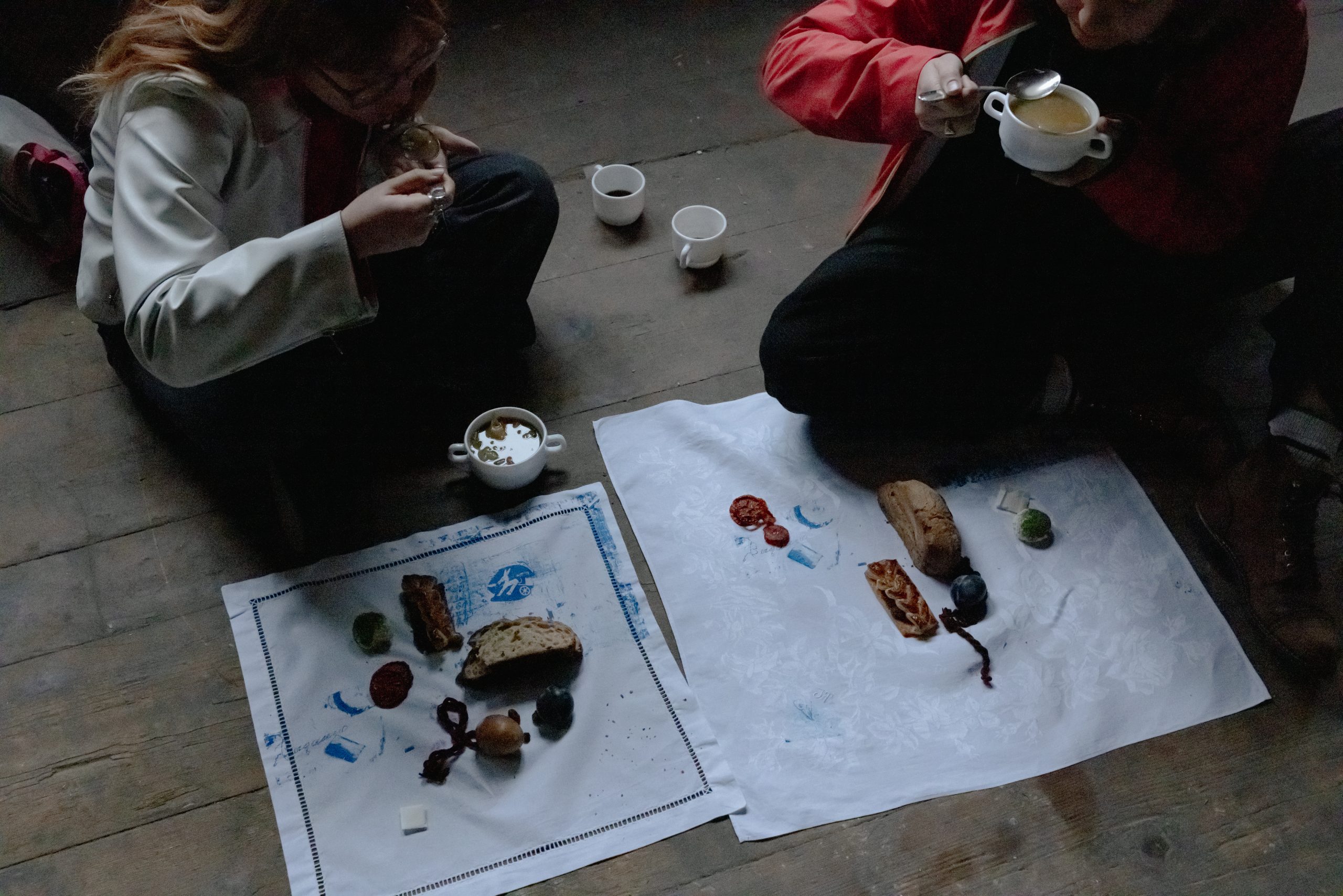
pause at Klontaler Triennale Diesbach © Binta Kopp
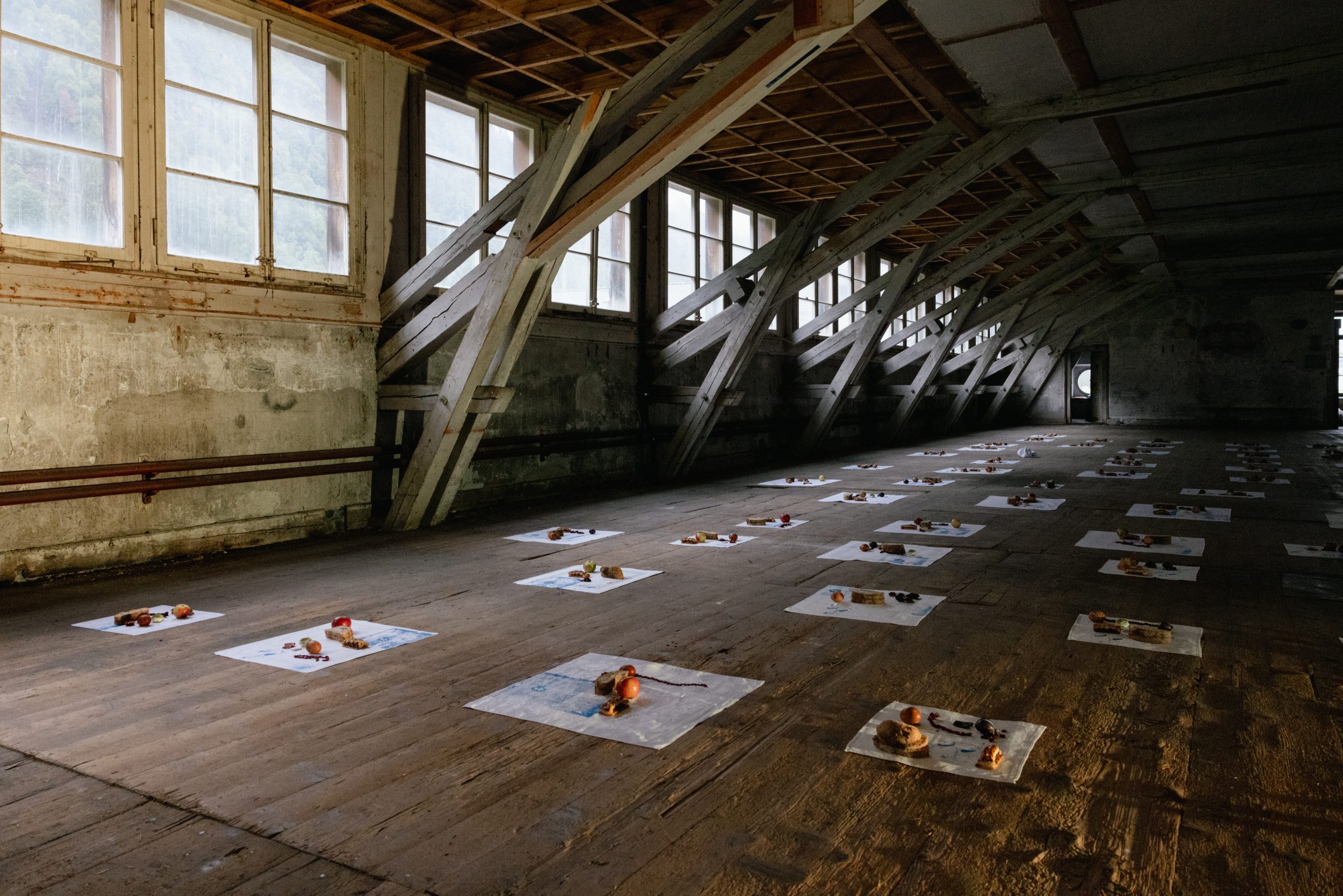
pause at Klontaler Triennale Diesbach © Binta Kopp
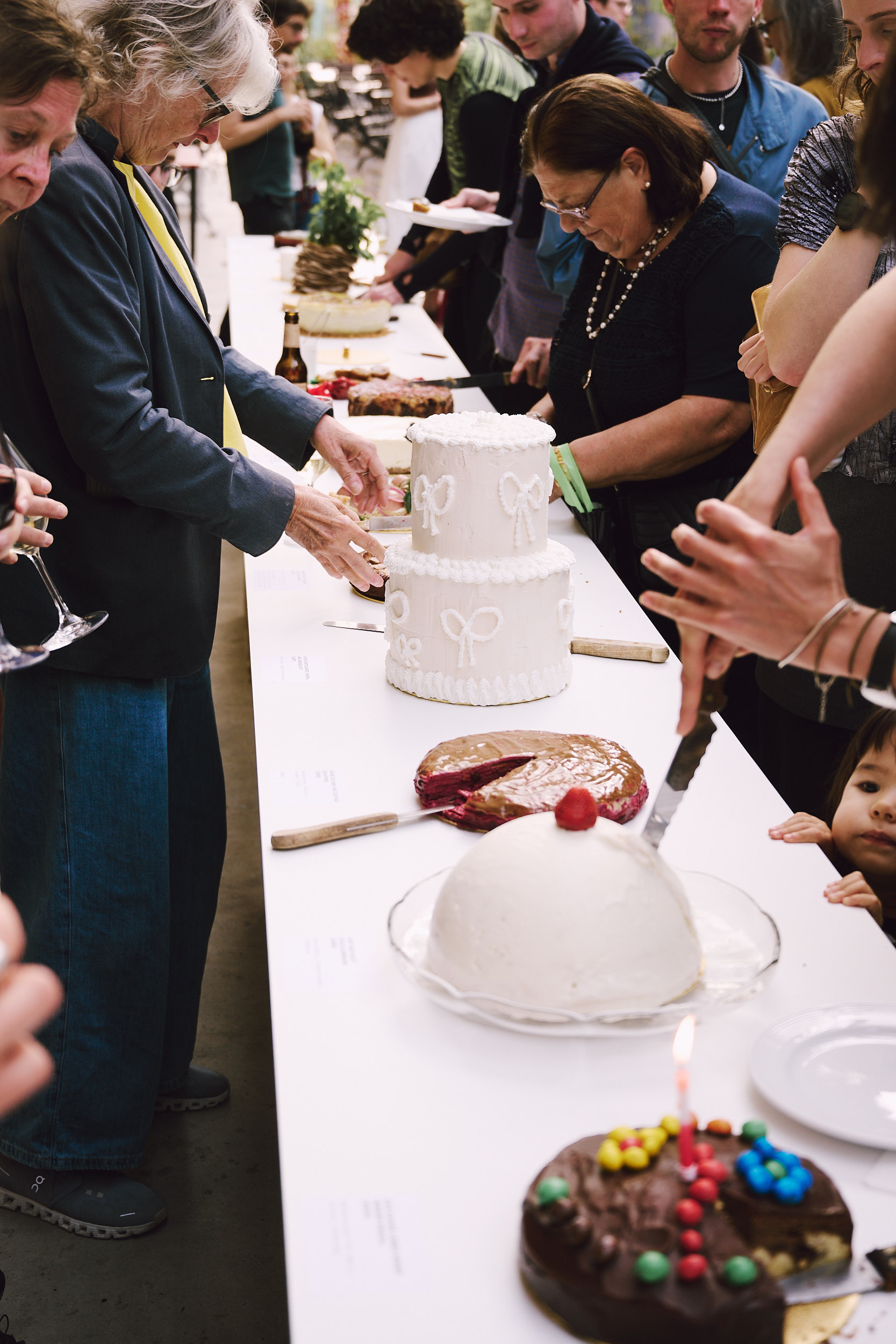
archive cakes Kunst Halle Sankt Gallen 1985, 2025 at Kunst Halle Sankt Gallen © Romain Mader
The temporary column titled “Close Up” is the result of a collaboration between Flash Art Italia and Istituto Svizzero, and focuses on editorial hosting as a practice of sharing research. “Close Up” is conceived as an editorial space that hosts texts by writers invited by Istituto Svizzero to engage with and reflect on the practices of the artists in residence participating in the Roma Calling 2025/2026 programme.
Eva Zornio (1987) is an artist based in Geneva. Her work explores living systems and the relational and narrative structures that shape us as human beings. Her installations, performances, sculptures, and videos are informed and formed by the notions of embodiment, affect, fiction, and interaction. She earned both her BA and MA at HEAD – Genève. She has exhibited at Fondation d’Entreprise Ricard, Forde, Istituto Svizzero, and Kunst Halle Sankt Gallen. She was nominated for the Bourses de la Ville de Genève (2020) and the Swiss Art Awards (2021). In 2023, she published Who are you performing today? with Pro Helvetia’s Cahiers d’Artistes. In Rome, critically engaged with the intersections of science, vision, and gender, developing an installation that explores how anatomical practices in medieval and Renaissance Italy influenced representations of the female body, using glass as both material and medium of knowledge.
One day, while speaking with the artist Eva Zornio (Arlesheim, 1987), she told me about a period in which she experienced hypnagogic states – moments of paralysis in which her body, suspended between sleep and wakefulness, refused to respond. It was then, she said, that she understood she was afraid of dying: “a fear that seemed to lie somewhere deep within the body.”
To cope with it, she began taking long nocturnal walks along the shores of Lake Geneva near her home, stopping to observe the water. Not to dispel the fear, but to remain before it, before that opaque and shifting surface, allowing her gaze to adapt to the darkness, letting her body register subtle variations in light, distance, and temperature. Remaining there meant accepting that one cannot see everything, that what stands before us cannot be controlled. That gesture – exposing herself without dominating – hints at the stance that informs her practice. It is from this position that her work unfolds, situated at a point of tension where the body becomes both an object of knowledge and, at the same time, a site of experience.
Since the beginning, her work has investigated the conditions that make affects observable and measurable, organizing and translating emotions and perceptions into forms. Her field of inquiry is not simply the body, but the regime of visibility that permeates it.
Starting from a reflection on embodied knowledge, affect, and interaction, the Swiss artist conceives the body as a relational node: not an isolated entity, but a point of intersection between gazes, devices, narratives, and material forces, both exposed to the effects of the world and capable of producing them. The works act within structures, moving through them, placing them in tension, and recomposing them on the sensory level.
Initially trained in biology and neuroscience before seeking expression through visual art, Zornio has direct experience of how scientific knowledge is constructed and legitimized. In her work, science does not appear as a neutral territory, but as a historical and cultural apparatus made of specific protocols, instruments, and images. This background is not merely a biographical anecdote: it constitutes the epistemic matrix of her practice.
Through a multidisciplinary approach that interweaves performance, installation, video, sculpture, sound, and text, the artist translates research environments and institutional structures into spatial and experiential configurations. Her aim is not to illustrate life sciences but to reactivate them as form and operational structure. In doing so, Zornio brings out the tensions between some of the foundational dualisms of the Western tradition: objectivity and subjectivity, body and mind, observer and observed.
The first phase of her research took form between 2019 and 2023 in a series of device-like works that simulate environments for affective assessment. With the projects Reception Space (2019, Fondation Ricard, Paris) and The Aesthetic Emotions Scale (2020, Centre d’Art Contemporain Genève), Zornio implemented her invented “Affective Evaluation” survey, adopting corporate aesthetics and pseudo-scientific protocols to render visible the logics of quantification and data collection that traverse cultural institutions and neoliberal practices of emotion management. This work resonates with what theorist Gregory Sholette has described as “mock institutions” – speculative institutional forms that operate through mimicry in order to reveal, inhabit, and reconfigure the epistemic and political frameworks of contemporary art institutions (Sholette, Gregory. 2011. Dark Matter: Art and Politics in the Age of Enterprise Culture. London: Pluto Press.). Rather than mere parody, these formations function as operative fictions: they expose institutional mechanisms, challenge their authority, and open up alternative modes of knowledge production.
With the solo exhibition Life Lives in Gaps (2021, EAC – Les Halles), this logic expands into space: graphs without legends on transparent panels, an operator leaving traces on surfaces during the opening, an audio signal, and a video mounted on wheels with a performer exploring the para-linguistic capabilities of her face. Production, maintenance, and representation overlap within a deliberately suspended atmosphere; evaluation is no longer a direct interaction but becomes an exhibition structure.
This phase culminated in Who are you performing today? (2023, Löwenbräukunst, Zurich), where the artist and another performer, acting as Affective Evaluation researchers, welcomed visitors and invited them to participate in a brief protocol combining sensory activation of the hands with questions about the emotions perceived in the space. The responses produced both an affective self-portrait and an experiential mapping of the institution.
Something began to shift in 2022. Without abandoning the question of affectivity, Zornio’s practice gradually moved toward a more marked materiality and a more complex spatial construction. This transition was already evident in Pleure-moi une rivière (2022), a solo exhibition at Soul2Soul/RU in Geneva. Here, the exhibition environment – an installation composed of small coloured glass forms resembling embryonic bodies of water distributed on the walls, a video work in which a woman practices somatic exercises, two-way mirrors, and a soundtrack recalling the song of sirens – takes the form of a capsule suspended between technology and an almost mythical dimension. Reflective and transparent surfaces multiply points of view; the visitor merges into the visual device, simultaneously observer and part of the image. Glass ceases to function merely as a substrate and becomes a device that shapes perception and relations: not merely a support, but a membrane, threshold, and perceptual filter.
With the gradual introduction of glass into her practice, Zornio increasingly focuses on the materiality of perception. Transparency, refraction, and fragility allow her to articulate tensions between the visible and the invisible, stability and vulnerability, and interiority and exteriority. In Redevenir poisson (2023, Espace 3353, Geneva), the symbolic reconstruction of the architecture of the Biotech Campus in Geneva – where she was a resident during the preparation of the show – generates a deliberately ambiguous environment through installations: a laboratory of affects, an abandoned open space, a perceptual aquarium.
The cycle Soma (2024–2025) takes things further in this direction. Resembling a procedural apparatus, metal structures host elements of blown, engraved, or silvered glass that react to light and the presence of bodies, producing minimal perceptual events rather than fully formed images. The work reveals itself over time, through imperceptible movements of the spectator and variations in light, configuring itself as a perceptual field rather than an object.
The most recent project, Spellate (She, skinned), carried out during her fellowship at Istituto Svizzero in Rome (2025-2026), marks a further and more radical shift. Developed from research conducted in Rome, Padua, Bologna, and Florence on the history of anatomy and representations of the female body between the Middle Ages and the Renaissance, the work focuses on a historical moment in which the opening of bodies became both an epistemic practice and a public spectacle.
Following Katharine Park’s research (Park, Katharine. 2006. Secrets of Women: Gender, Generation, and the Origins of Human Dissection. New York: Zone Books), Zornio identifies the female body as a figure occupying a dual role in the birth of academic anatomy: not only an object of dissection but also a symbolic and cultural matrix that helped structure the ways anatomy was practiced. Between the thirteenth and sixteenth centuries, post-mortem examinations linked to canonization processes, the emergence of anatomical theatres, and the production of the first illustrated treatises established a new economy of the gaze. The body – and in particular the female body – became a surface to be opened to extract “truth”.
In this context, the progressive expropriation of women’s empirical and ancestral knowledge coincided with the ascendency of male academic medicine founded on direct vision and the authority of the eye. Early anatomical plates depict female figures exposing their reproductive organs in passive or theatricalized postures, while male figures appear active, demonstrative, and almost autoptic. The interiority of the body becomes a territory of conquest, and the woman is simultaneously its threshold and its pretext, at a time in history when the opening of the body still carried an almost sacred dimension: revealing the inside means approaching the mystery of creation.
Entering Eva Zornio’s studio, I encounter fragments rather than a finished work: sketches, material tests, tentative arrangements. There are bits of blown, engraved, or sometimes silvered glass alongside wax, textiles, and reflective surfaces. A low table at once recalls an anatomical theatre and a domestic work surface. From these scattered pieces, I begin to imagine the outlines of Spellate.
Rather than reconstructing historical regimes of anatomical vision, the work seems to move through their spatial and perceptual logic, as if testing how such structures might re-emerge under different conditions. The body is not there yet and perhaps never fully will be; it is approached obliquely, through surfaces, incisions, and thresholds.
Glass recurs throughout these experiments, a material that both reveals and disrupts. What it brings into view never appears entirely stable, as if visibility itself were being subtly displaced.
From these elements, I imagine a work that unsettles the conditions under which it becomes visible. Not a scene of revelation, but a suspension of it. The viewer’s gaze, rather than being directed and stabilized, is turned back upon itself and made conscious of its own history, of the ways in which it has long positioned the body, and particularly the female body, as something to be opened, known, and possessed. What is at stake here is not simply visibility, but the conditions that produce it – what feminist and epistemological critiques have long described as the situated, constructed nature of the gaze.(See Donna Haraway, “Situated Knowledges: The Science Question in Feminism and the Privilege of Partial Perspective”, Feminist Studies 14, no. 3 (1988): 575–599; Jonathan Crary, Techniques of the Observer: On Vision and Modernity in the Nineteenth Century (Cambridge, MA: MIT Press, 1990); Michel Foucault, The Birth of the Clinic: An Archaeology of Medical Perception (New York: Vintage Books, 1994 [1963]). These authors, from different perspectives, have shown how vision is not a neutral or universal faculty, but a historically situated and culturally constructed practice, shaped by epistemic frameworks and relations of power.)
If modern anatomy rests on the premise that opening produces knowledge, Spellate seems to gesture toward another possibility – one in which exposure entails loss, and visibility does not coincide with mastery. What emerges is perhaps the outline of a different kind of attention: one that does not seek to penetrate or resolve but is ready to pause, adjust, and dwell with what resists.
A way of seeing that – as in the image evoked at the beginning – lingers before a dark expanse, allowing the gaze itself to be transformed. Not to grasp an object of perception but to be there with it.
Eva Zornio, In little slits lives the life, view of the solo show ‘Life lives in gaps’, at EAC – Les Halles, Porrentruy, 2021. Performer: Axelle Stiefel. Photography of Sebastien Verdon
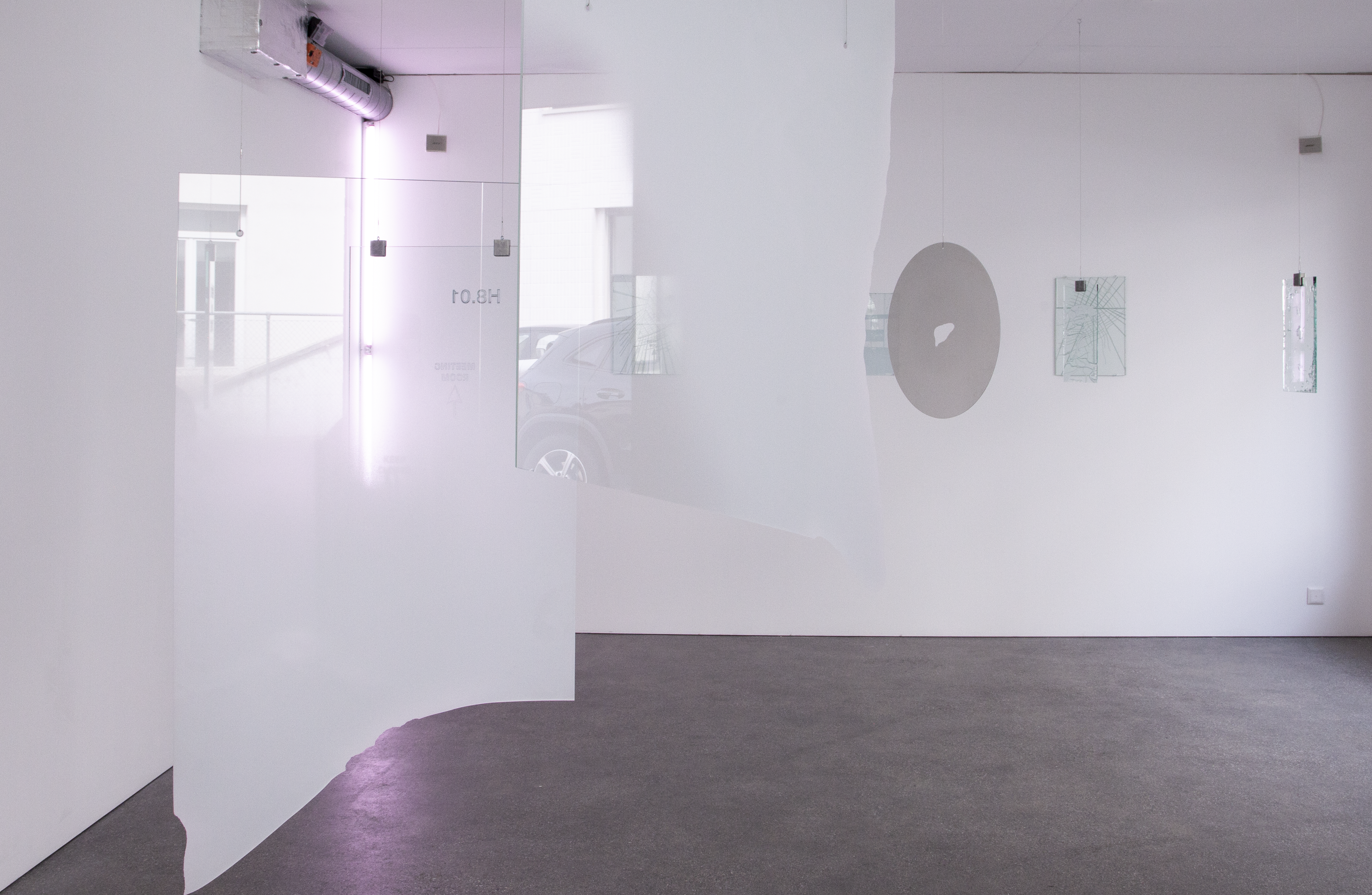
Eva Zornio, Redevenir poisson, installation view, solo show at Espace 3353, Genève, 2023. Photography of Anastasia Mityukova
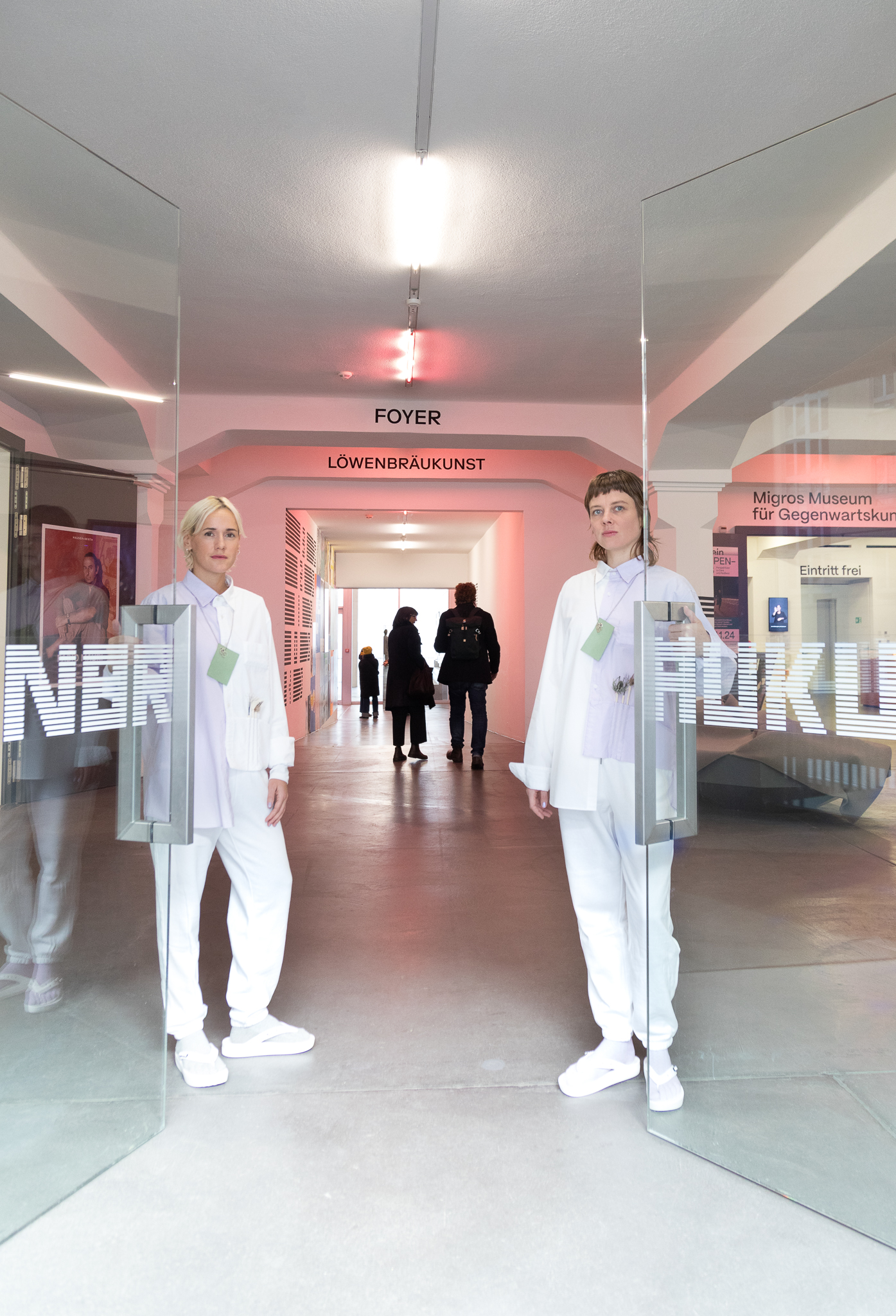
Eva Zornio, Who are you performing today?, performance at Löwenbräukunst, Zürich, 2023. Performers: Eva Zornio and Marie Popall. Photography of Lily Pellaud
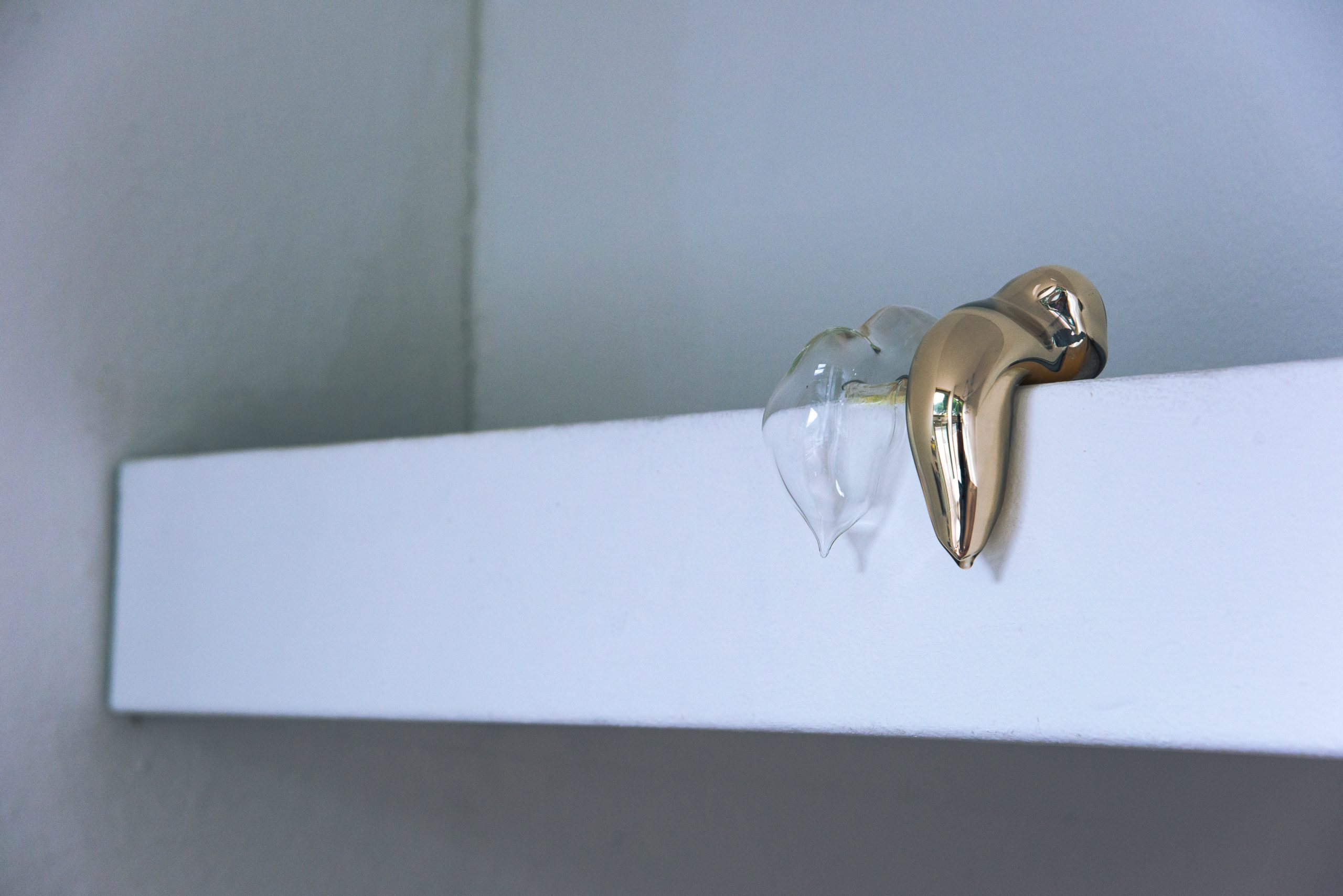
Eva Zornio, Soma (sense of the senses), detail of the installation, solo show at Spazio Lampo, Chiasso, 2024. Photography of Sarah Mathon
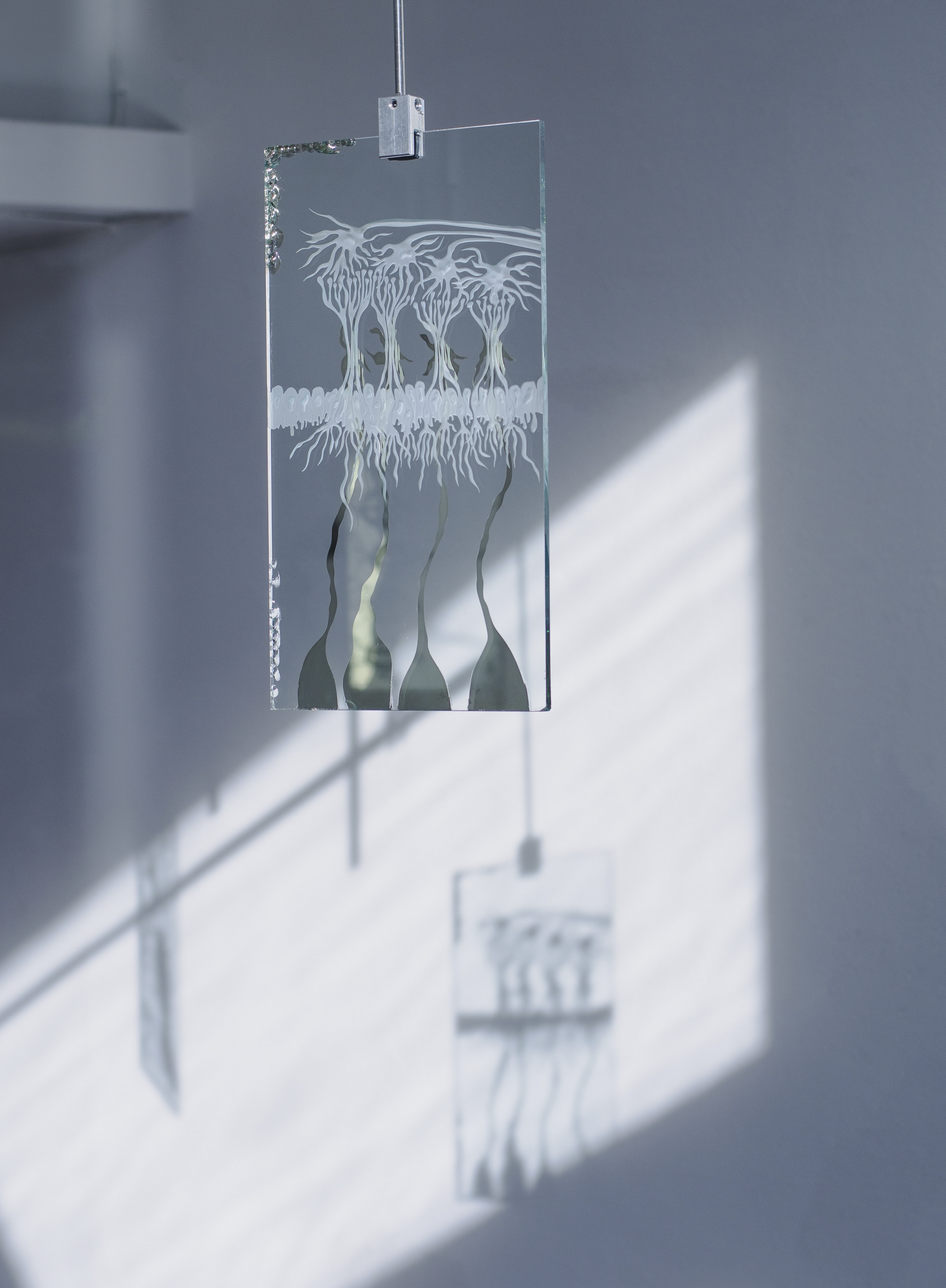
Eva Zornio, Soma (sense of the senses), detail of the installation, solo show at Spazio Lampo, Chiasso, 2024. Photography of Sarah Mathon
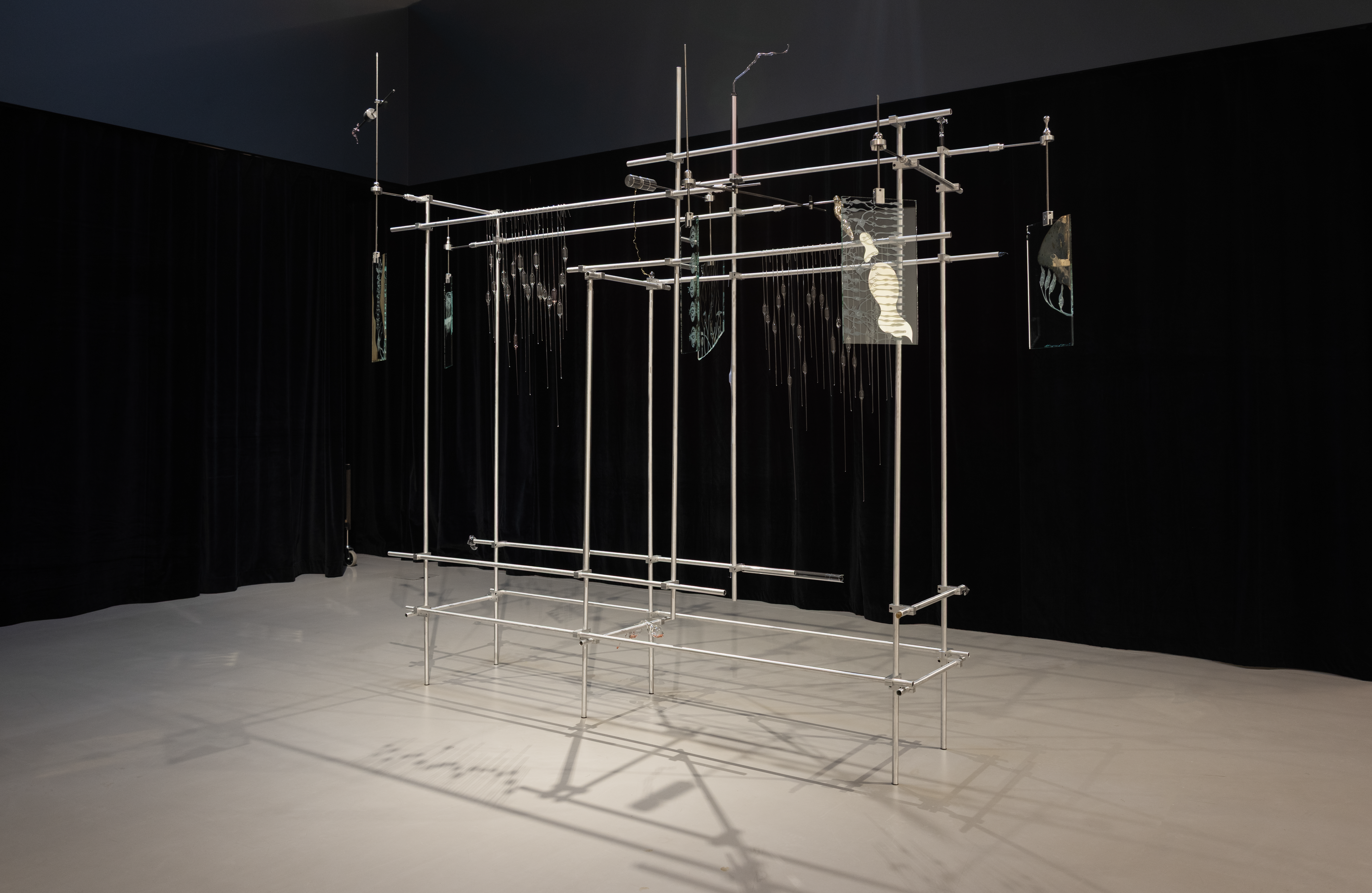
Eva Zornio, Soma (vulnerability is a fantastic power), part of the group exhibition ‘Visions’ at FMAC, Geneva, 2025, Photography of Remy Ugarte Vallejos
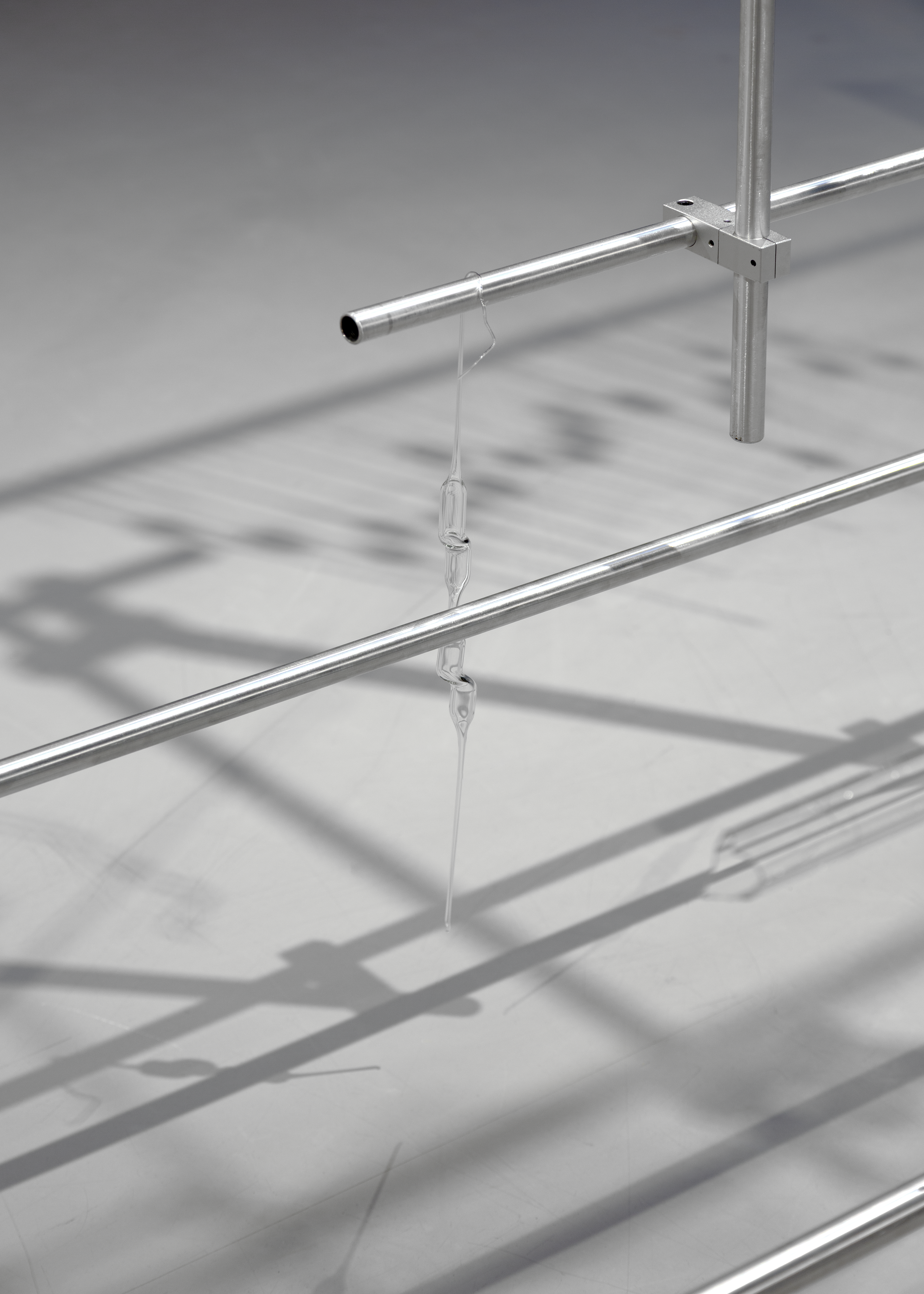
Eva Zornio, Soma (vulnerability is a fantastic power), detail of the installation, part of the group exhibition ‘Visions’ at FMAC, Geneva, 2025, Photography of Remy Ugarte Vallejos
Eva Zornio, High tide low tide (2022-2026), part of the group exhibition ‘Rivages’, Le Commun, Geneva, 2026. Was previously presented at Soul2Soul/RU as part of the solo exhibition ‘Pleure-moi une rivière’ in 2022. Photography of Remy Ugarte Vallejos
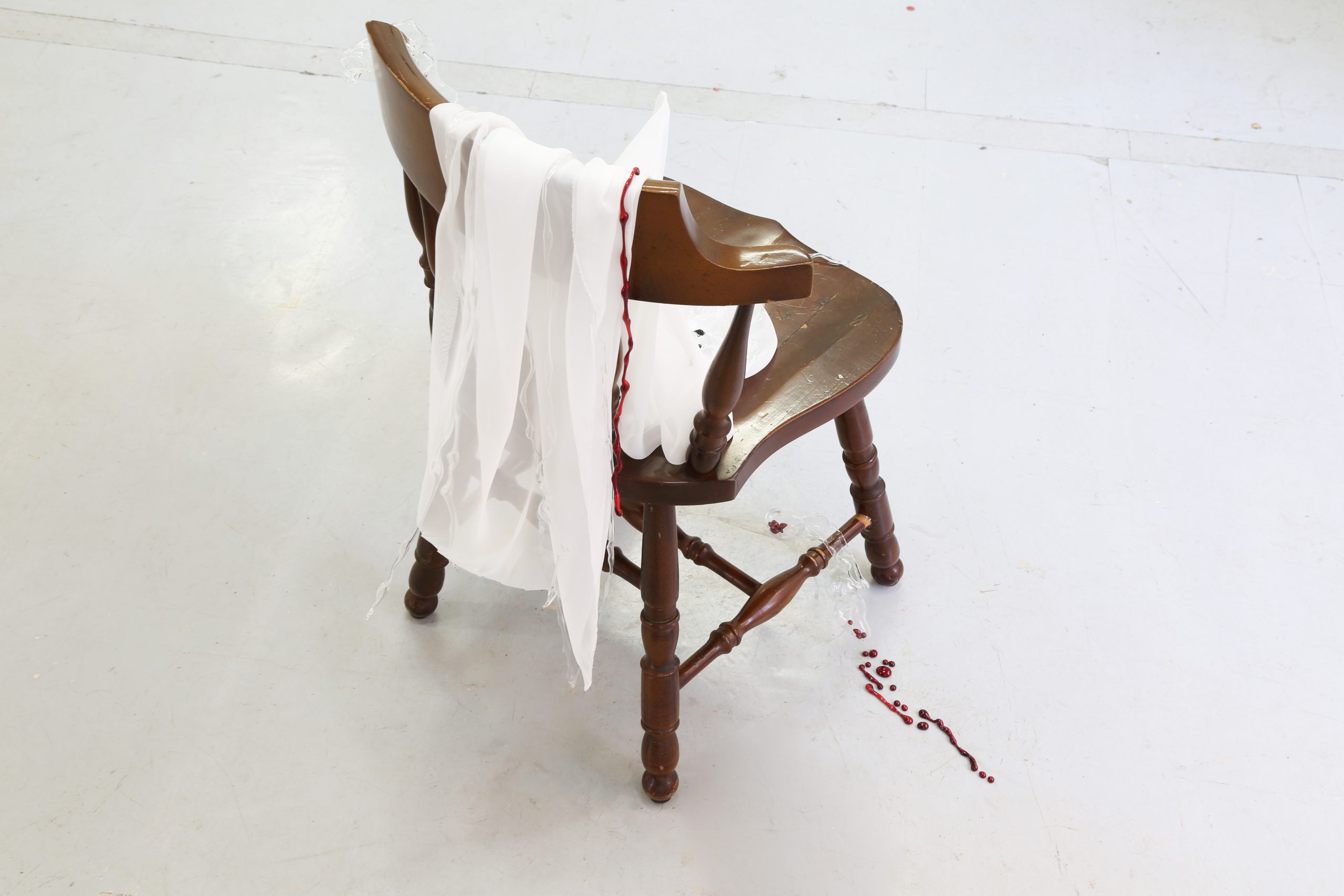
Eva Zornio, The secrets of women are revealed only by the diligent hand, new production for the group exhibition ‘Roman Rhapsody’, Lateral, Roma, 2026. Photography of Jacopo Rinaldi
The temporary column titled « Close Up » is the result of a collaboration between Flash Art Italia and Istituto Svizzero, and focuses on editorial hosting as a practice of sharing research. « Close Up » is conceived as an editorial space that hosts texts by writers invited by Istituto Svizzero to engage with and reflect on the practices of the artists in residence participating in the Roma Calling 2025/2026 programme.
Sultan Çoban (1994) is an artist working between Basel, Zurich, and Amsterdam. Her practice spans performance, directing, and installation, with a focus on cultural identity, memory, and self-representation. Her works combine sound, live projections, and staged elements. She holds a BA in Fine Arts from ZHdK and an MA from the Sandberg Instituut, Amsterdam. Her work has been presented at Gessnerallee in Zurich, Swiss Art Awards, Les Urbaines festival, and Istituto Svizzero. In Rome, through visual narratives and performance, she explored the creation of a hybrid figure between witch and angel as a metaphor for transformation and identity.
Suspended between languages, cities, and inherited memories, the work of Sultan Çoban unfolds as an accumulation of identities. Singer, actress, assistant, diva, witch: each performance adds another layer. Across a constellation of media, spanning live art, audiovisual, text, and installations, Sultan Çoban performs a fictional character that bears her own name. The irony of this gesture, almost quixotic, blurs any dichotomy between the real and fiction; becoming a method of inhabiting tensions between her Kurdish heritage, emigration, and hyper-femininity.
In the choreography of being seen, red lipstick, velvet curtains, and gold jewellery exist at the threshold of eroticism and baroque. A making and unmaking of identity in search of a sense of belonging. In Çoban’s performances, irony permeates everything. Camp – intended as a love of melodrama, artifice, and theatricality of gestures – operates as a temporary evasion from the patriarchal gaze we have internalised; the constant fear of being too much, too glamorous, tragically loving.
The fictional figure “Sultan Çoban” protects what autobiography cannot safely reveal, while simultaneously intensifying vulnerabilities. By exaggerating the codes historically used to discipline female visibility, the artist creates ruptures between wanting and being wanted. Between display and agency. Between gender roles and the bodies that exceed them.
If Unveiling for a Play (2024) reveals the theatricality of identity, staging a new character at every appearance, Zêr (2023) [Kurdish for gold] insists that subjectivity is constructed through adornment and repetition. The artist had been wearing a copy of her mother’s jewellery, collected over a lifetime, for two weeks prior to the opening, when she transposed the golden replicas onto a red-velvet display. By elevating the misogynist value that this ritual used to hold in the past into unprecedented meanings, the artist creates a new tradition. Not a patriarchal exchange sanctioned by marriage or death, but a demand to be seen on her own terms.
Zêr is both performance and fabulation, introspective yet public, fleeting yet monumental. Almost as a souvenir crystallises suspension, the objects in the show — a flowery curtain accompanied by handwritten notes and a photograph of her mother wearing the zêr at her age — refuse the catharsis of nostalgia.
Weaving together memories and material stories, the jewellery is neither fetish nor relic: it is a proposition. Like wearing a lover’s garment, celebrating a newly-invented ritual fosters a gesture of world-building, a genealogy of affects.
The copies of golden accessories, chains, and bracelets represent both tradition and phantasmagoria: they script the body into legibility while offering the redemption of autofiction. In the shimmer of red velvet and golden charms, ornamentation becomes a manifesto, an ode to intergenerational legacy, a rewriting of one’s role.Objects as simulacra of affects reappear in And Then I Left With & Without a Trace (Be Xatirê Te) (2025) or Arrival or the Return (2025). A dried rose with crystal chains, a used lipstick, a train ticket, a hotel pen. In the indefiniteness of being left aside or carried along, these objects become vessels of temporary belonging. Identity sediments into irrational prophecies, the kind of feeling when you close your eyes and flip a coin wishing for luck, daydreaming that you will be coming back to a certain place. Both works make tangible the ambivalences of emigration, the perpetual cycle of loss and excitement of navigating your life in your second language. Home cannot be located in a single place: instead, you try to make every place feel like your own.
Just as an immersive scent or a taste can transport you to another time-space, memory reverberates through overflowing sound. Arabesk ballads, Kurdish love songs, evanescent pop melodies wafting from radios, these are not nostalgic citations but technologies of romance. Sentimentality becomes a device through which feelings exceed narrative. Lyrics promise eternal devotion or mourn irreversible loss, yet in Çoban’s performances the emotional climax rises without resolution.
Her reenactments of televised pop shows are interrupted by multilingual anecdotes anchored to these songs. A hit overheard at the gym folds into the music of exhilaration filling New York streets. A ballad played at a Kurdish wedding resurfaces years later in another country. “I hope you’re also dancing at this moment,” she says in one monologue, creating a temporary community through listening. To lip-sync is to navigate contradictions: to reclaim autonomy while participating in a system structured by attention and desire. Echoing José Esteban Muñoz, popular culture then becomes the “stage where we rehearse our identities” (José Esteban Muñoz, Cruising Utopia: The Then and There of Queer Futurity (New York: New York University Press, 2009), 104.). To borrow a voice without relinquishing one’s own.
Moving between Northern Europe and Rome, Çoban recalls a guesthouse once owned by her family in Kurdistan, a place that survives primarily through gossip. There are no photographs or official documents; the house persists as a narrative trope. What does it mean to host and to be hosted when relationships are increasingly commodified? What if seduction is a way of claiming space rather than surrendering to it?
These questions intensified during her residency in Rome at Istituto Svizzero. The glass façade of the studio transformed rehearsal into a semi-public event. From outside, passersby glimpse fragments of movement, shifting curtains, reflections of light. The studio functions as an introspective refuge while staging the politics of the gaze.
When asked how Rome influences her research, Sultan Çoban replies, emphasising the mesmerising feeling of being immersed in its immemorial spectacle, its ruins, the Catholic opulence, its baroque decorations. The passion that permeates everything. Rome is making her want to sing again. Sometimes, she continues, “I take my fictional character out for a walk and we just go and look at the dresses in shop windows together”. While we speak, she mentions the impression that her work resonates deeply in the audience here. I can’t help but think how her hyperfemininity gains even more significance in the context of post-Berlusconian feminism. Her personal diva aesthetic and identity experimentalism reveal the culturally mediated nature of gender performance while reclaiming the right to multiplicity. But most of all, her pride in being a Kurdish woman emerges throughout her practice: the ambition to represent other ideals beyond fighters and mourning, opening unprecedented paths through her life. Perhaps it is precisely in this positioning that the transformative power of Sultan Çoban’s autofiction lies: in weaving together personal and collective deconstruction, Kurdish diaspora and transnational encounters; allowing us to mirror ourselves in others’ resistance. In the rehearsal of excess, in the daring to be too much, in finding her own voice, new ways of living come into being.
Seduction, far from being compliance, becomes a choreography of refusal. At the threshold between not-belonging-anymore and not-belonging-yet, overperforming femininity reveals its underpinning script and unsettles dominant power dynamics. Sultan Çoban often articulates refusal through disappearance. She turns her back to the audience. She exits before the music resolves. Objects gathered across cities remain as simulacra of presences. The radio continues to murmur. Every exit becomes a prelude to return. In leaving traces everywhere while carrying every place with her, belonging emerges through cyclical encounters, perpetually in the making. In the untranslatability of living between languages, freedom is neither a return to an origin nor assimilation into normativity but permanence in transition.
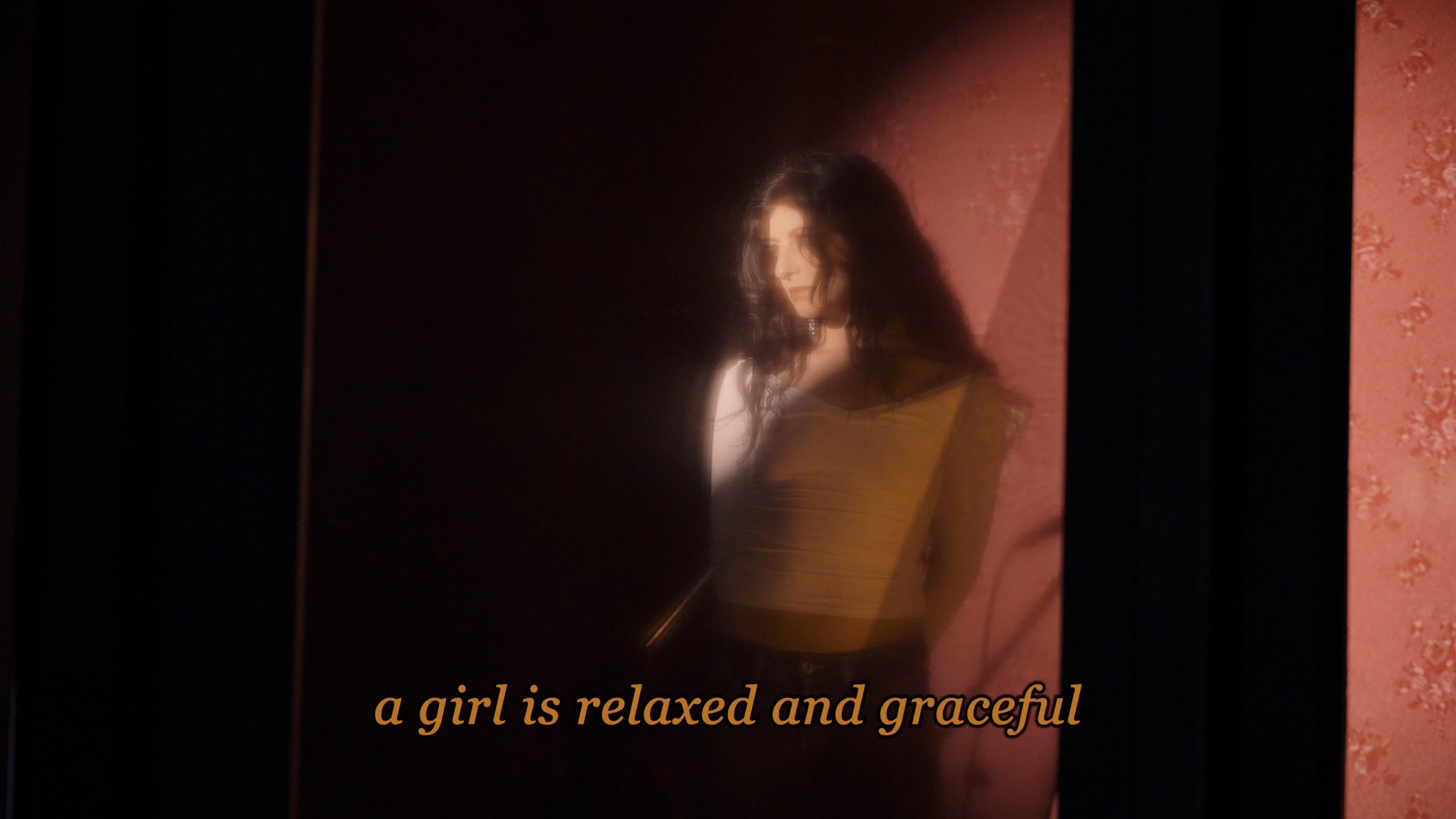
Beauty must be angry as Lisa suggested, 2026, Still Video shot by Paolo Blarzino
Performance showed at Istituto Svizzero, Rome
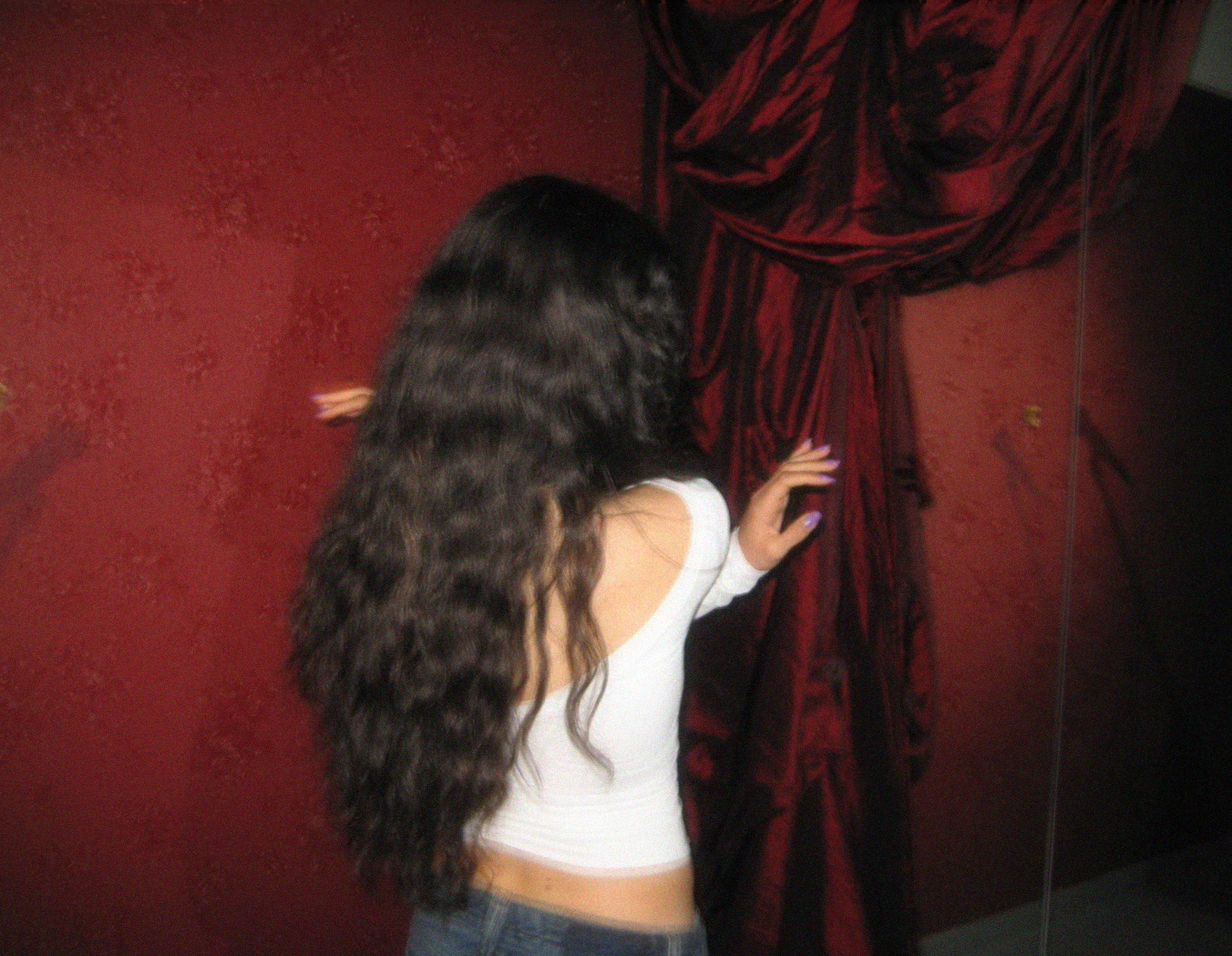
Beauty must be angry as Lisa suggested, 2026, ph. Ika Schwander
Performance showed at Istituto Svizzero, Rome
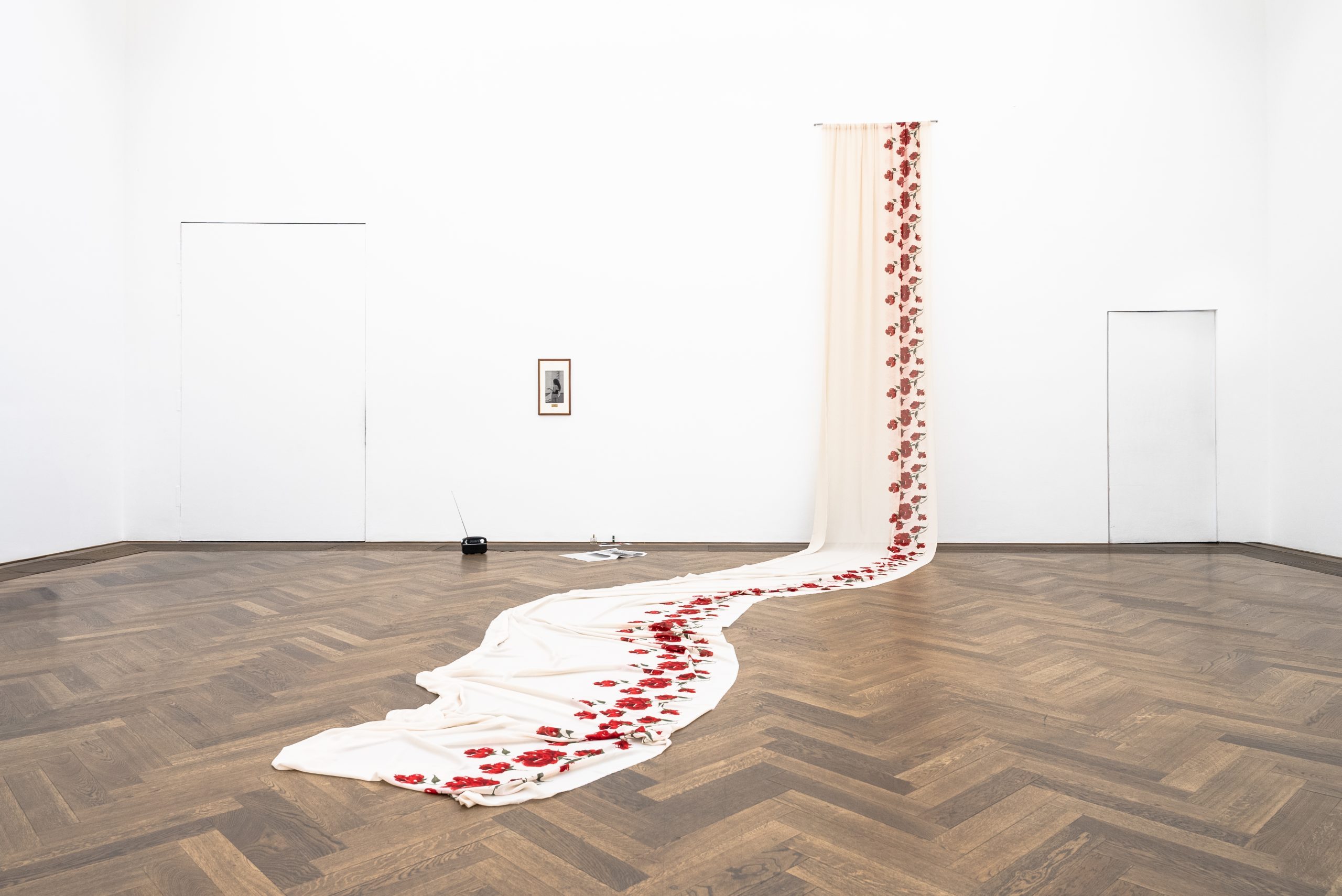
Arrival or the Return, 2025, ph. Irem Güngez Arrival or the Return 2, Performance and Installation showed at Kunsthalle Basel
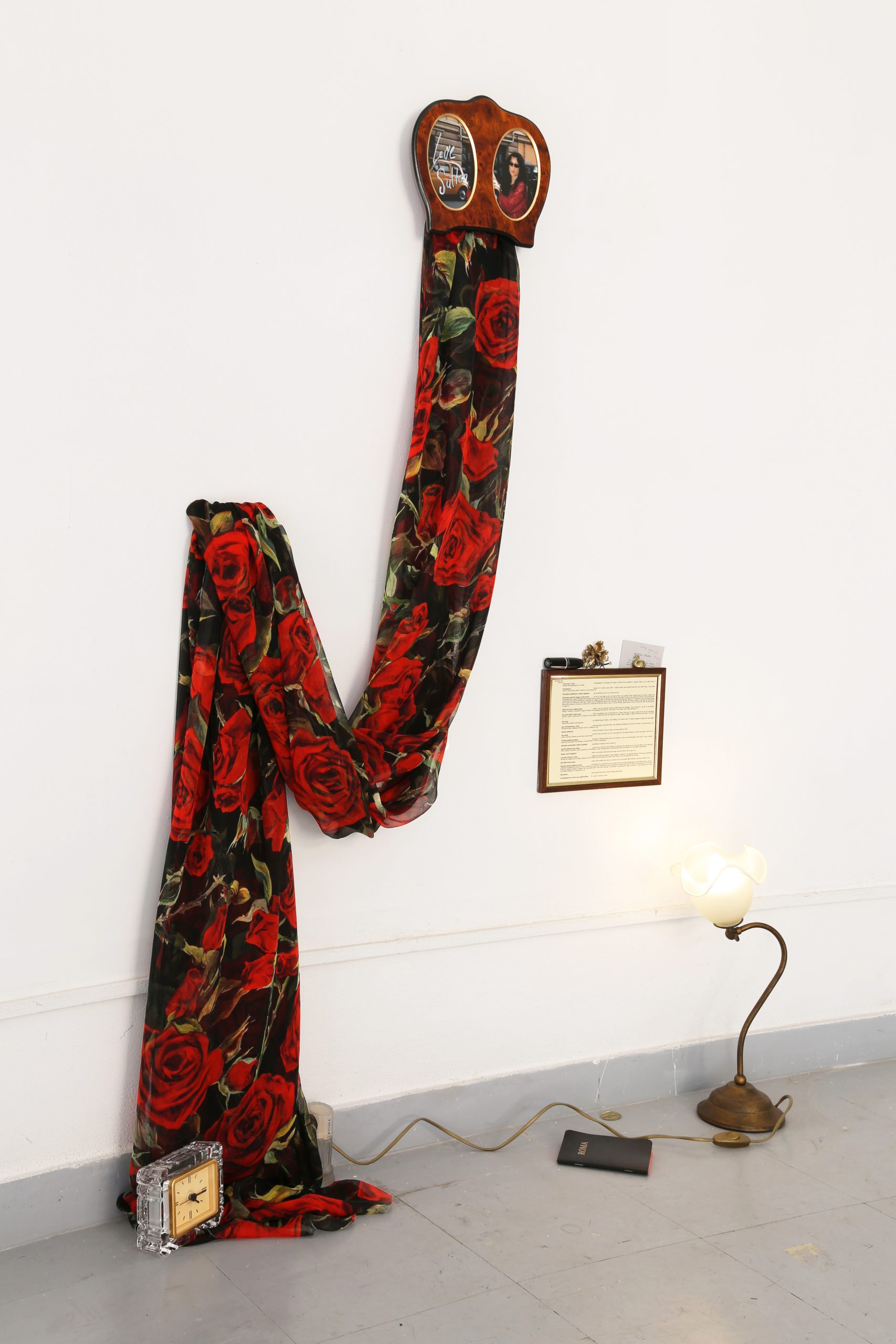
everybody here loves me, 2026, ph. Jacopo Rinaldi
Installation showed at Lateral Roma
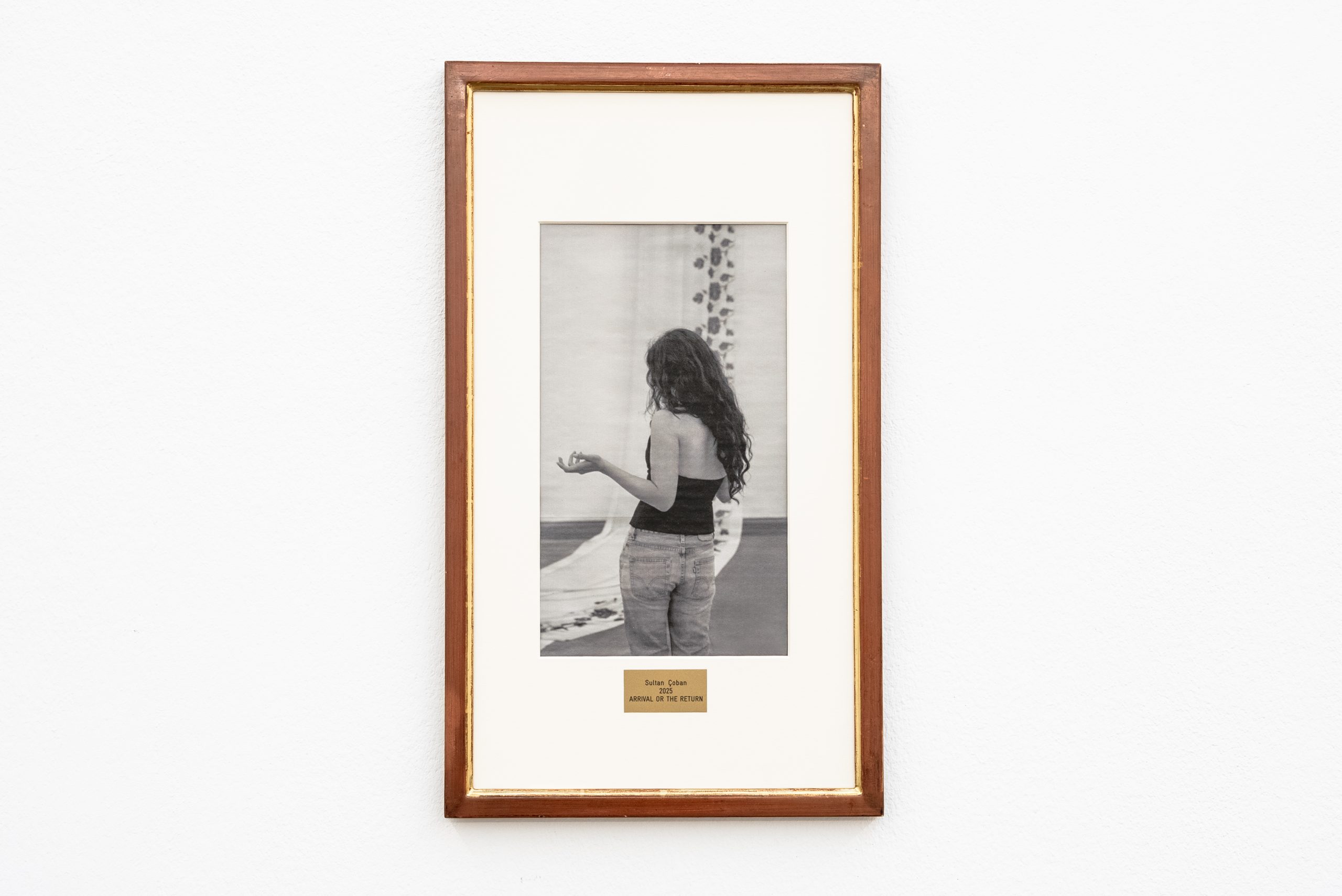
Arrival or the Return, 2025, ph. Irem Güngez Arrival or the Return 2, Performance and Installation showed at Kunsthalle Basel
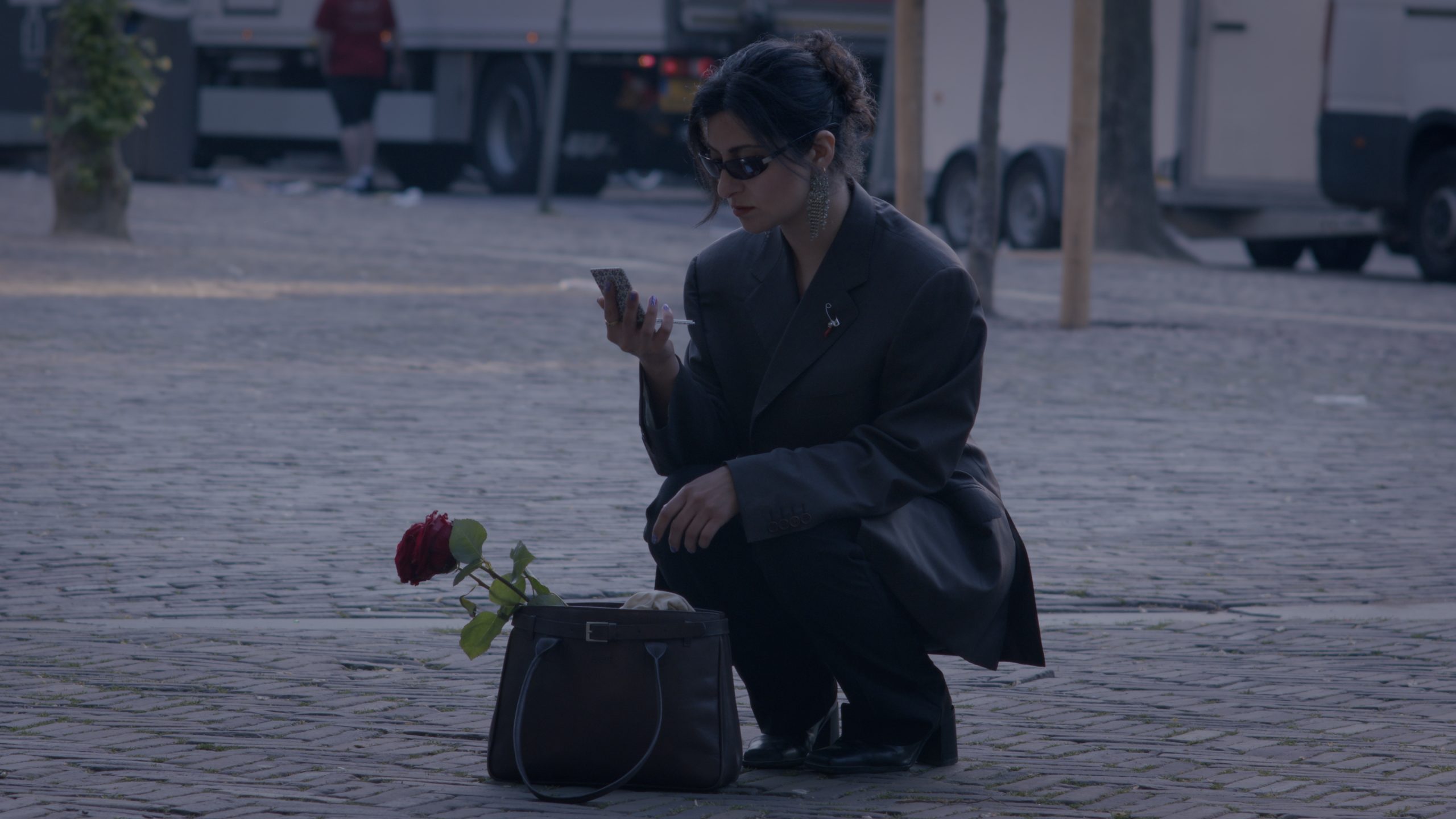
and then I left with & without a trace (be xatirê te), 2025 – still from the video shot by Jonathan Steiger, Performance and Video Installation showed in the Bradwolff Projects Amsterdam and Halle für Kunst Lüneburg
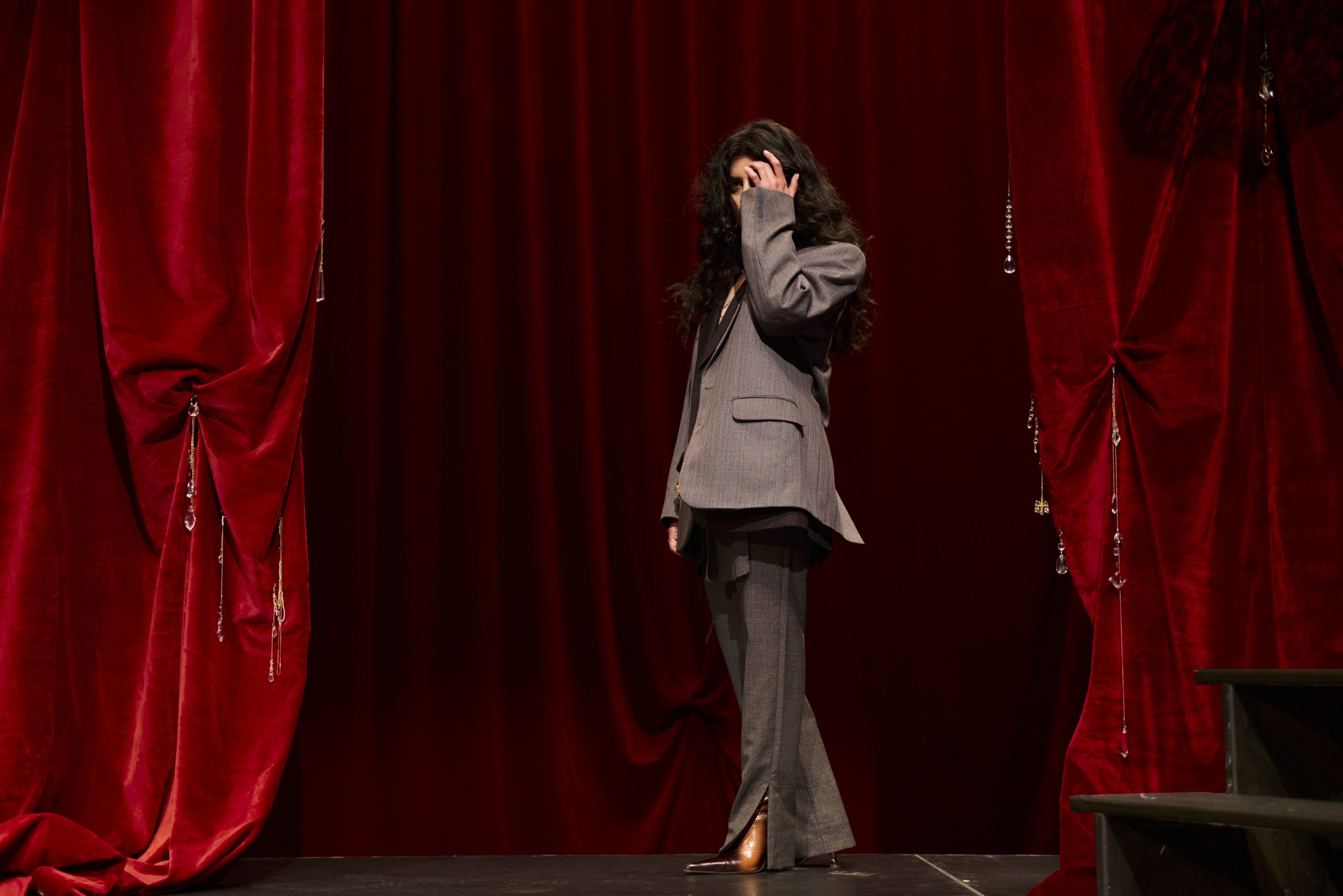
unveiling for a play (act Il, scene l) 2, 2024, ph. Lara Esquada
Performance showed at Gessnerallee Zurich, and LES URBAINES
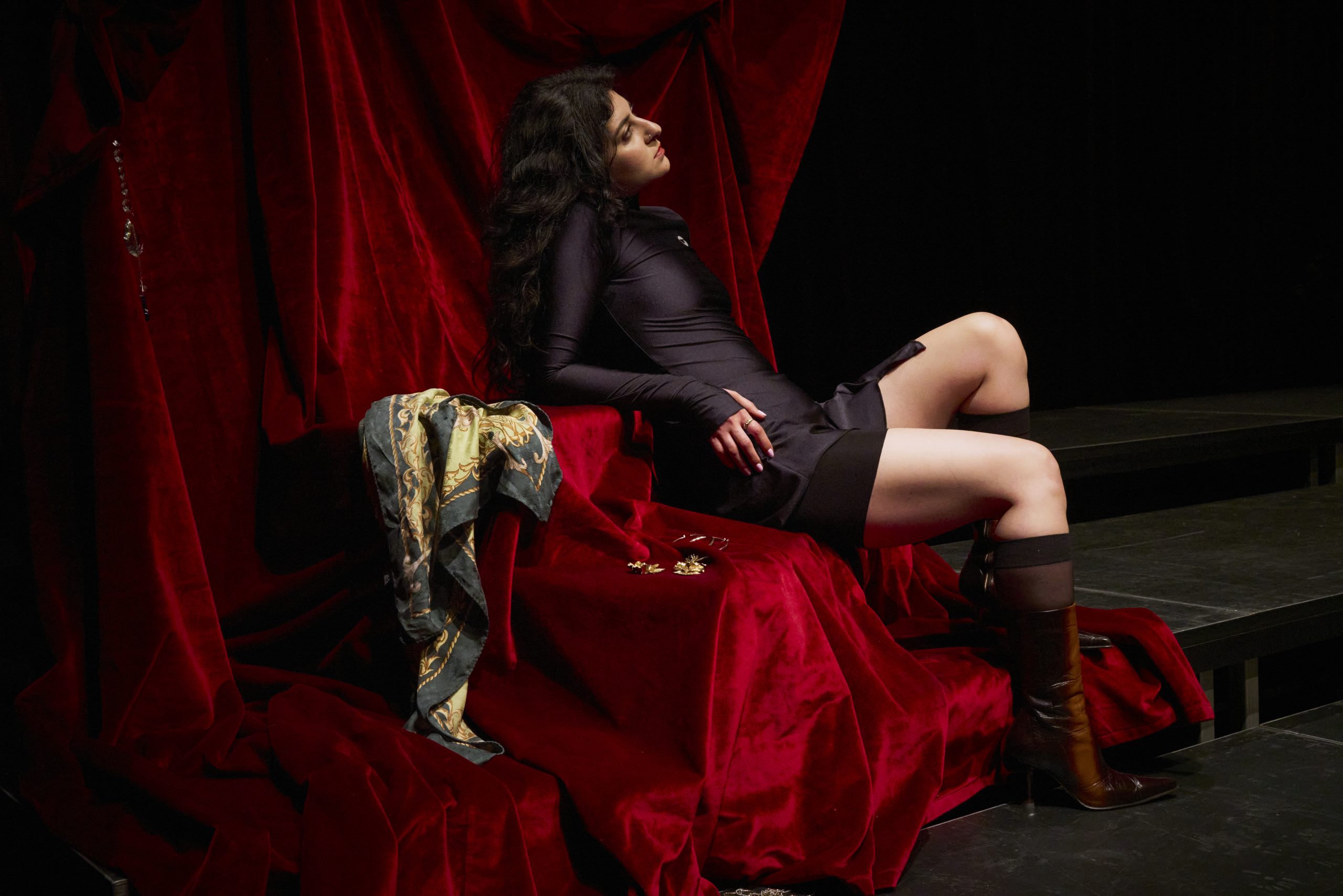
unveiling for a play (act Il, scene l) 2, 2024, ph. Lara Esquada
Performance showed at Gessnerallee Zurich, and LES URBAINES
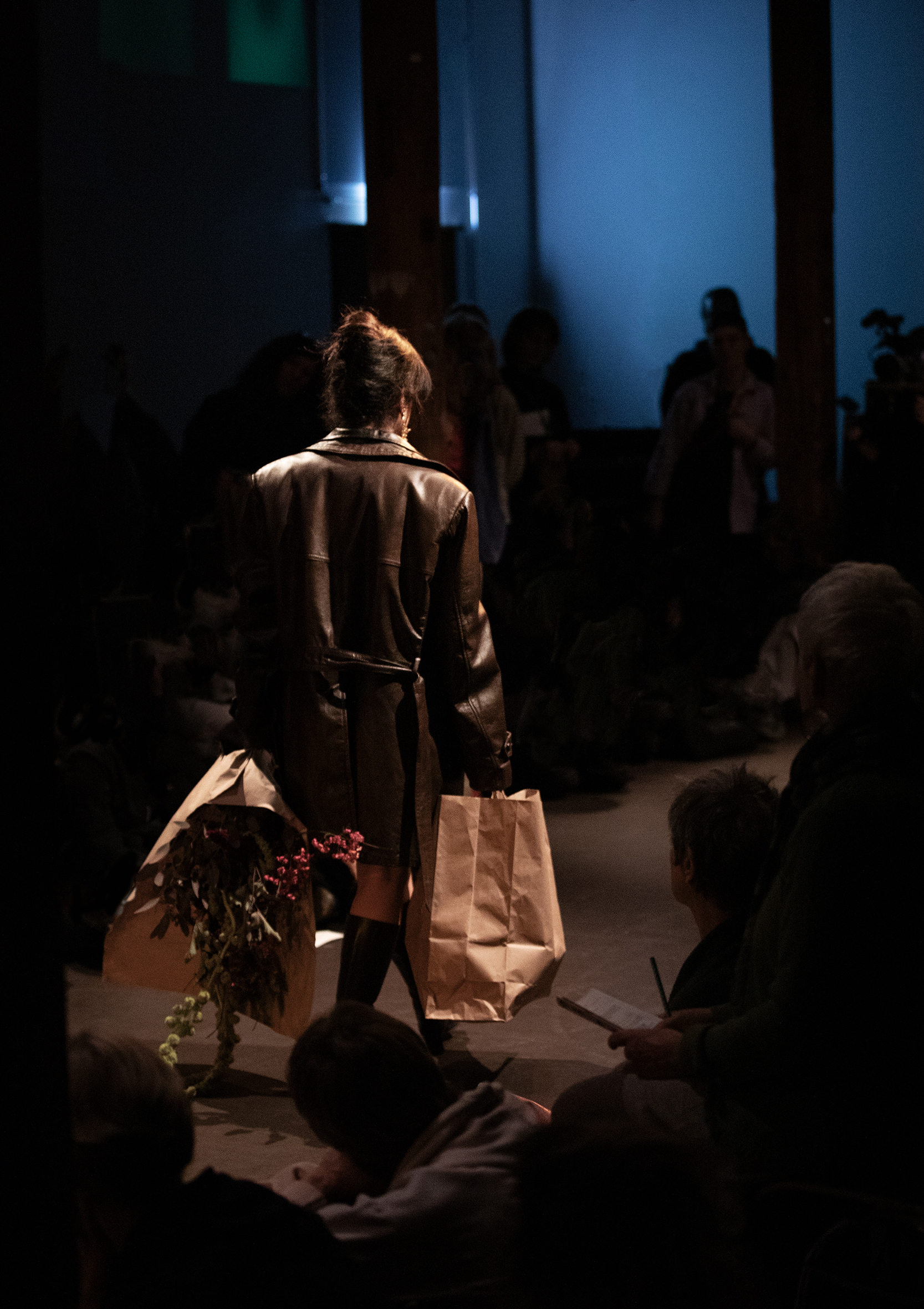
I came knowing I would show up again, 2024 – Karin_Salathé.png
year 2024, Performanceshowed at the Swiss Performance Art Award, Gessnerallee Zurich