The temporary column titled “Close Up” is the result of a collaboration between Flash Art Italia and Istituto Svizzero, and focuses on editorial hosting as a practice of sharing research. “Close Up” is conceived as an editorial space that hosts texts by writers invited by Istituto Svizzero to engage with and reflect on the practices of the artists in residence participating in the Roma Calling 2025/2026 programme.
Eva Zornio (1987) is an artist based in Geneva. Her work explores living systems and the relational and narrative structures that shape us as human beings. Her installations, performances, sculptures, and videos are informed and formed by the notions of embodiment, affect, fiction, and interaction. She earned both her BA and MA at HEAD – Genève. She has exhibited at Fondation d’Entreprise Ricard, Forde, Istituto Svizzero, and Kunst Halle Sankt Gallen. She was nominated for the Bourses de la Ville de Genève (2020) and the Swiss Art Awards (2021). In 2023, she published Who are you performing today? with Pro Helvetia’s Cahiers d’Artistes. In Rome, critically engaged with the intersections of science, vision, and gender, developing an installation that explores how anatomical practices in medieval and Renaissance Italy influenced representations of the female body, using glass as both material and medium of knowledge.
One day, while speaking with the artist Eva Zornio (Arlesheim, 1987), she told me about a period in which she experienced hypnagogic states – moments of paralysis in which her body, suspended between sleep and wakefulness, refused to respond. It was then, she said, that she understood she was afraid of dying: “a fear that seemed to lie somewhere deep within the body.”
To cope with it, she began taking long nocturnal walks along the shores of Lake Geneva near her home, stopping to observe the water. Not to dispel the fear, but to remain before it, before that opaque and shifting surface, allowing her gaze to adapt to the darkness, letting her body register subtle variations in light, distance, and temperature. Remaining there meant accepting that one cannot see everything, that what stands before us cannot be controlled. That gesture – exposing herself without dominating – hints at the stance that informs her practice. It is from this position that her work unfolds, situated at a point of tension where the body becomes both an object of knowledge and, at the same time, a site of experience.
Since the beginning, her work has investigated the conditions that make affects observable and measurable, organizing and translating emotions and perceptions into forms. Her field of inquiry is not simply the body, but the regime of visibility that permeates it.
Starting from a reflection on embodied knowledge, affect, and interaction, the Swiss artist conceives the body as a relational node: not an isolated entity, but a point of intersection between gazes, devices, narratives, and material forces, both exposed to the effects of the world and capable of producing them. The works act within structures, moving through them, placing them in tension, and recomposing them on the sensory level.
Initially trained in biology and neuroscience before seeking expression through visual art, Zornio has direct experience of how scientific knowledge is constructed and legitimized. In her work, science does not appear as a neutral territory, but as a historical and cultural apparatus made of specific protocols, instruments, and images. This background is not merely a biographical anecdote: it constitutes the epistemic matrix of her practice.
Through a multidisciplinary approach that interweaves performance, installation, video, sculpture, sound, and text, the artist translates research environments and institutional structures into spatial and experiential configurations. Her aim is not to illustrate life sciences but to reactivate them as form and operational structure. In doing so, Zornio brings out the tensions between some of the foundational dualisms of the Western tradition: objectivity and subjectivity, body and mind, observer and observed.
The first phase of her research took form between 2019 and 2023 in a series of device-like works that simulate environments for affective assessment. With the projects Reception Space (2019, Fondation Ricard, Paris) and The Aesthetic Emotions Scale (2020, Centre d’Art Contemporain Genève), Zornio implemented her invented “Affective Evaluation” survey, adopting corporate aesthetics and pseudo-scientific protocols to render visible the logics of quantification and data collection that traverse cultural institutions and neoliberal practices of emotion management. This work resonates with what theorist Gregory Sholette has described as “mock institutions” – speculative institutional forms that operate through mimicry in order to reveal, inhabit, and reconfigure the epistemic and political frameworks of contemporary art institutions (Sholette, Gregory. 2011. Dark Matter: Art and Politics in the Age of Enterprise Culture. London: Pluto Press.). Rather than mere parody, these formations function as operative fictions: they expose institutional mechanisms, challenge their authority, and open up alternative modes of knowledge production.
With the solo exhibition Life Lives in Gaps (2021, EAC – Les Halles), this logic expands into space: graphs without legends on transparent panels, an operator leaving traces on surfaces during the opening, an audio signal, and a video mounted on wheels with a performer exploring the para-linguistic capabilities of her face. Production, maintenance, and representation overlap within a deliberately suspended atmosphere; evaluation is no longer a direct interaction but becomes an exhibition structure.
This phase culminated in Who are you performing today? (2023, Löwenbräukunst, Zurich), where the artist and another performer, acting as Affective Evaluation researchers, welcomed visitors and invited them to participate in a brief protocol combining sensory activation of the hands with questions about the emotions perceived in the space. The responses produced both an affective self-portrait and an experiential mapping of the institution.
Something began to shift in 2022. Without abandoning the question of affectivity, Zornio’s practice gradually moved toward a more marked materiality and a more complex spatial construction. This transition was already evident in Pleure-moi une rivière (2022), a solo exhibition at Soul2Soul/RU in Geneva. Here, the exhibition environment – an installation composed of small coloured glass forms resembling embryonic bodies of water distributed on the walls, a video work in which a woman practices somatic exercises, two-way mirrors, and a soundtrack recalling the song of sirens – takes the form of a capsule suspended between technology and an almost mythical dimension. Reflective and transparent surfaces multiply points of view; the visitor merges into the visual device, simultaneously observer and part of the image. Glass ceases to function merely as a substrate and becomes a device that shapes perception and relations: not merely a support, but a membrane, threshold, and perceptual filter.
With the gradual introduction of glass into her practice, Zornio increasingly focuses on the materiality of perception. Transparency, refraction, and fragility allow her to articulate tensions between the visible and the invisible, stability and vulnerability, and interiority and exteriority. In Redevenir poisson (2023, Espace 3353, Geneva), the symbolic reconstruction of the architecture of the Biotech Campus in Geneva – where she was a resident during the preparation of the show – generates a deliberately ambiguous environment through installations: a laboratory of affects, an abandoned open space, a perceptual aquarium.
The cycle Soma (2024–2025) takes things further in this direction. Resembling a procedural apparatus, metal structures host elements of blown, engraved, or silvered glass that react to light and the presence of bodies, producing minimal perceptual events rather than fully formed images. The work reveals itself over time, through imperceptible movements of the spectator and variations in light, configuring itself as a perceptual field rather than an object.
The most recent project, Spellate (She, skinned), carried out during her fellowship at Istituto Svizzero in Rome (2025-2026), marks a further and more radical shift. Developed from research conducted in Rome, Padua, Bologna, and Florence on the history of anatomy and representations of the female body between the Middle Ages and the Renaissance, the work focuses on a historical moment in which the opening of bodies became both an epistemic practice and a public spectacle.
Following Katharine Park’s research (Park, Katharine. 2006. Secrets of Women: Gender, Generation, and the Origins of Human Dissection. New York: Zone Books), Zornio identifies the female body as a figure occupying a dual role in the birth of academic anatomy: not only an object of dissection but also a symbolic and cultural matrix that helped structure the ways anatomy was practiced. Between the thirteenth and sixteenth centuries, post-mortem examinations linked to canonization processes, the emergence of anatomical theatres, and the production of the first illustrated treatises established a new economy of the gaze. The body – and in particular the female body – became a surface to be opened to extract “truth”.
In this context, the progressive expropriation of women’s empirical and ancestral knowledge coincided with the ascendency of male academic medicine founded on direct vision and the authority of the eye. Early anatomical plates depict female figures exposing their reproductive organs in passive or theatricalized postures, while male figures appear active, demonstrative, and almost autoptic. The interiority of the body becomes a territory of conquest, and the woman is simultaneously its threshold and its pretext, at a time in history when the opening of the body still carried an almost sacred dimension: revealing the inside means approaching the mystery of creation.
Entering Eva Zornio’s studio, I encounter fragments rather than a finished work: sketches, material tests, tentative arrangements. There are bits of blown, engraved, or sometimes silvered glass alongside wax, textiles, and reflective surfaces. A low table at once recalls an anatomical theatre and a domestic work surface. From these scattered pieces, I begin to imagine the outlines of Spellate.
Rather than reconstructing historical regimes of anatomical vision, the work seems to move through their spatial and perceptual logic, as if testing how such structures might re-emerge under different conditions. The body is not there yet and perhaps never fully will be; it is approached obliquely, through surfaces, incisions, and thresholds.
Glass recurs throughout these experiments, a material that both reveals and disrupts. What it brings into view never appears entirely stable, as if visibility itself were being subtly displaced.
From these elements, I imagine a work that unsettles the conditions under which it becomes visible. Not a scene of revelation, but a suspension of it. The viewer’s gaze, rather than being directed and stabilized, is turned back upon itself and made conscious of its own history, of the ways in which it has long positioned the body, and particularly the female body, as something to be opened, known, and possessed. What is at stake here is not simply visibility, but the conditions that produce it – what feminist and epistemological critiques have long described as the situated, constructed nature of the gaze.(See Donna Haraway, “Situated Knowledges: The Science Question in Feminism and the Privilege of Partial Perspective”, Feminist Studies 14, no. 3 (1988): 575–599; Jonathan Crary, Techniques of the Observer: On Vision and Modernity in the Nineteenth Century (Cambridge, MA: MIT Press, 1990); Michel Foucault, The Birth of the Clinic: An Archaeology of Medical Perception (New York: Vintage Books, 1994 [1963]). These authors, from different perspectives, have shown how vision is not a neutral or universal faculty, but a historically situated and culturally constructed practice, shaped by epistemic frameworks and relations of power.)
If modern anatomy rests on the premise that opening produces knowledge, Spellate seems to gesture toward another possibility – one in which exposure entails loss, and visibility does not coincide with mastery. What emerges is perhaps the outline of a different kind of attention: one that does not seek to penetrate or resolve but is ready to pause, adjust, and dwell with what resists.
A way of seeing that – as in the image evoked at the beginning – lingers before a dark expanse, allowing the gaze itself to be transformed. Not to grasp an object of perception but to be there with it.
Eva Zornio, In little slits lives the life, view of the solo show ‘Life lives in gaps’, at EAC – Les Halles, Porrentruy, 2021. Performer: Axelle Stiefel. Photography of Sebastien Verdon
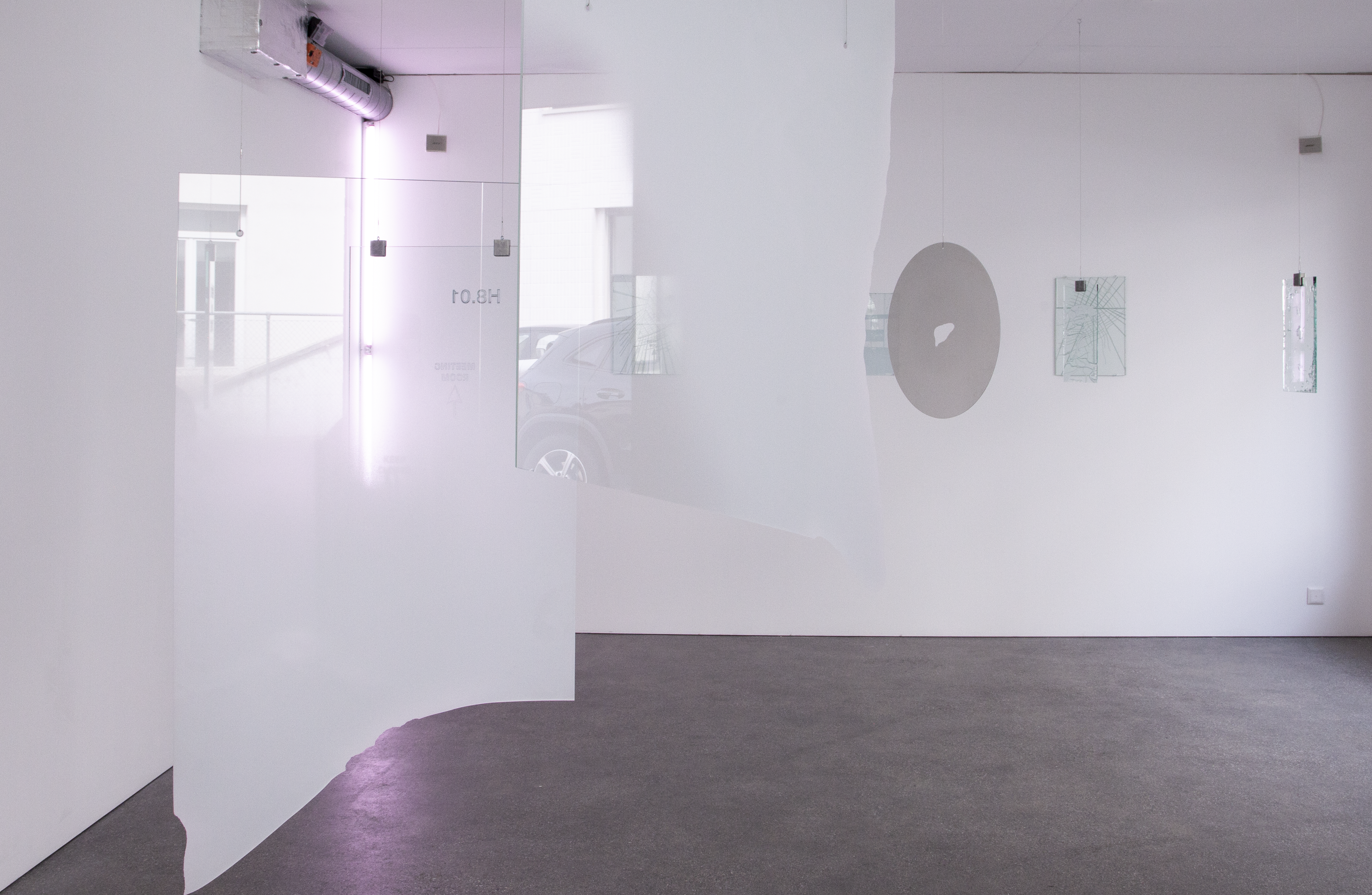
Eva Zornio, Redevenir poisson, installation view, solo show at Espace 3353, Genève, 2023. Photography of Anastasia Mityukova
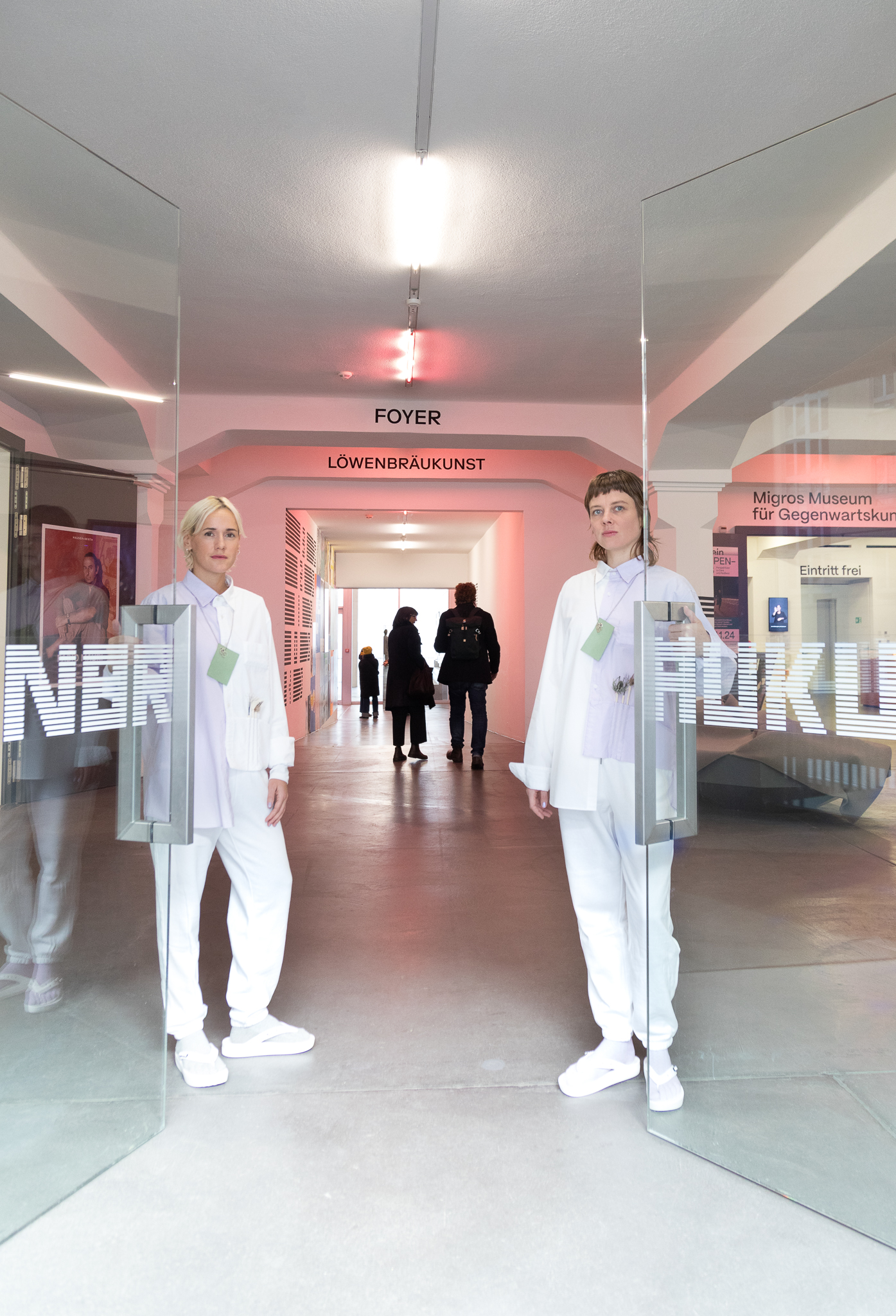
Eva Zornio, Who are you performing today?, performance at Löwenbräukunst, Zürich, 2023. Performers: Eva Zornio and Marie Popall. Photography of Lily Pellaud
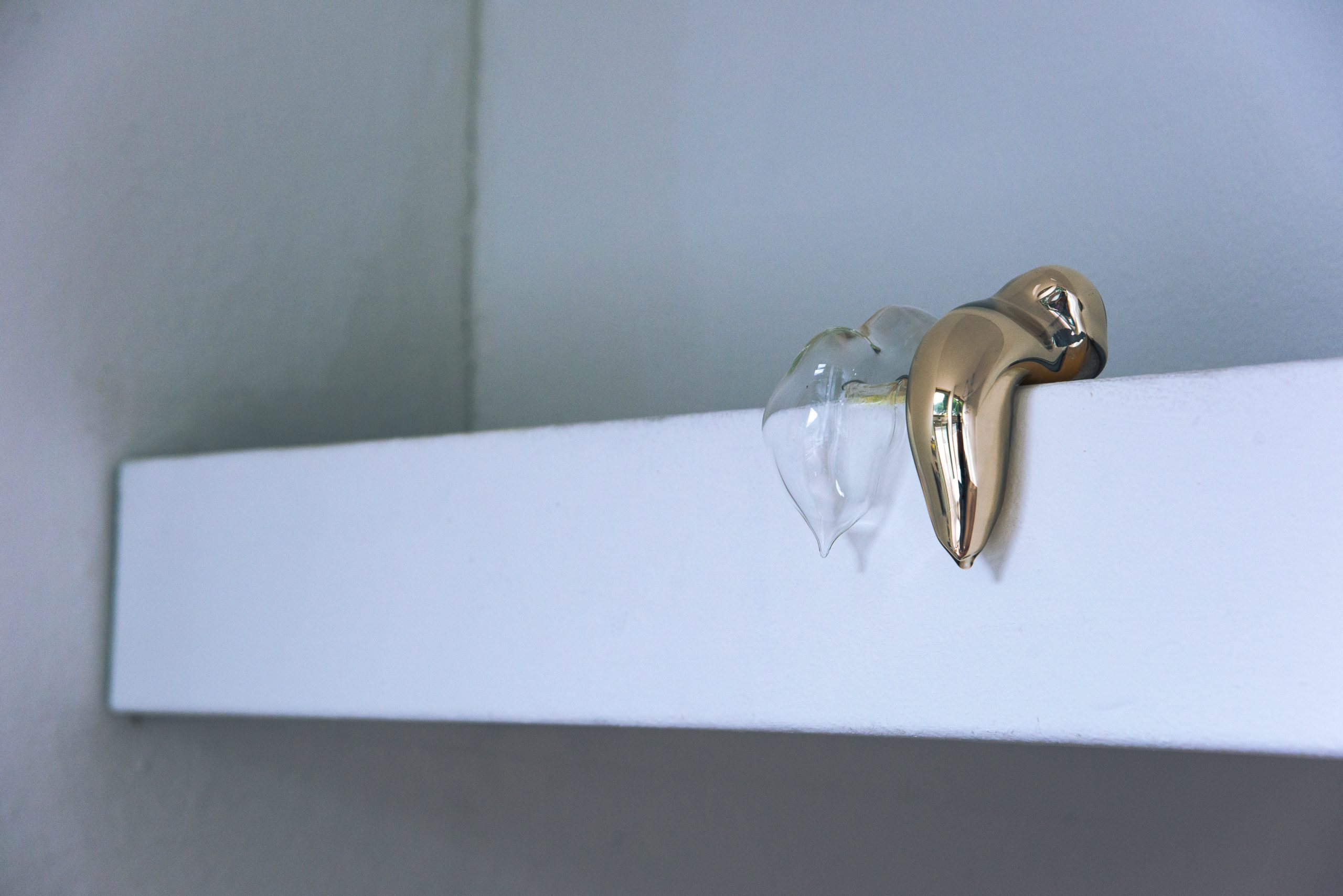
Eva Zornio, Soma (sense of the senses), detail of the installation, solo show at Spazio Lampo, Chiasso, 2024. Photography of Sarah Mathon
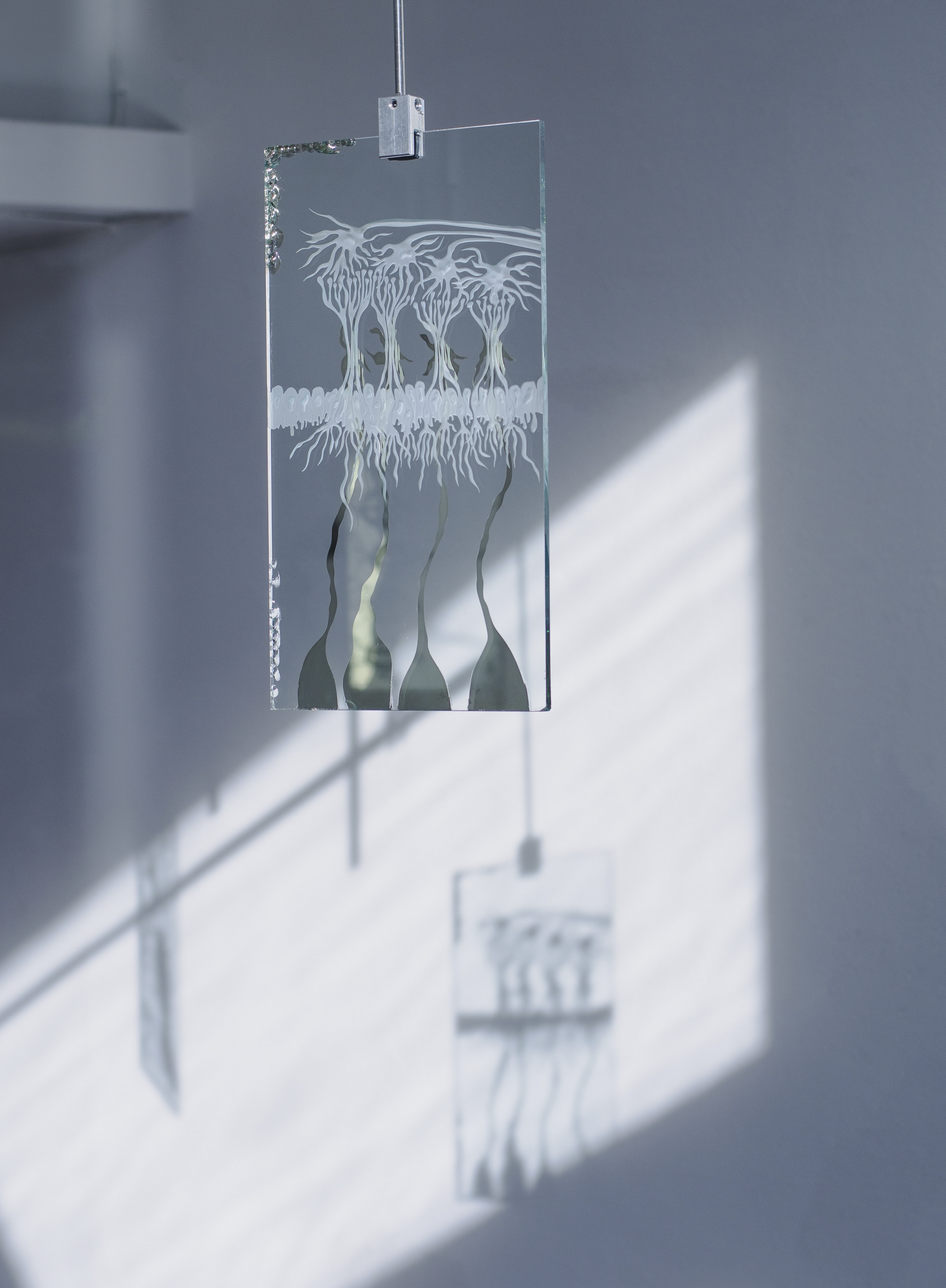
Eva Zornio, Soma (sense of the senses), detail of the installation, solo show at Spazio Lampo, Chiasso, 2024. Photography of Sarah Mathon
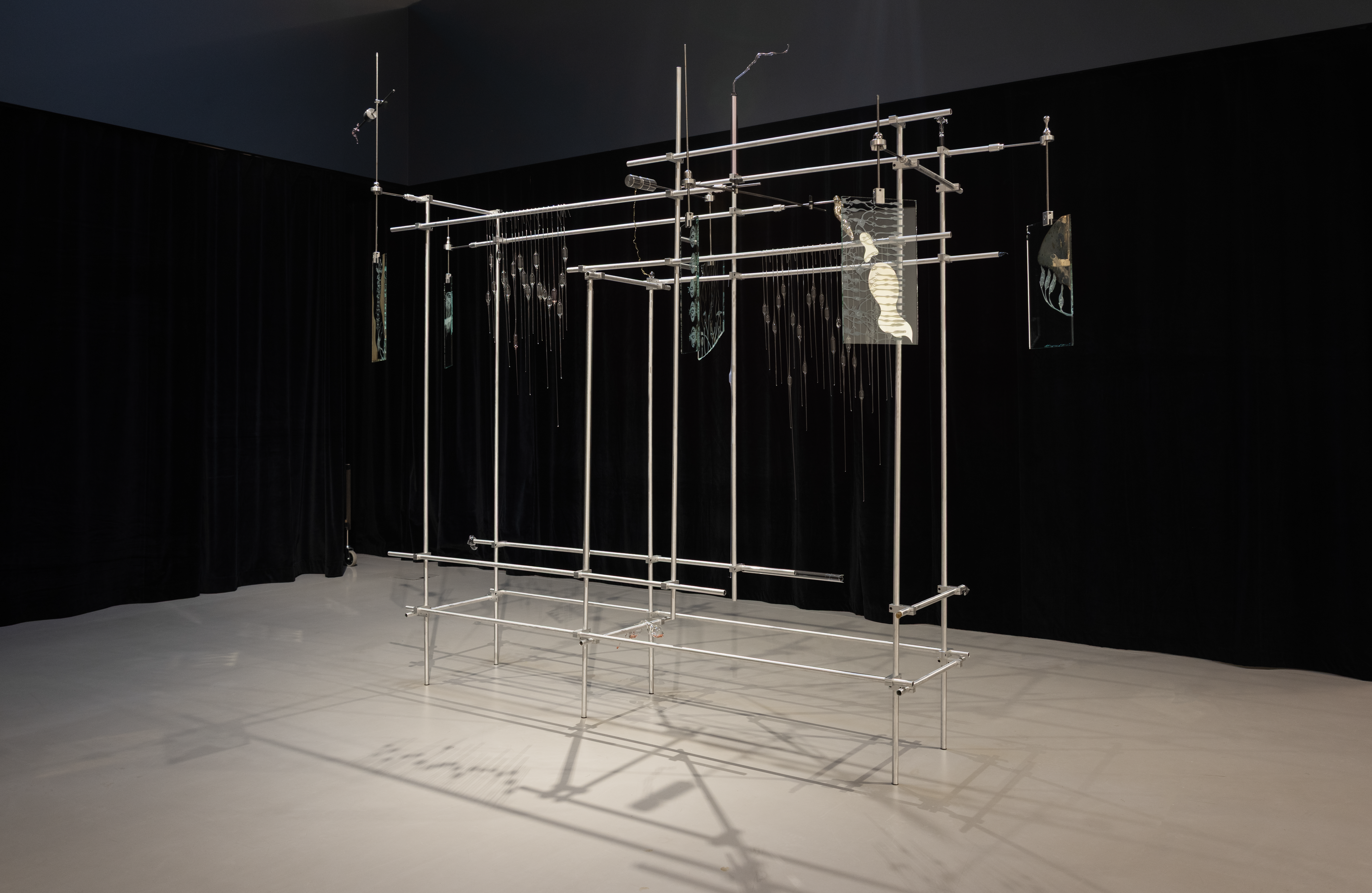
Eva Zornio, Soma (vulnerability is a fantastic power), part of the group exhibition ‘Visions’ at FMAC, Geneva, 2025, Photography of Remy Ugarte Vallejos
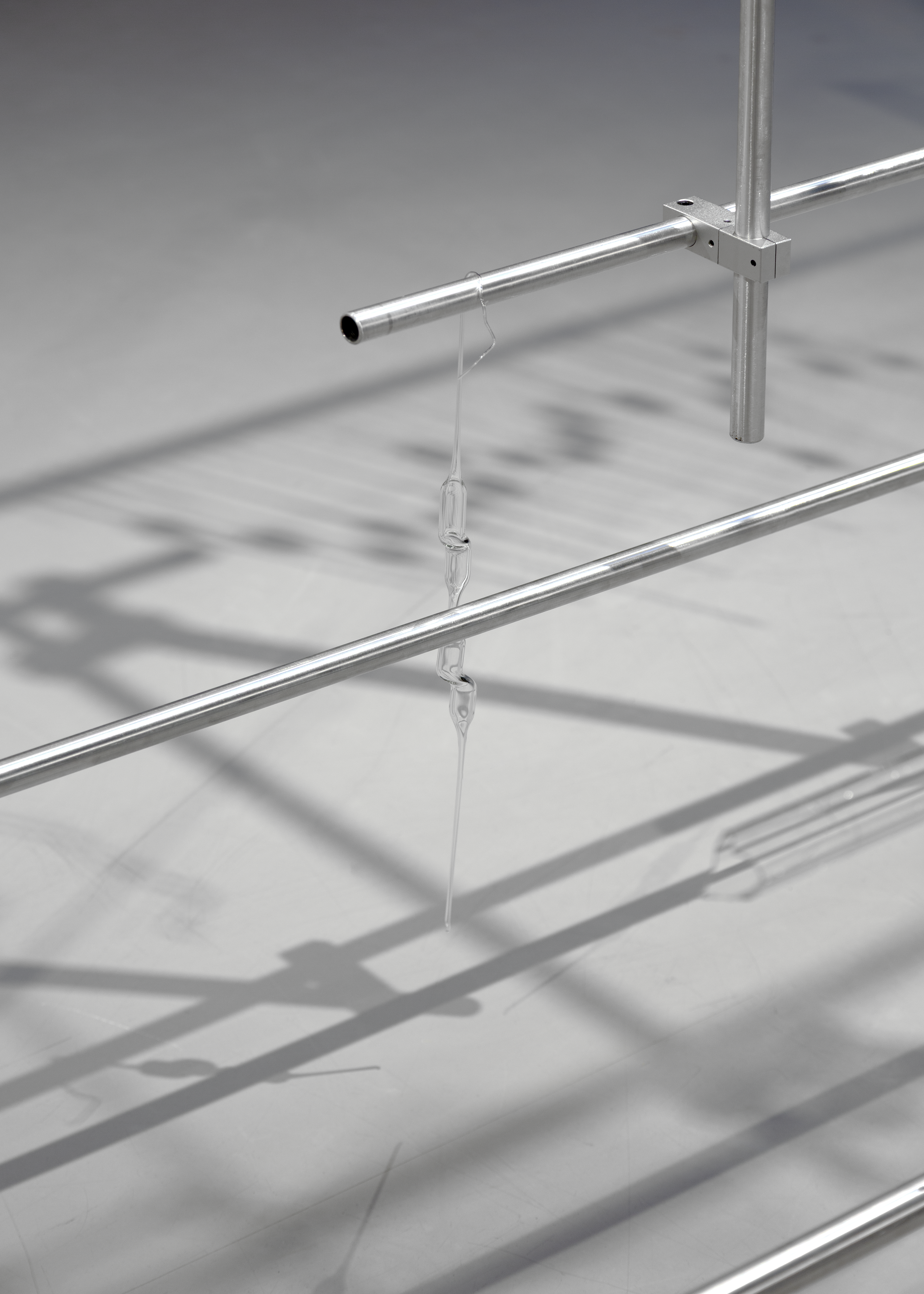
Eva Zornio, Soma (vulnerability is a fantastic power), detail of the installation, part of the group exhibition ‘Visions’ at FMAC, Geneva, 2025, Photography of Remy Ugarte Vallejos
Eva Zornio, High tide low tide (2022-2026), part of the group exhibition ‚Rivages‘, Le Commun, Geneva, 2026. Was previously presented at Soul2Soul/RU as part of the solo exhibition ‘Pleure-moi une rivière’ in 2022. Photography of Remy Ugarte Vallejos
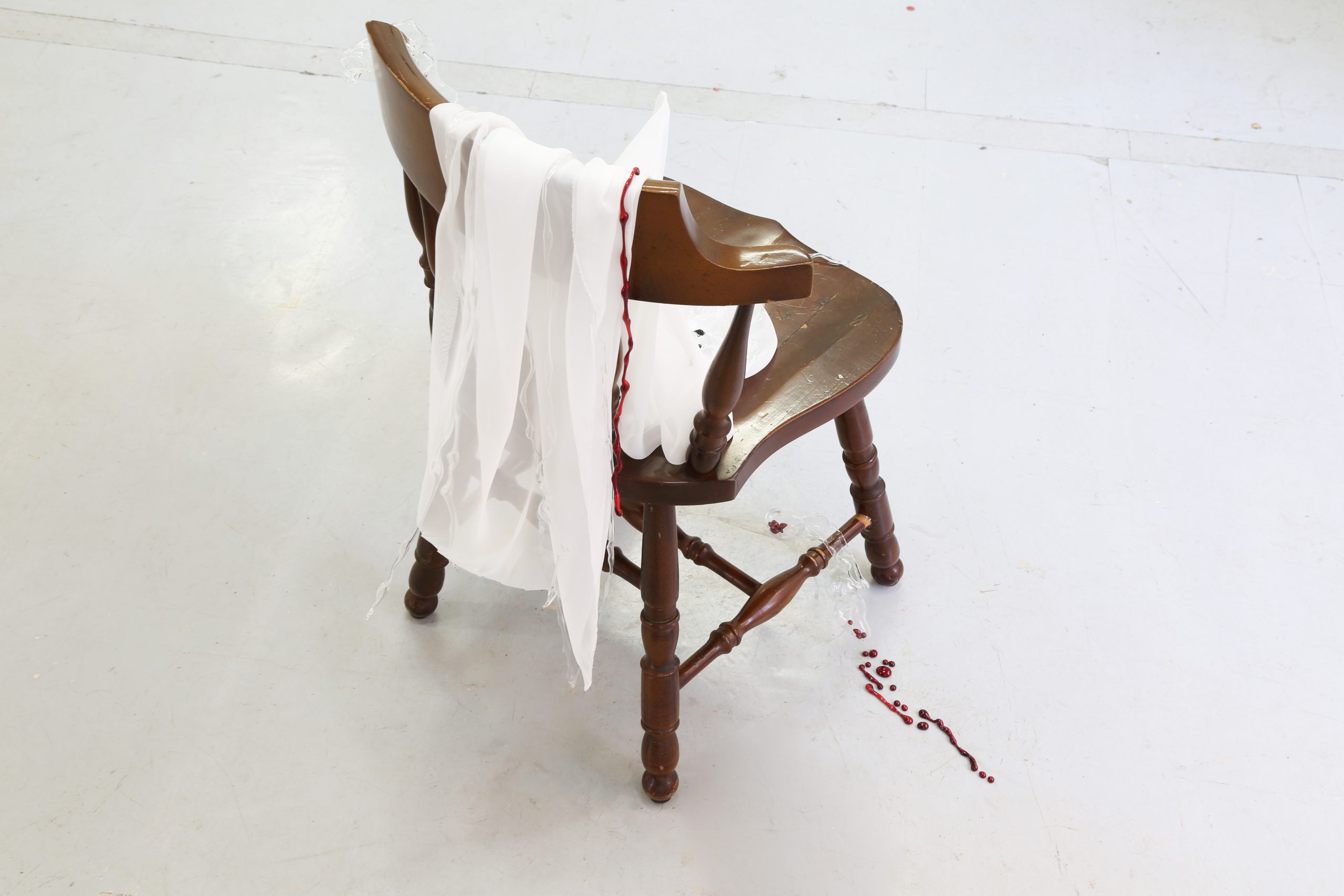
Eva Zornio, The secrets of women are revealed only by the diligent hand, new production for the group exhibition ‚Roman Rhapsody‘, Lateral, Roma, 2026. Photography of Jacopo Rinaldi