The temporary column titled “Close Up” is the result of a collaboration between Flash Art Italia and Istituto Svizzero, and focuses on editorial hosting as a practice of sharing research. “Close Up” is conceived as an editorial space that hosts texts by writers invited by Istituto Svizzero to engage with and reflect on the practices of the artists in residence participating in the Roma Calling 2025/2026 programme.
Viola Leddi (1993) is an artist based in Geneva. Her practice, which moves between painting and sculpture, explores the processes of vision and their aesthetic and political implications in Western modernity. Inspired by feminist epistemologies, her works challenge the modernist canon of representation, which is based on a disembodied and dominating gaze. She completed the Work.Master program at HEAD – Genève and has exhibited at FRAC Champagne-Ardenne, Pace Gallery in Geneva (2023), Ordet in Milano, Triennale Milano (2023), and Liste Art Fair Basel (2022). She is a co-founder of the Altalena collective. In Rome, she engaged a group of young artists in a workshop that interweaves materials from local archives with self-narration practices, creating a work that questions the city’s historical memory.
Across her painterly and sculptural practice, Viola Leddi is often engaged in navigating the socio-political formations that shape feminine identities and behaviours through the lens of the so-called Western canon of art history. She does so not without a sense of estrangement from the factors behind the lasting presence of certain images and the parlous fascination they exert, but also with a belief in the possibility of reusing them to make space for what has been repressed, specifically through their reproduction. After all, that very canon, like any other process of retrospective legitimization of an origin story, is inseparable from the society which created it (in this case, a Eurocentric, patriarchal society) and Leddi has a specific interest in the works of male painters during the Fascist regime in Italy.
The setting of Leddi’s “Post Show” series (2025) is a nondescript exhibition space in the aftermath of an unspecified exhibition. White plinths are disseminated in and before all three paintings, which are seen from above in a quasi-forensic, aerial point of view. Even if they are empty, the plinths bear the traces of their function, i.e., the support of an artist’s work and its institutional accrual of value, in the form of bits of dry tape or exhausted nails left above them. Marks on the linoleum floor tell of heavy bodies that have been dragged across it – an innuendo of violence reinforced by the disembodied limbs at work there, either holding an intangible veil or putting their weight, with weightless grace, on a small cube. Both cite portions of Felice Casorati’s painting Il concerto [The Concert, 1924], where the representation of a group of naked women looks like a ruse to stage a dramatic sculpting of forms and light rather than the intention of telling a story, let alone their story. As if to say, carelessly, their bodies function as props as much as the plinths do. Fragments of torn paper stipple the floor, sometimes coalescing in piles of impossibly transparent sheets where one may or may not recognise a drawing of a floor sculpture by Carl Andre and of a body silhouette by Ana Mendieta, or perhaps a drawing of a 3D model of a face… or is it a metaphysical mannequin? Among them, the presence of a drawing by Vera Molnár, where she deconstructed the lines of Albrecht Dürer’s signature logo and recombined them into her own, is indicative of Leddi’s allegorical approach to the canon, one that substitutes the original meaning with a reframing that shifts forms and implications.
Since the 1970s, feminist art historians have pointed to the structures and discourses at play in the phallocentric history of Western art. For example, Lynda Nead has argued that the (always female) nude has been transformed into a shorthand for “Art,” where “natural matter” (the unruly and unformed characteristics of women and paint) is tamed into a cultural form (a sealed, pleasant whole to the gaze). Griselda Pollock and Rozsika Parker have written about the central role that “a negated femininity” has had in the confirmation of the male creative genius together with the idea that art is the expression of an ungendered individual with only formal intentions. The aforementioned painting by Casorati shows well the purpose of this critique: there, a sovereign subject, insofar as female, can be differentiated into an object of languid contemplation at the hands of the male painter, who is both producer of the image and its consumer. Similarly, Lucy R. Lippard has noted how media such as embroidery or quilting have been relegated to craft-making unless a male artist such as Claes Oldenburg employed it, even if the sewing was done by his then wife Patty Muschinski, an artist and poet.
Leddi’s poetics operates at a symbolic level in the linearity of the canon by sliding a multitude fragments into an ideal wholeness, herstories into History, the creativity of the collective into that of the individual, what has been called “women’s hobby” into “fine art.” In fact, the composite imagery in Leddi’s works is drawn mainly from personal memories of her friends, pictures chosen and painted together (each in her own brushstrokes) with artists Kelechi Amaka Madumere and Melissa Steenman, who are collaborators in Leddi’s Geneva studio, beauty accessories, and tools for hobby crafts. In this process of remaking, notions of value and authorship are put to the test in reciprocal loops of reification and distribution, always in the name of their ideological deconstruction. It is a process where Leddi openly embodies her role as director and spectator of her meditative vistas.
Close to the Pictures Generation, her collagist practice brings together materials that are copied on the canvas: never the real “thing” but its mediated mediation. This is made possible via the postmodernist use of many techniques in intricate layers: drawing, photography, digital manipulation, 3D modelling, painting, that all build up in strata of manual and mechanical means of reproduction, of the painterly and the projected-photographic, of the free gestures and the use of masks and stencils. The hazy atmosphere is conferred in the final step, the airbrush, a tool introduced in the late 19th century to retouch photographs. In Leddi’s hands, it becomes a way of painting at a distance, like a hovering ghost, a shadow that briefly darkens the scene, time deposited as dust particles. The result is an artificially homogenized space obtained through an almost cinematic edit, via sprayed modulations of light and shadow. Under such a canopy, the photographic realism of the scenes, where objects and images are not scaled up but only transferred onto the canvas via puffs of paint, is belied by the multiple dimensional planes occupied by the objects, as if to say: everything around you has fallen apart.
Interestingly enough, another series of Leddi’s paintings suggests they are set in the aftermath of some event. However, what remains here is mostly an eerie feeling. Indeed, the scenes are constructed around a void, around an absence instead of a presence, around the moment before a frightening question. Patterns of Translation and Patterns of Recognition (all works, 2024) are views of her wooden-floored room in Geneva, again seen from a foreshortened aerial point of view, with the dramatic vignetting suggesting that the scenes have been briefly illuminated by a flashlight. Here the artist has portrayed herself for the first time, as a pair of legs reflected in a free-standing mirror or as a half-bust shadow stretching across the floor. There, the marks seem less incidental and more deliberate, with one of them resembling an eye, the other resembling an optics diagram. Pieces of torn paper feature conceptual works by Hanne Darboven, scribbles of butterflies and fairies, Toyen’s painting Le Reste de la Nuit (1934), cutting dies for hobby craft, but also little acts of rebellion such as a graffitied rat-king. Here and elsewhere, personal objects such as a hair clip or decorative elements such as an empty heart-shaped photo holder are brought together. The suspended and alienated ambience coalesces the dreamy sweetness of Magic Realism with the disquieting crunch of digital surveillance.
It is tempting to try and collect all the pieces, to try and recompose the identity of the subjects of Leddi’s paintings, but this effort would be pointless. Because in her mostly blue compositions, both in colour and in emotional tone, Leddi gathers as much as she disperses, reveals as much as she complicates, represents as much as she destroys. Her works seem engaged in a laborious reckoning with the past and its long shadow on the present, in acknowledging the violence that accompanies being sculpted by a culture and sculpting oneself.
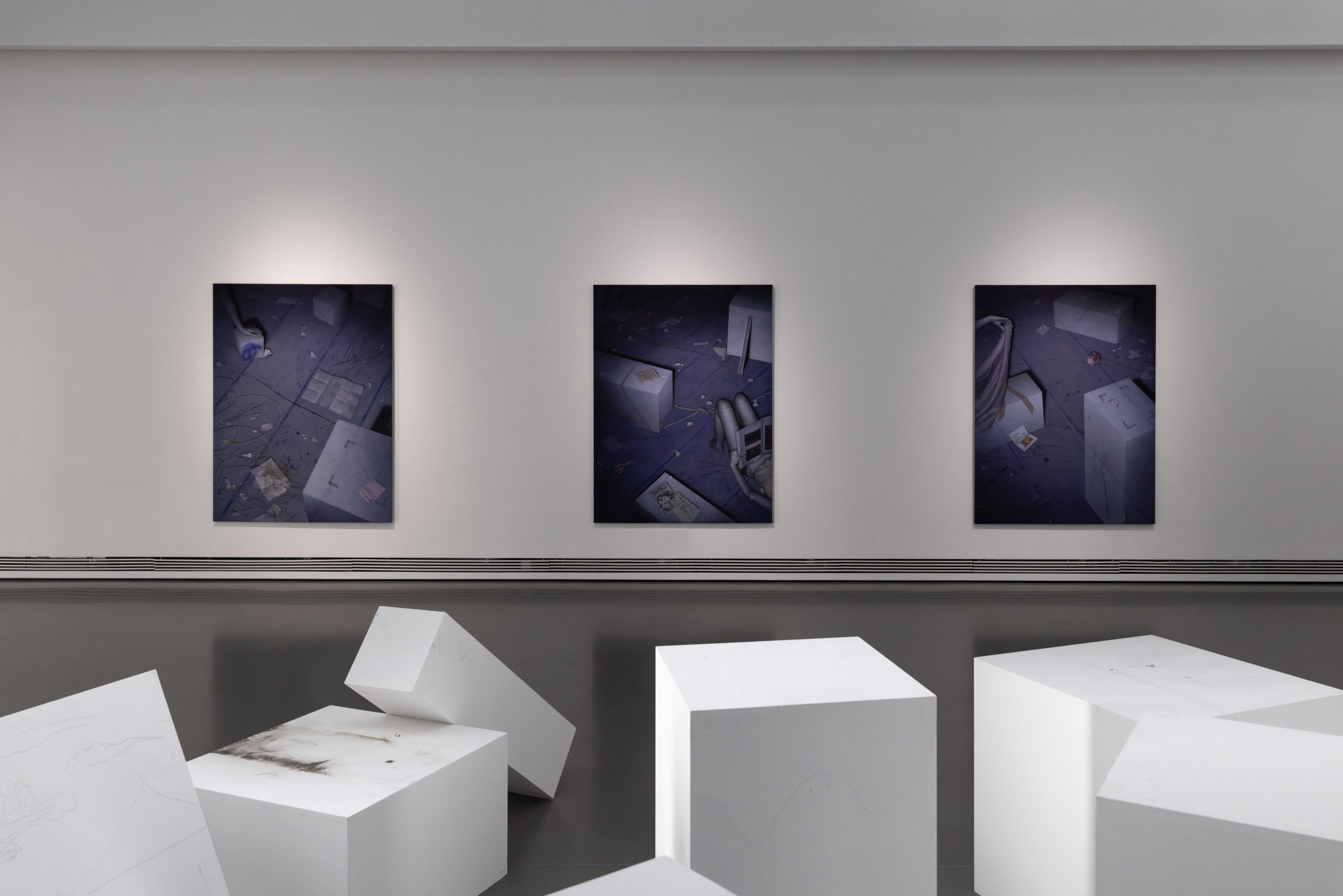
Dear Hateful Spirits, installation view at TAG Art Museum, Qingdao, 2025, ph. Shaoli Huang, courtesy TAG Art Museum and VIN VIN Vienna
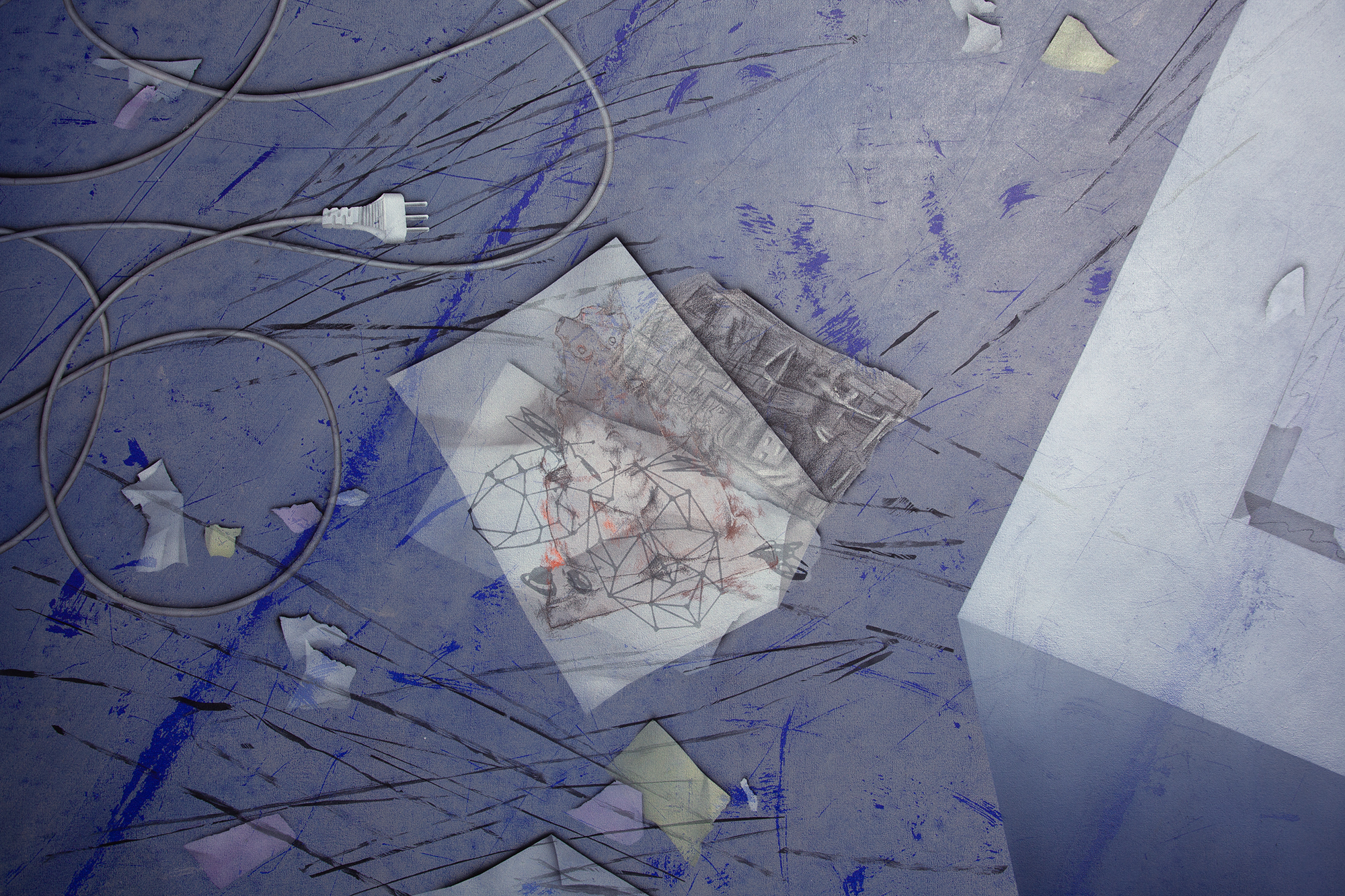
Post Show 1, 2025, detail, ph Viola Leddi Studio, courtesy the artist and VIN VIN Vienna
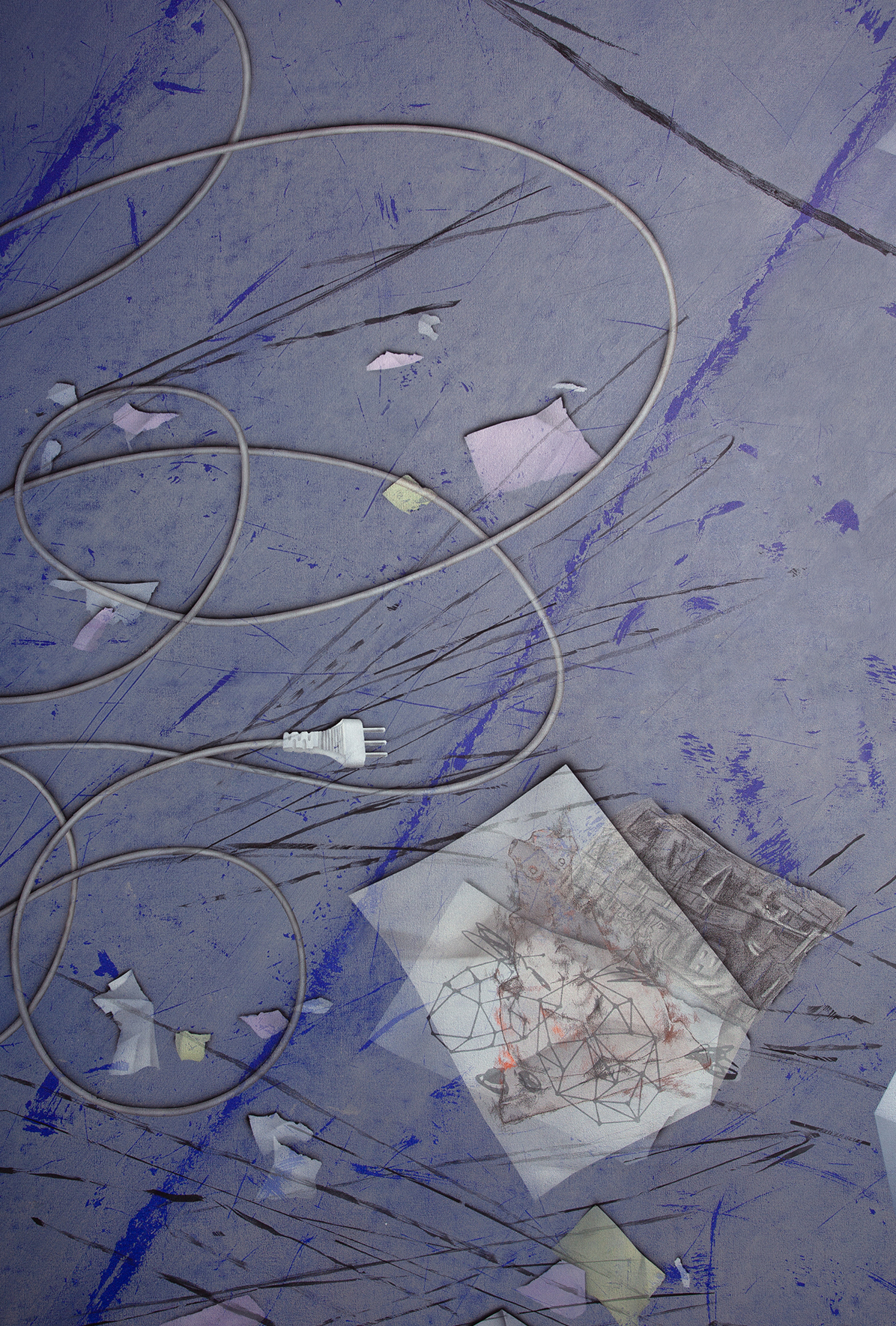
Post Show 1, 2025, detail, ph Viola Leddi Studio, courtesy the artist and VIN VIN Vienna
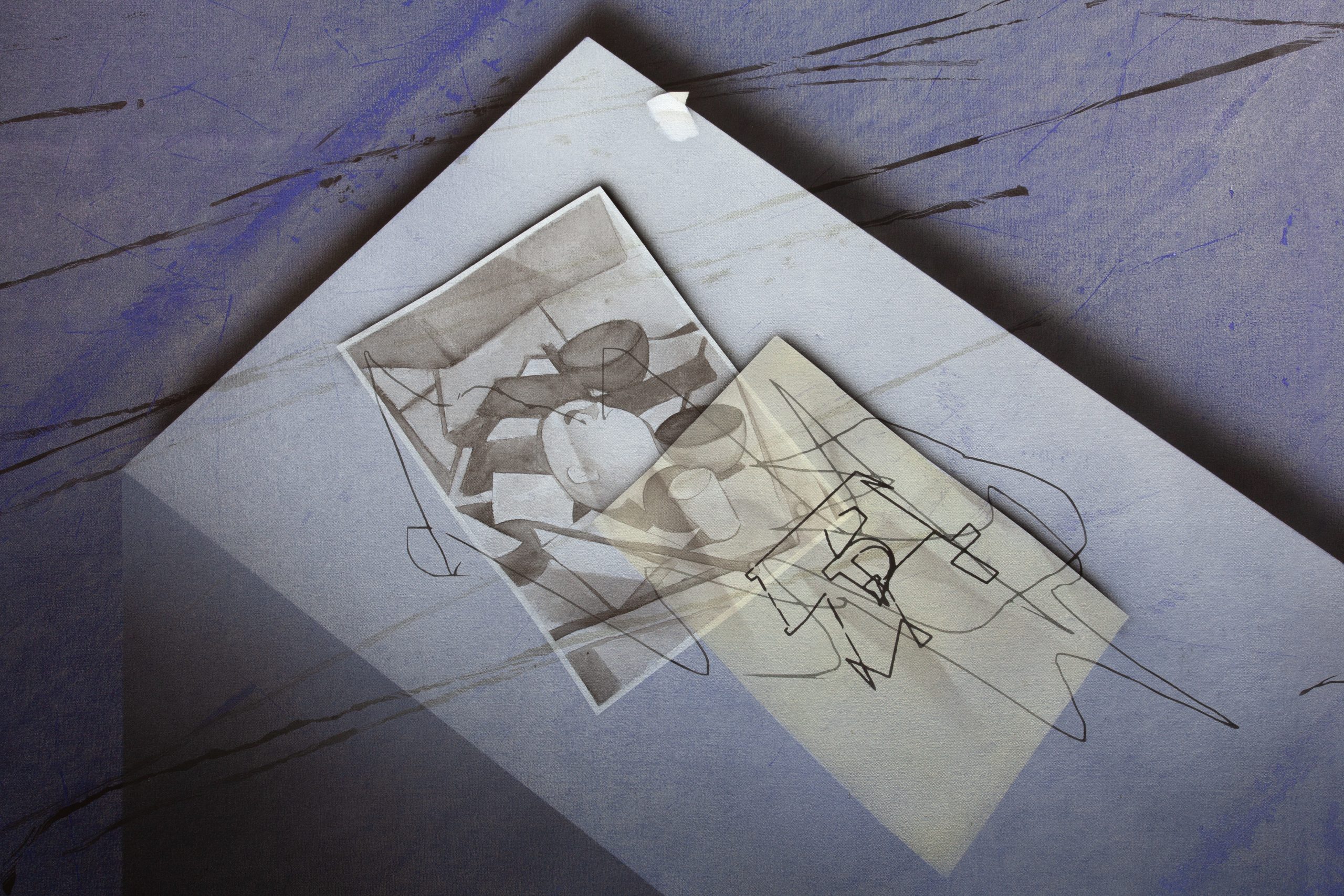
Post Show 2, 2025, detail, ph Viola Leddi Studio, courtesy the artist and VIN VIN Vienna
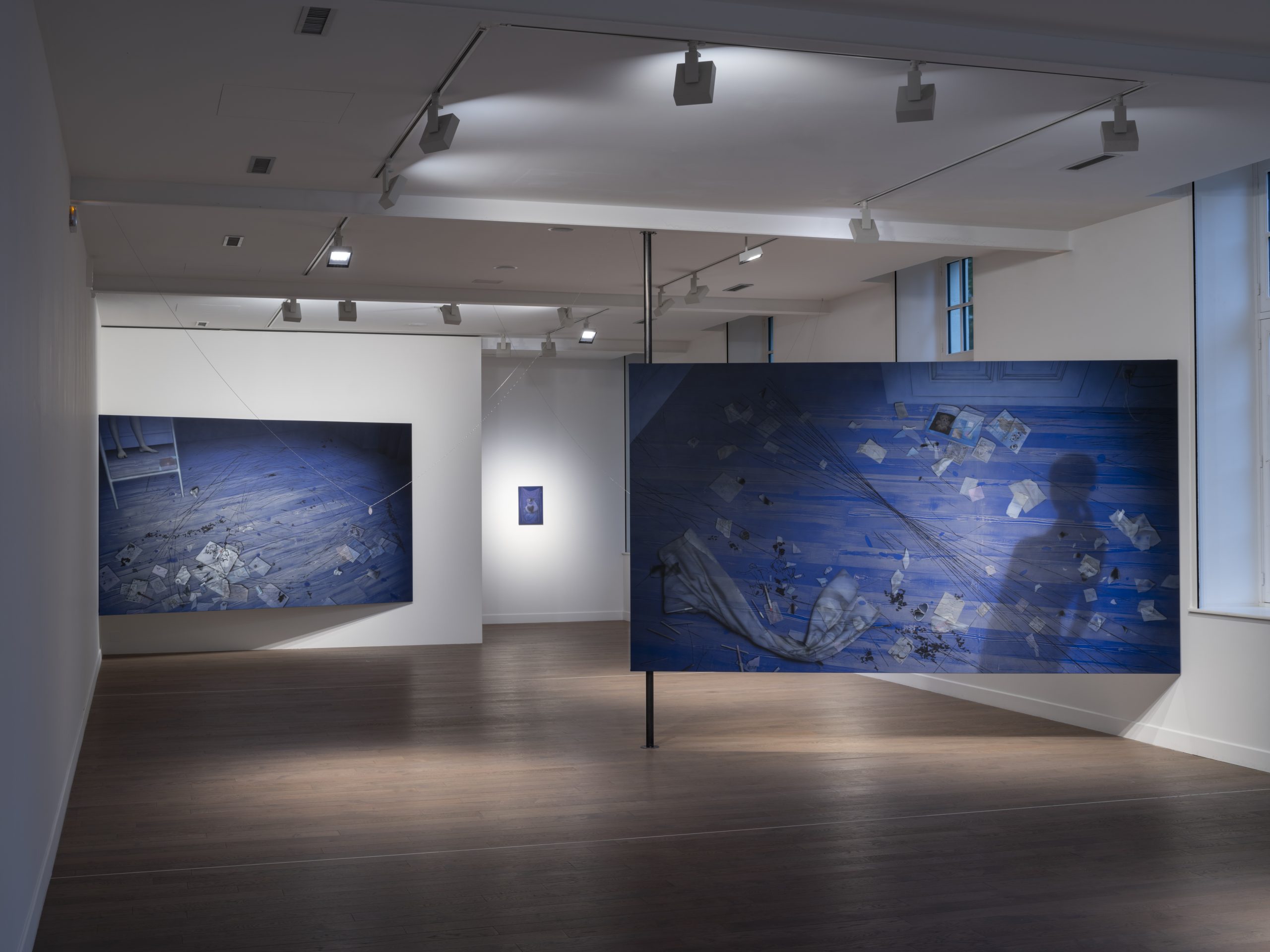
Pupille, installation view at FRAC Champagne Ardenne Riems, 2024 ph. Martin Argyroglo, courtesy FRAC Champagne Ardenne and VIN VIN Vienna
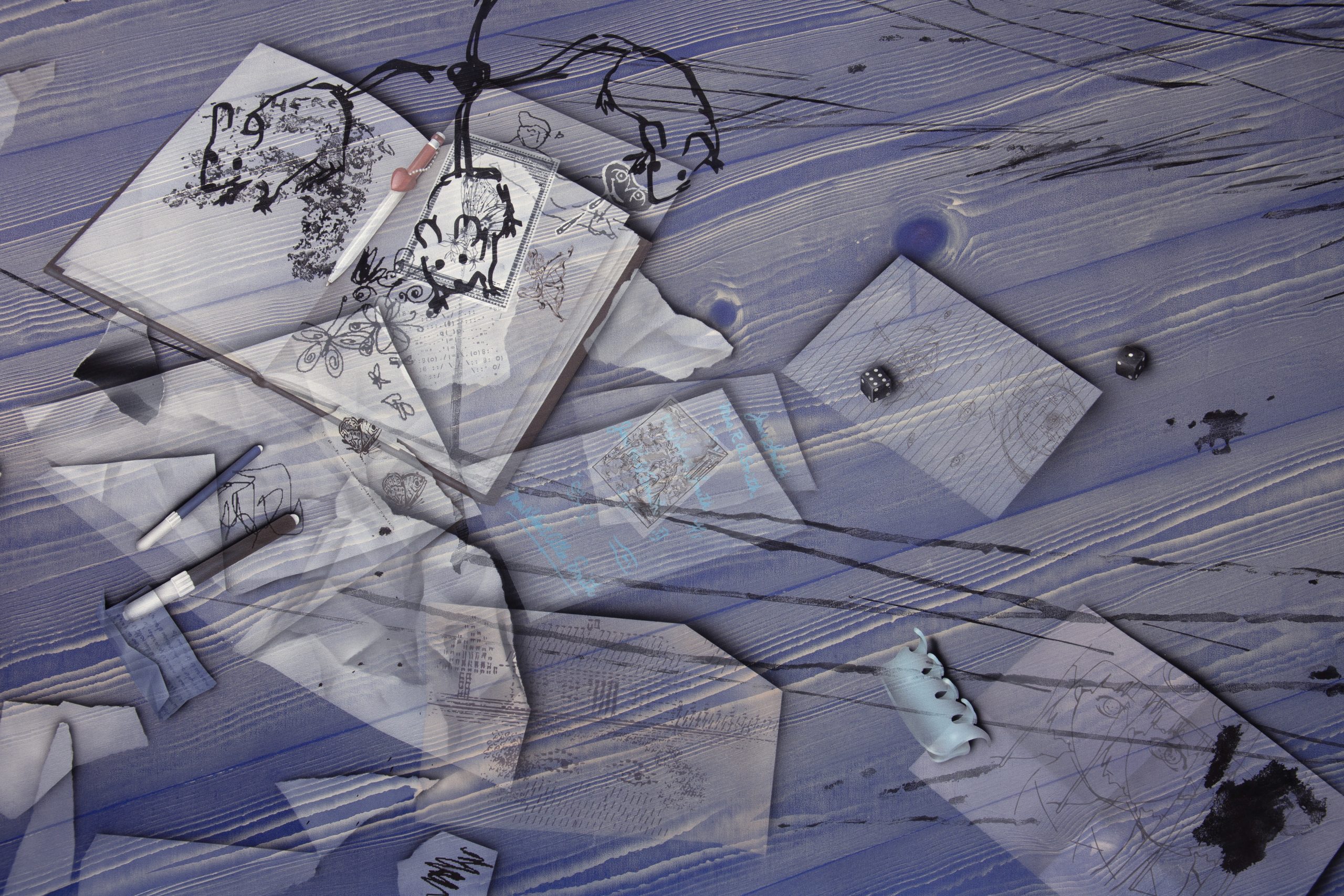
Patterns of Translation, 2024, detail, ph. Viola Leddi Studio, courtesy the artist and VIN VIN Vienna
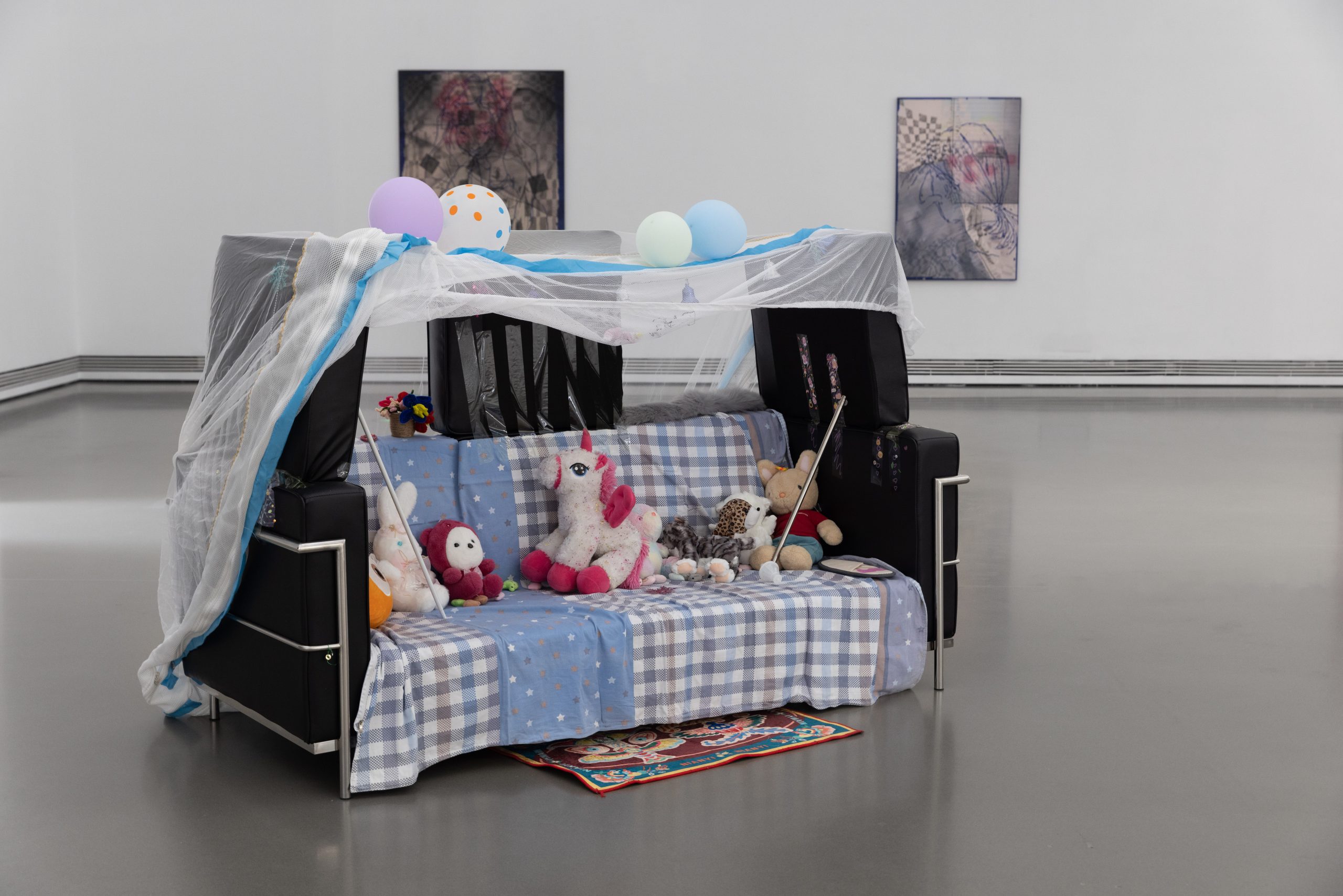
Dear Hateful Spirits, installation view at TAG Art Museum, Qingdao, 2025, ph. Shaoli Huang, courtesy TAG Art Museums and VIN VIN Vienna
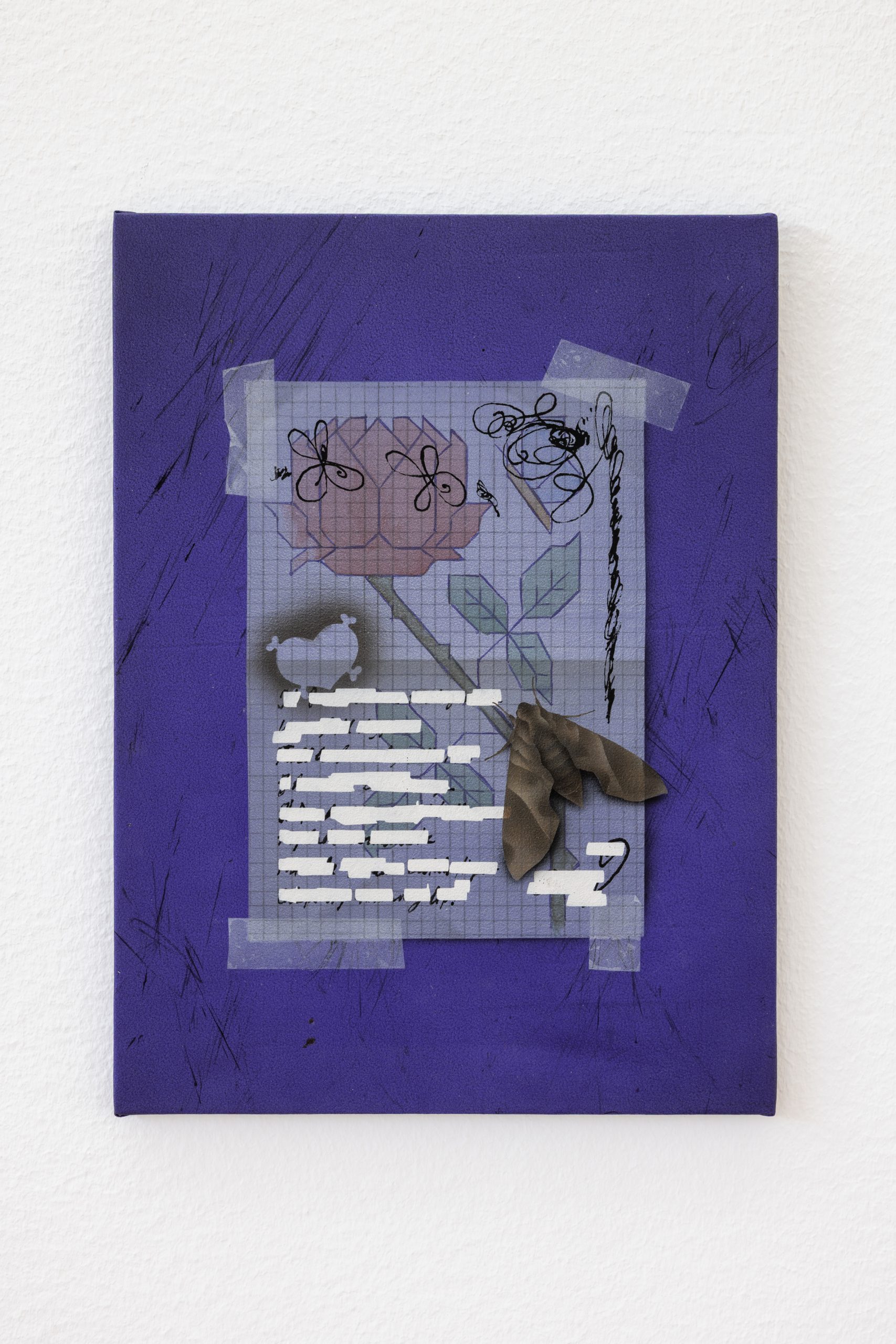
Untitled, 2025, ph. Roberto Marossi, courtesy MAC Lissone and VIN VIN Vienna