Dialogus de scientia politica
10.09.2026 H13:30-19:30
11.09.2026 H09:00-12:30
Piazza Navona 62, Roma / Online
10.09.2026 H13:30-19:30
11.09.2026 H09:00-12:30
Piazza Navona 62, Roma / Online
Dialogus de scientia politica
Prerequisites, Forms, Contents and Impacts of a Treatise on Political Theory in Late Antiquity
REGISTRATION HERE TO PARTICIPATE IN PERSON 10.09.2026
REGISTRATION HERE TO PARTICIPATE IN PERSON 11.09.2026
REGISTRATION HERE TO PARTICIPATE ONLINE 10.09.2026
REGISTRATION HERE TO PARTICIPATE ONLINE 11.09.2026
In collaboration with the University of Zurich and the Heidelberg University
Hosted by École française de Rome
The conference will be held in Italian and English
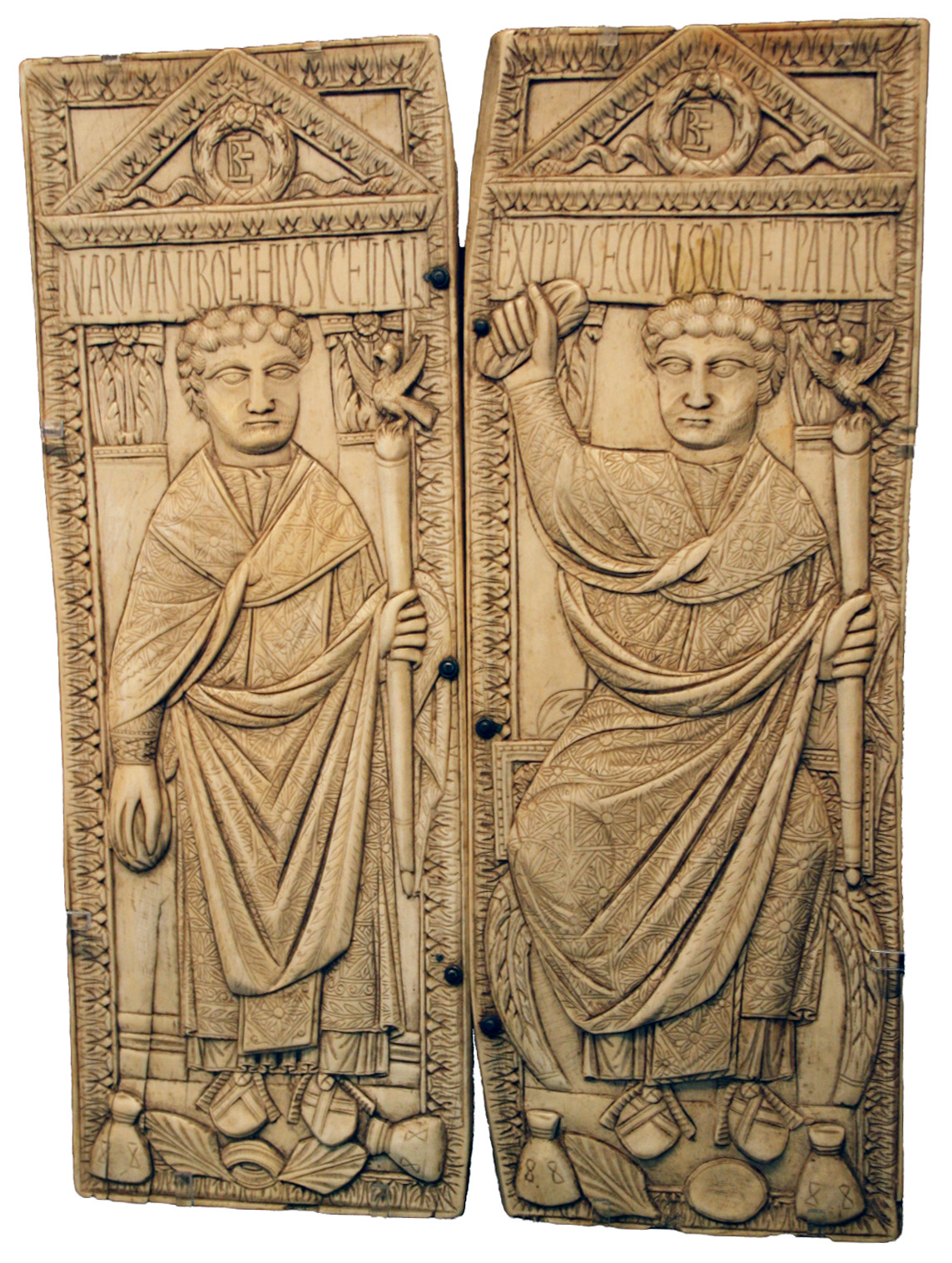
Based on the Dialogus de scientia politica, the planned conference will examine theoretical foundations of the Later Roman state by exploring conceptions of monarchical rule and ideals of just governance, drawing on Platonic theory and ideals of Roman constitutional thought. The conference will then focus on the possible author, the text’s intended audience and the form of the work itself. Finally, the analysis will look at the relationship between the emperor and various acceptance groups within the Roman state, i.e. the senate, the army, the citizens of Constantinople and the Church. In doing so, the conference will shed new light on a highly interesting and relevant text for the better understanding of Justinian’s I reign and political thought in the Later Roman Empire against the backdrop of ongoing scholarly endeavors.
PROGRAMME:
DAY 1
H13:30 Welcome and introduction
H13:30-15:15 Section Ia: Theoretical premises and intellectual influences
Chair: Umberto Roberto (Naples)
The Place of the Dialogus in Justinianic Political Debates
Marion Kruse (Cincinnati)
« Watered from the Springs of Knowledge »: The (Neo)Platonic Statecraft of the Dialogus de Scientia Politica
Sonsoles Costero-Quiroga (Madrid)
H15:15-16:00 Break
H16:00-17:45 Section Ib: Theoretical premises and intellectual influences
Chair: Umberto Roberto (Naples)
Why a philosopher-king should be bound by laws. The Justinianic Dialogue On Political Science as a synthesis of Platonic political thought
René de Nicolay (Parigi)
The Dialogue’s ideas on kingship in context: Situating its political theory in the rulership discourse of late antiquity
Jan Stenger (Würzburg)
H17:45-19:15 Culture politiche in movimento: incontri tra Occidente e Oriente
Laura Mecella (Milano)
DAY 2
H09:00-12:00 Section II: The importance of public acceptance groups
Chair: Rene Pfeilschifter (Würzburg)
Concepts of senate(s), then and now
Muriel Moser (Münster)
«For those who cultivate military science» – The Dialogue on military matters
Theresia Raum (Berlin)
The relationship between church and empire in the Dialogus and in the Justinianic reality
Silvio Roggo (Frankfurt)
The Factions, the Aristocracy, and the Politics of Fear in the Dialogue on Political Science
Matthew Hassall (Liverpool)
H12:00-12:30 Final discussion
Marion Kruse is currently working as an Associate Professor of Classics at the University of Cincinnati, specializing in Roman and Byzantine history and historiography. His work investigates how historical narratives were used to shape political and cultural identities in the past. Key areas encompass the reign of the emperor Justinian, the works of the historian Procopius of Caesarea, the textual tradition of Cassius Dio and the structure of the East Roman military high command.
René de Nicolay worked as a post-doctoral researcher at the École Normale Supérieure and has held research affiliations with institutions such as the University of Zurich and the Facultés Loyala in Paris. He focuses on ancient Greek and Roman philosophy (including Plato, Aristotle, Cicero and Polybius), political thought and how classical concepts, particularly freedom and governance, evolved and were received in later eras.
Sonsoles Costero-Quiroga is a Senior Postdoctoral Research Fellow Ramón y Cajal at Madrid, a Visiting Scholar at Wolfson College, University of Oxford (2026), and an Assistant Editor at the Ancient Commentators on Aristotle. She is working at the intersection of late antique Mediterranean cultural history with philology and philosophy, with a particular focus on Neoplatonism. She is also the co-Principal Investigator of the European project Bearers of Knowledge and Networks of education in Antiquity and Middle Ages (2024-2026).
Jan Stenger is currently active as Full Professor of Greek Philology at the University of Würzburg. In his academic endeavors, he bridges classical poetry, late antique Greek and Latin prose and the history of education. He is interested in classical Greek choral poetry, late antique Greek literature, including authors like Libanius, Themistius, Julian and John Chrysostom), the evolution of educational theories and the representation of emotions in ancient texts.
Laura Mecella serves as a Full Professor of Roman History at the University of Milan. Her research centers on the political and cultural trajectories of the Roman Empire during its periods of systematic transformation. In doing so, she pays particular attention to Roman imperial history, particularly the crises and transitions of empire spanning from the 3rd to the 5th centuries CE, thereby examining late antique and Byzantine historiography and the history of classical scholarship and political communication in antiquity.
Muriel Moser-Gerber is a Full Professor of Roman History at the University of Münster. Her academic work spans several distinct areas of classical and late antiquity, including the history of the Roman Empire with a strong focus on the role of the senatorial order, the political situation of Greek cities under Roman rule, urban transformations in Rome and Constantinople and changes of the epigraphic habit. Furthermore, she investigates public speech acts, power dynamics and the legal economic agency of women in Roman society.
Theresia Raum works since 2024 as postdoctoral researcher at the Department of Ancient History at the FU Berlin. Her research interests span violence and military history, the history of knowledge and political culture across both the Roman Republic and Late Antiquity. Her key areas of focus include the Eastern Roman Empire in the 7th century, Roman expansion and military strategies during the Middle Republic and the cultural history of warfare and emotions in antiquity.
Silvio Roggo is currently active as a postdoctoral researcher and specialist in Late Antique and Byzantine history at Goethe University Frankfurt, thereby contributing to major collaborative research initiatives, such as the DFG-funded project focusing on a comprehensive commentary on the Ecclesiastical history of John of Ephesus. His key areas of focus include the religious policies of East Roman emperors, such as Justin II and Tiberius II Constantine, the authority and institutional history of the patriarch of Constantinople and late antique historiographical texts and sources.
Matthew Hassall is currently working as a Leverhulme Early Career Research Fellow at the University of Liverpool, specializing in political culture, public debate and economic ideas in the Later Roman world. His research centers on the history of radical and counter-radical arguments regarding wealth inequality and distribution in the late antique Mediterranean. In doing so, he pays particular attention to cultures of political debate and public rhetoric in sixth-century Constantinople to understand how wealth distribution was contested and defended.
Umberto Roberto is a Full Professor of Roman History at the University of Naples Federico II and the Director of the Istituto Italiano per la Storia Antica. His key areas include Roman imperial history, with an emphasis on the 3rd and 5th centuries CE.
Rene Pfeilschifter is a Full Professor of Ancient History at the University of Würzburg. His scholarship covers political culture, institutional dynamics and structural transformations from the Roman Republic through Late Antiquity.