Between Satraps and “Strategoi”
H17:00-19:30
“I Pomeriggi” series
H17:00-19:30
“I Pomeriggi” series
REGISTRATION HERE TO FOLLOW IN PERSON
REGISTRATION HERE TO FOLLOW ONLINE
Between Satraps and “Strategoi”
Inscribing Power in the Eastern Mediterranean
The event is part of the series I Pomeriggi dedicated to the Fellows.
Curated by Cinzia Tuena (Fellow Roma Calling / History).
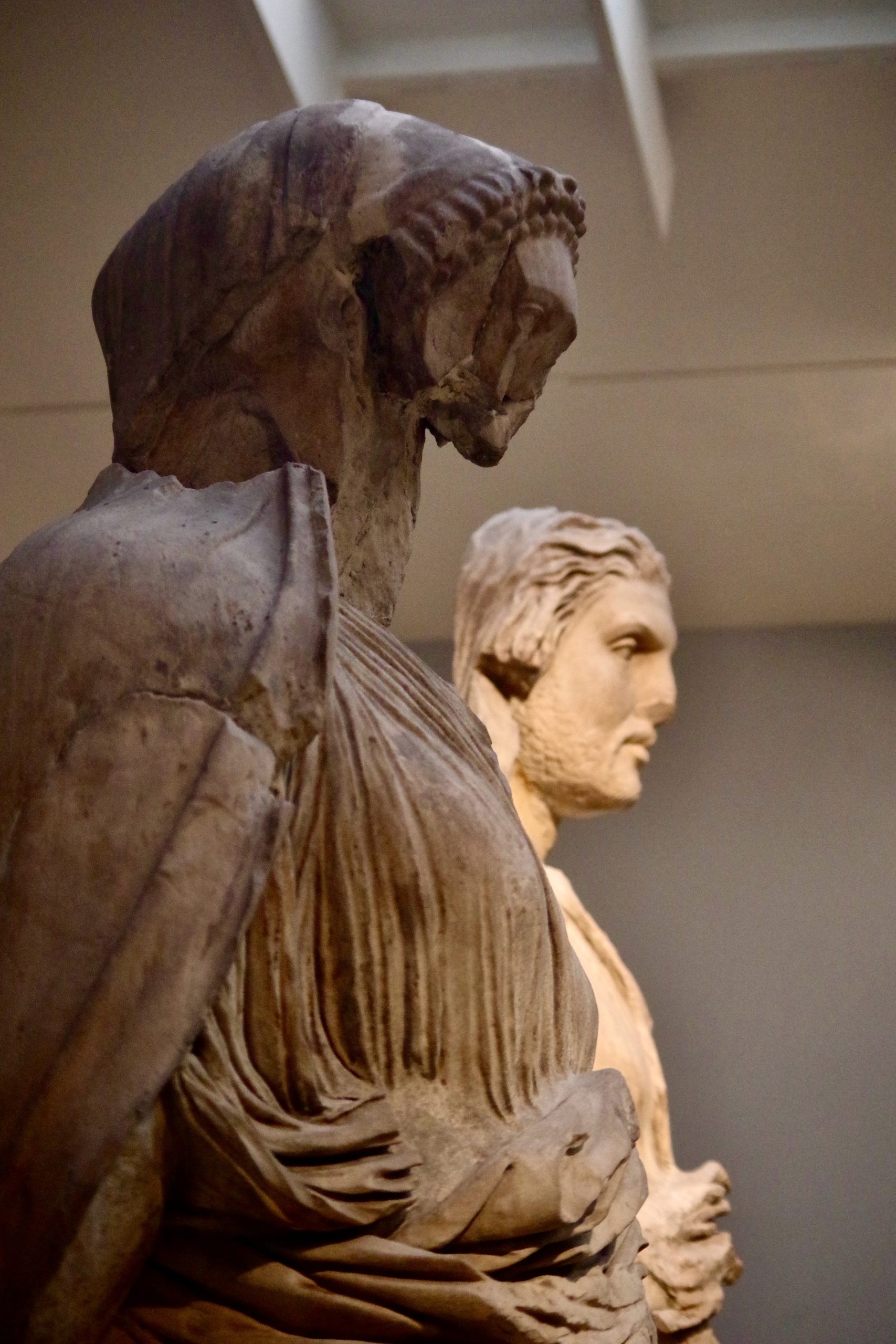
This workshop investigates the rich and complex intersections between Persian and Greek modes of (self-)representation in the fifth and fourth centuries BCE, a period marked by imperial ambition, cultural entanglement, and shifting political identities. As the Achaemenid Empire (550–330 BCE) confronted internal challenges and external pressures, and as Greek poleis and emerging Macedonian power recalibrated their place in the Mediterranean world, rulers and elites turned to epigraphy and visual media to assert legitimacy, negotiate identity, and communicate across cultural boundaries.
Participants will explore how inscriptions and iconography served as tools of dynastic strategy in contested spaces such as Asia Minor, the Levant and the Aegean. The workshop aims to examine the political use of language, script, and imagery in Persian-Greek contact zones. By focusing on these pivotal centuries, the discussion will uncover how textual and visual media shaped and were shaped by the dynamics of empire, resistance, and cultural exchange.
I Pomeriggi is a transdisciplinary series curated by the Fellows of Istituto Svizzero. Drawing on their ongoing research, Fellows in residence in Rome, Milan, and Palermo conceive events and initiatives presented within Istituto’s public programme, fostering dialogue between art, science, and research. The series embraces a range of formats, often involving external guests and partners, including conferences, seminars, performances, concerts, walks, and other activities.
The event may be photographed and/or video recorded for archival, educational, and related promotional purposes. By attending this event, you are giving your consent to be photographed and/or video recorded.
PROGRAMME:
H17:00 Welcome and introduction
Ilyas Azouzi, Istituto Svizzero
Cinzia Tuena, Istituto Svizzero, University of Basel
H17:20 The Achaemenid Empire and Its Western Borderlands: Cosmopolitanism and Impact
Julian Degen, University of Innsbruck
H17:40 Achaemenid Owls? Northern Anatolia between Athens and Persia
Leah Lazar, University of Manchester
H18:00 Coffee break
H18:20 King at Home, Satrap in Persia? Reflections on the Titulature of Power in Hecatomnid Lycia
Marco Ferrari, Institut Français d’Études Anatoliennes (IFEA) / Research Center for Anatolian Civilizations (ANAMED), Koç University
H18:40 Divine and human honours for satraps and generals. The cities of Asia Minor and their models of behaviour in the 4th century BC
Roberta Fabiani, University of Roma Tre
H19:00 Roundtable
Julian Degen studied Ancient History and Ancient Near Eastern Studies at the Leopold-Franzens University of Innsbruck. In 2020 he completed his PhD under the supervision of Robert Rollinger on Alexander the Great and his empire. He has taught Ancient History at the Universities of Hildesheim and Kiel and held a postdoctoral position at the University of Trier. In 2025 he was appointed Professor of Ancient History at the Leopold-Franzens University of Innsbruck, with a research focus on empires and historiography. He is a key researcher in the Cluster of Excellence “EurAsian Transformations,” vice chair of the Melammu Project, and a core member of the PERSIAS project in Norway. He has recently completed his habilitation on Strabo and imperial geographies.
Leah Lazar is Lecturer in Hellenistic Culture at the University of Manchester, having completed her doctoral and postdoctoral work at the University of Oxford. She researches the political and economic history of the Greek world, with a strong interest in Achaemenid Anatolia. Her first book, Athenian Power in the Fifth Century BC (Oxford University Press 2024), offers a new perspective on the relationship between the Athenian Empire and subject communities, including those at the interface of Athenian and Achaemenid influences. Her new book (part of the ERC-funded CHANGE project in Oxford) analyses the complex interaction between imperial powers and smaller communities in ancient Anatolia through the lens of the monetary economy, in a series of case studies from Archaic Lydia and the invention of coinage, through to the coming of Rome.
Marco Ferrari (1996) earned his PhD in Ancient Greek History and Achaemenid Studies at Sapienza University of Rome and the École Pratique des Hautes Études–PSL (Paris). His main research interests focus on the relations between the Greek world and the Achaemenid Persian Empire (6th–4th centuries BC), with particular attention to processes of acculturation among Greek, Iranian, and Anatolian communities in Asia Minor. He is currently a postdoctoral fellow at the Institut Français d’Études Anatoliennes (IFEA) and at the Research Center for Anatolian Civilizations (ANAMED, Koç University) in Istanbul, where he is conducting a project on the integration of Iranian and local elites in north-western Anatolia.
Roberta Fabiani is Professor of Greek History at the Università degli Studi Roma Tre. Her main interests are the Late Classical and Hellenistic periods, with a focus on Greek epigraphy. She has contributed to a number of studies on Caria and the city of Iasos and has been entrusted by the Inscriptiones Graecae project of the Berlin-Brandenburgische Akademie der Wissenschaften with the new edition of IG XIV for Magna Graecia.
Cinzia Tuena is currently pursuing a PhD in ancient history at the University of Basel, having previously studied in Zürich and Oslo. In 2025/26, she holds a Fellowship at the Istituto Svizzero in Roma and is affiliated as a Visiting Scholar at the Università degli Studi di Roma Tre in support of her research, which centres primarily on gender structures and dynastic power, with a geographical emphasis on Asia Minor. Her thesis examines the familial networks of the Hekatomnids, focusing on the political and symbolic functions of sibling marriages. Working with epigraphic sources, she explores how these practices shaped authority, identity, and legitimacy at the intersection of Persian and Greek cultural spheres in the fourth century BCE.
© Cinzia Tuena