Riso e Derisione
H17:00-19:30
“I Pomeriggi” series
H17:00-19:30
“I Pomeriggi” series
REGISTRATION HERE TO PARTICIPATE
Riso e Derisione.
Forms of Irony between Art and Society in the Early Modern Period
The event is part of the series I Pomeriggi dedicated to the Fellows.
Curated by Isabella Foglia (Fellow Roma Calling / Art History).
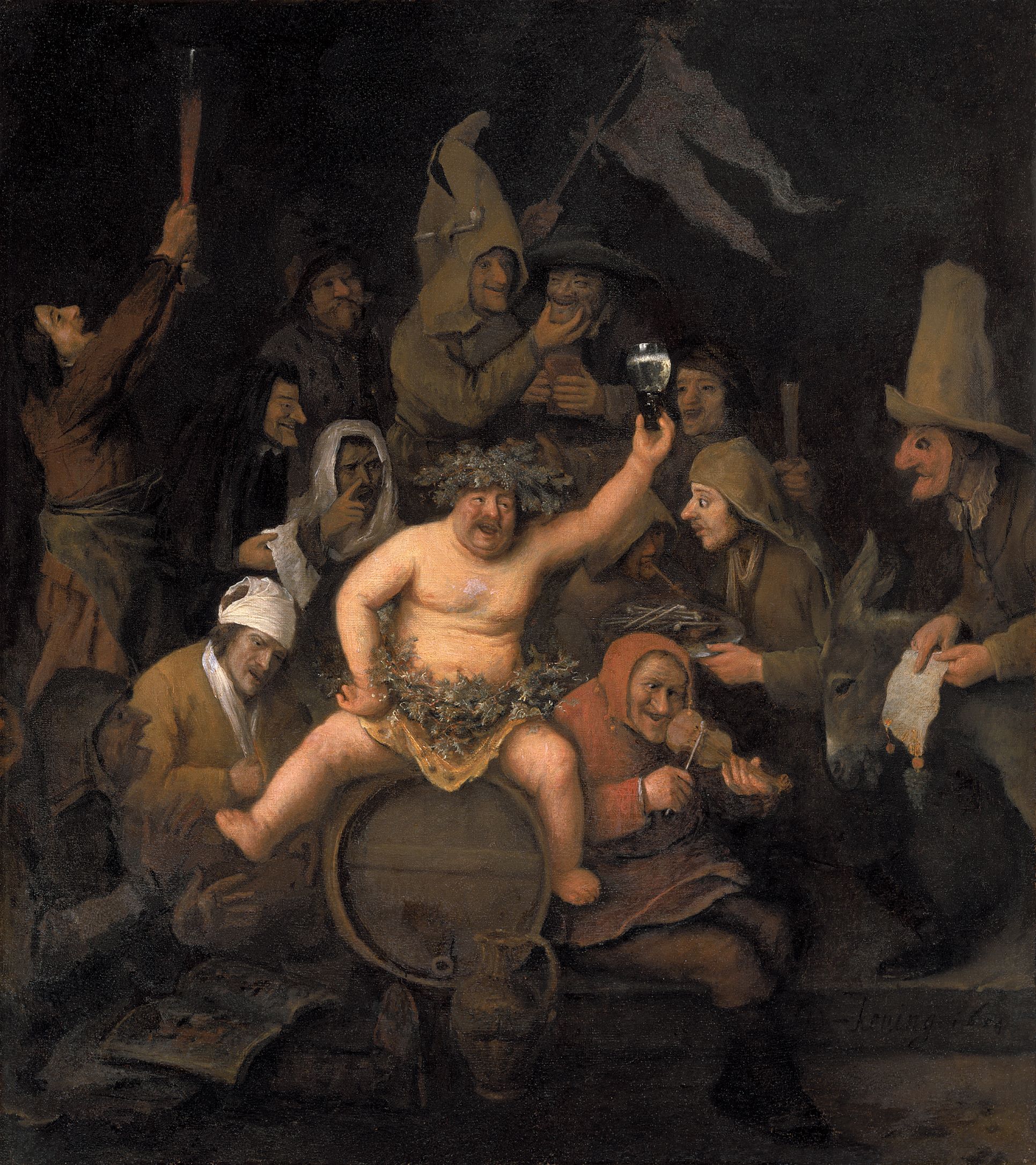
Irony, in its various semantic facets, has permeated cultural communication since antiquity, giving rise over time to debates and divergent theoretical positions. Burlesque language, as well as grotesque imagery, often constitutes a space of licence and freedom in which the official codes of “decorum” may be overturned, at times allowing established historical truths to be called into question.
Long regarded as marginal to “high” culture, manifestations of humour in art instead represent a fundamental field of inquiry for understanding the social and cultural dynamics that shape artistic production. Laughter eludes rigid definitions and continues to pose a theoretical challenge: rather than being confined within formulas, it must be observed in its original context, namely the social one. Laughter is never a neutral phenomenon, but a historically situated fact.
At the same time, to reflect on laughter also means asking why certain images or narratives provoke it, and what mechanisms—cultural, cognitive, and emotional—lie behind this response. The event will feature a series of talks, followed by a round table aimed at exploring the role of laughter, irony, and derision in the arts and culture of the early modern period, considering them as autonomous and multifaceted languages capable of opening up methodological perspectives in dialogue with historical, visual, and neuroscientific approaches.
The event may be photographed and/or video recorded for archival, educational, and related promotional purposes. By attending this event, you are giving your consent to be photographed and/or video recorded.
PROGRAMME:
H17:00 Institutional Greetings
Ilyas Azouzi, Istituto Svizzero
H17:05 Introduction
Isabella Foglia, Fellow Istituto Svizzero, Universität Zürich
H17:15 L’improvvisazione musicale e teatrale degli artisti nella Firenze del Seicento: indagine sugli “affetti” e ritualità collettiva
Sergio Taddei, Sapienza Università di Roma
H17:35 Carnevale e Quaresima nel Cinque-Seicento
Roberta Colbertaldo, Goethe-Universität Frankfurt am Main
H17:55 tba
Tania De Nile, Università di Roma Tor Vergata
H18:15 Break
H18:30 Comico eroicomico e satirico nella pittura e nella poetica di Salvator Rosa: origini e sviluppi
Caterina Volpi, Sapienza Università di Roma
H18:50 Perché ridiamo. Alle origini del cervello sociale
Fabio Caruana, Institute of Neuroscience of the National Research Council of Italy (IN-CNR), Parma
H19:10 Roundtable
Sergio Taddei pursued his studies in Art History between Rome and Florence, obtaining both his Bachelor’s and Master’s degrees from Sapienza University of Rome, as well as a diploma from the School of Specialisation in Historical and Artistic Heritage at the University of Florence. At the same time, he undertook musical and musicological studies at the Santa Cecilia Conservatory in Rome, graduating in Composition. He is currently enrolled in a PhD programme in Art History at Sapienza University of Rome.
Roberta Colbertaldo is a postdoctoral researcher at the Institute of Romance Languages and Literatures at Goethe University Frankfurt. She studied Modern Literature and Textual Criticism in Milan, Vienna, and Heidelberg. After completing her PhD in Italian Literature at the University of Ferrara, she worked as an adjunct lecturer at Humboldt University of Berlin and held fellowships at the University of Fribourg in Switzerland, the Literaturarchiv in Marbach, and the German Centre for Venetian Studies. Since 2023, she has been co-coordinator of the project “Mondi grassi II. Tra eccesso e ascesi. Costruzioni di corpi collettivi e individuali nell’era premoderna (France; Italy)”, funded by the German Research Foundation (DFG). She specialises in premodern and contemporary literature, particularly in French and Italian. Her main research interests include literary food studies and fat studies, literary and visual representations of Carnival and Lent, literature and intermediality, literary epistolary works, the sociology of literature, and processes of canon formation.
Tania De Nile works at the Capitoline Superintendency for Cultural Heritage and teaches Dutch and Flemish Art at the University of Rome “Tor Vergata”. After completing her PhD in Art History at Sapienza University of Rome, jointly supervised with Leiden University, she held postdoctoral and teaching positions at the University of Calabria and Roma Tre University. A specialist in Flemish and Dutch painting, she has authored numerous studies focusing on artistic relations between the Low Countries and Italy, particularly on works with diabolical and witchcraft themes, the Bentvueghels community in Rome, and Northern artists in Southern Italy.
Caterina Volpi is Full Professor of Art History at the SARAS Department of Sapienza University of Rome. Her research has focused in particular on artistic relations and artists active between Naples, Rome, and Florence during this period, on the relationship between artistic production and antiquarian research, and on the connections between the Republic of Letters and the circulation of aesthetic and intellectual ideas. She is a member of the PhD board in Art History at Sapienza, sits on the scientific committee of Storia dell’Arte, directs the series Dentro il palazzo and Territorio e paesaggio, and is the author of numerous publications, including a monograph on Pirro Ligorio, a study on Vincenzo Cartari’s sixteenth-century mythological text, and a book dedicated to Domenico Lampsonio. Also noteworthy is her monograph Salvator Rosa (1615–1673), pittore famoso (Rome, 2014). In 2024, she curated the exhibition Guercino. L’era dei Ludovisi a Roma.
Fausto Caruana is a Senior Research Scientist at the Institute of Neuroscience of the Italian National Research Council (CNR) in Parma. He works in cognitive and behavioural neuroscience and is the author of over 80 publications on the neural and psychological mechanisms underlying emotional and motor behaviour, mirror neurons, and emotional contagion. His research adopts a multidisciplinary approach, primarily based on intracranial recordings and electrical stimulation. Trained as an electrophysiologist in the study of non-human primates, he later shifted towards human neuroscience through collaboration with the Claudio Munari Epilepsy Surgery Centre at Niguarda Hospital in Milan. He conducts his research in interdisciplinary collaboration with scholars from other fields, including neurology, ethology, and philosophy of mind.
SAVE THE DATE
Sign up to this event to receive a notification email
Koninck, Philips, Bachanalia, 1654, Museum Bredius