Architecture in Transition
« Innovation » Series
11.06.2026 H10:00-19:30
12.06.2026 H09:00-14:30
« Innovation » Series
11.06.2026 H10:00-19:30
12.06.2026 H09:00-14:30
REGISTRATION HERE TO PARTICIPATE IN PERSON 11.06.2026
REGISTRATION HERE TO PARTICIPATE IN PERSON 12.06.2026
REGISTRATION HERE TO PARTICIPATE ONLINE 11.06.2026
REGISTRATION HERE TO PARTICIPATE ONLINE 12.06.2026
Architecture in Transition: Modernist Legacies and Sustainable Futures in the Mediterranean and Global South
This event is part of Istituto Svizzero’s Innovation series, which brings together artistic and scientific research through dialogue between Swiss, Italian, and international institutions. Within this framework, the conference addresses modernist architecture as a field where technological, material, and spatial innovation is rethought in relation to contemporary ecological, political, and cultural pressures.
Focusing on the Mediterranean and the Global South, it looks at how modernist architecture is being re-evaluated, reinterpreted, and transformed under conditions of environmental pressure, political instability, and social change. Particular attention is given to post-war architectural systems – often based on materials such as reinforced concrete – which are today confronted with processes of decay, obsolescence, and the urgent need for adaptation.
Rather than treating modernism as a closed historical period, the contributions approach it as an ongoing condition that continues to shape urban space, institutional frameworks, and design practices. The focus lies on the theoretical legacies and material realities of modernism, and on the challenges of conserving, retrofitting, or transforming buildings that are technically demanding, politically charged, and often climatically misaligned with present conditions.
The programme is structured around three concerns: the transformation of existing buildings through reuse, upcycling, and adaptive design; the reassessment of modernism’s political and infrastructural legacies in contexts marked by interruption, decay, or contested memory; and the reorientation of architectural knowledge through climate adaptation, vernacular intelligence, and experimental pedagogies.
The conference is guided by a set of interrelated questions: how can modernist architecture be transformed beyond the opposition between preservation and demolition, and what forms of innovation emerge from reuse, upcycling, and adaptive design? How do processes of decay, interruption, and abandonment reshape its meanings and values across different contexts? And how can colonial legacies, alongside climate adaptation and vernacular knowledge, inform more sustainable and socially responsive approaches to architectural practice, pedagogy, and policy?
The event may be photographed and/or video recorded for archival, educational, and related promotional purposes. By attending this event, you are giving your consent to be photographed and/or video recorded.
PROGRAMME:
DAY 1
Modernism Under Pressure: Legacies, Ruins, Transformations
The first day addresses modernist architecture as a contested legacy, examining how its material, political, and ideological afterlives continue to shape contemporary urban conditions across the Mediterranean and the Global South.
H10:00–10:30 Welcome coffee
H10:30–10:45 Introduction
Modernism in Transition. Heritage, Climate, and Future Practices
Ilyas Azouzi (Head of Science, Research, and Innovation, Istituto Svizzero)
H10:45–12:30 Panel 1 – Transforming Modernism: Reuse as Critical Method
Moderated by Ilyas Azouzi (Istituto Svizzero)
Starting from Italy, this opening panel foregrounds reuse not as a technical solution, but as a critical architectural and cultural practice.
Adaptive Reuse in Italy. Theory and Practice through the Reuse Italy Methodology.
Andrea Crudeli (University of Pisa / Chiba University)
Upcycling and Design for Disassembly in Italy since 1945: Compendium of Patents and Prototypes
Ilaria Giannetti (University of Rome Tor Vergata)
Gabriele Neri (University of Turin)
Alberto Bologna (Sapienza University of Rome)
H12:30–13:30 Lunch Break
H13:30–15:30 Panel 2 – Ruins, Infrastructure, and Postcolonial Fragmentation
Moderated by Ilyas Azouzi (Istituto Svizzero)
This panel examines modernist architecture and infrastructure as interrupted projects shaped by political instability, extraction economies, conflict, and uneven development.
Power in Ruins: Modernist Legacy, Institutional Collapse, and the Future of Électricité du Liban
Cristiano Lippa (Académie Libanaise des Beaux Arts–University of Balamand)
Federico Scaroni (University of New York Tirana)
Modernist Heritage Suspended Between Global Visibility and Local Paralysis. The Case of the International and Permanent Fairground of Lebanon in Tripoli
Joe Zaatar (Politecnico di Milano)
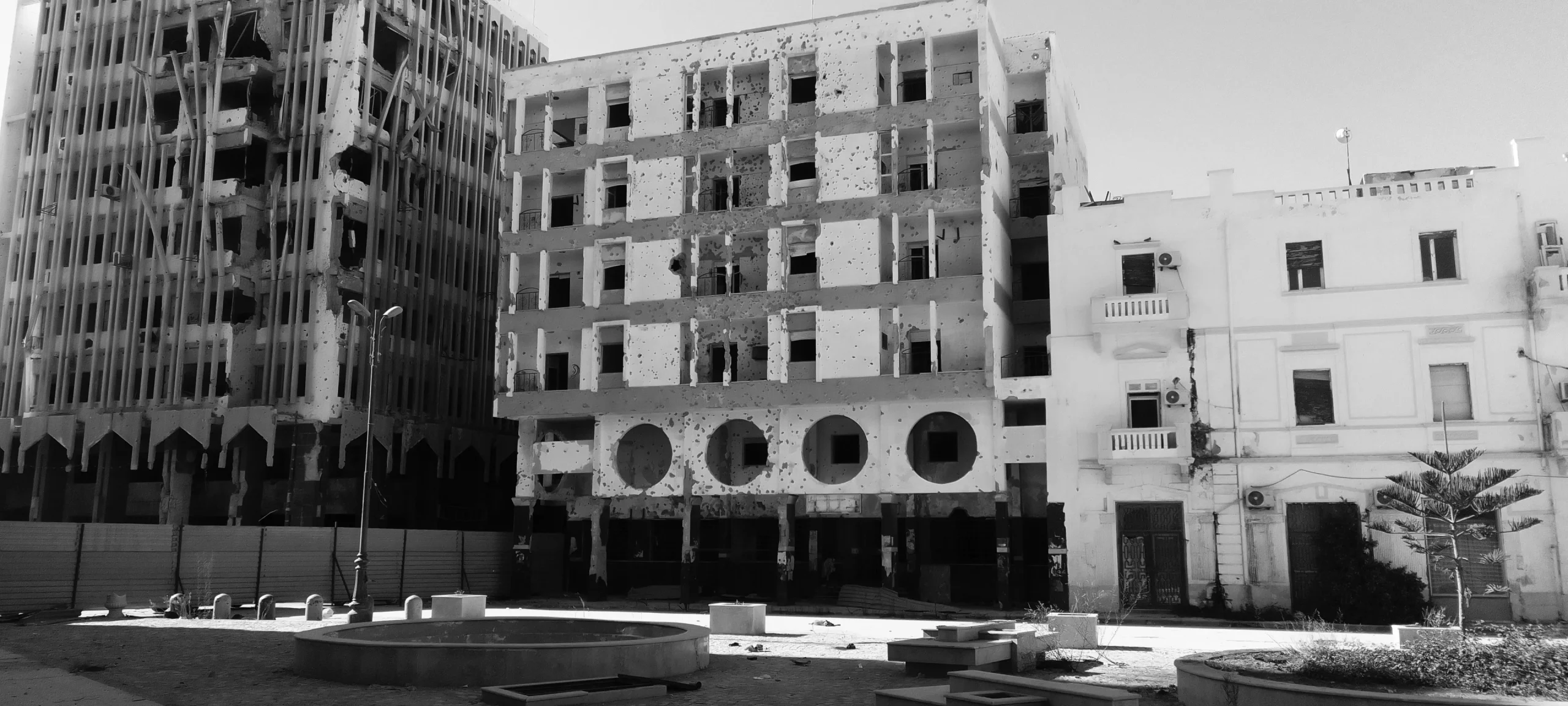
Reassembling Modernism: Spolia, Ruin, and Post-Colonial Practice in Benghazi
Jawad Elhusuni (Libyan International University, Benghazi)
Mediterranean modernity. The rural villages built by the agency for the colonization of the Sicilian latifundia
Domenico Busa (University of Palermo)
H15:30–16:00 Coffee Break
H16:00–18:00 Panel 3 – Narrating Modernism: Heritage, Memory, and Urban Futures
Moderated by Lydia Xynogala (Accademia di Architettura, Mendrisio)
This panel focuses on how modernist architecture is narrated, governed, preserved, and re-signified through memory-making, institutional frameworks, and urban discourse.
The “New Cities” of the 20th Century in Friuli Venezia Giulia. Historical and Ideological Parallel of Ideal Urban Development
Franco Stagni and Alessandro Morgera (Architects, Gorizia)
The Mediterranean Duality: Italian Cultural Diplomacy, Oil Urbanism, and Heritage Restoration in Tunisia (1950–1980)
Ali Javid (University of Technology Sydney – UTS), online
Iran Modern Architecture in Transition: Public Narratives against Demolition, and the Politics of Adaptation in Tehran
Neda Shafiei (University of Geneva)
Preserving a Modern University City in the Tropics: Challenges and Potentialities
Andréa de Lacerda Pessôa Borde (Federal University of Rio de Janeiro)
H18:00–18:30 Break
H18:30–19:30 Keynote Lecture
Metabolic Matter – Hassan Fathy’s Legacy through the Lens of “Stoffwechsel”
Sascha Roesler (Associate Professor and Director of the Doctoral School, Accademia di Architettura, Università della Svizzera italiana)
H19:30–20:30 Aperitivo
DAY 2
Climate, Knowledge, and Future Practices
The second day shifts the focus toward climate adaptation and future-oriented architectural practices, examining how vernacular knowledge, material intelligence, pedagogy, and maintenance systems can inform more sustainable and socially responsive approaches to the built environment.
H09:15–10:00 Athens – Climate Change and Urban Futures
Lydia Xynogala (Accademia di Architettura, Mendrisio)
Renate Walter, (Accademia di Architettura, Mendrisio)
H10:00–11:00 Keynote Lecture
Climate-Responsive Brutalism: 3 African Post-Independence Case Studies
Aziza Chaouni (Assistant Professor, Laboratory of South-North Sustainable Construction and Conservation EPFL)
H11:00–11:30 Coffee Break
H11:30–13:30 Panel 4 – Climate Intelligence, Care, and Material Futures
Moderated by Ludovica Marinaro (University of Naples Federico II)
This panel explores how architectural knowledge is produced through climate adaptation, material practices, maintenance systems, and vernacular intelligence across the Mediterranean and the Global South.
Dwelling in a Wound: Manufactures of Modernity in the Haouz
Yassine Rachidi (University of Basel)
Outsourcing Pedagogies of Care: Zambia World Bank Education Project
Maryia Rusak (Karlsruhe Institute of Technology)
Concrete, An Investigation in Shifting Sands: Communicating the Environmental Challenges of Concrete Overconsumption through a Graphic Novel
Alia Bengana (Architect and Author, Fellow Villa Medici)
Vernacular Architecture as Epistemic Resource: Beyond Romanticisation
Anna Bruna Menghini (Sapienza University of Rome)
Giuseppe Resta (CEAU, Faculty of Architecture, University of Porto)
H13:30–14:00 Final Discussion and Closing Remarks
An image of Shajara Square and its growing Norfolk Pine tree in 2025, as it awaits a new era of reconstruction in Benghazi and Libya.
Hassan Fathy Architectural Archives, the American University in Cairo.
Credits: Julian Raffetseder
Credits: Julian Raffetseder
Credits: Julian Raffetseder