Hidden Landscapes
H17:00-19:00
“I Pomeriggi” series
H17:00-19:00
“I Pomeriggi” series
The event will be held in English and Italian
FREE ENTRANCE, REGISTRATION HERE
Hidden Landscapes:
Labour in Post-War Italy and Architectures for Industry
The event is part of the series I Pomeriggi dedicated to the Fellows.
Curated by Jacopo Zani (Fellow Roma Calling / Architecture, Urban Studies)
The symposium foregrounds the role of ordinary workers in the transformation of the industrial sites in Italy, and more broadly those of Europe, after the Second World War. Spaces of industrial production played a crucial role in sustaining the emergence of European welfare states and the wealth generated by the post-war economic boom. Situated between welfare provision and forms of biopolitical control, industrial sites and workers’ neighbourhoods were radically reshaped through the interconnected initiatives of states, industrial patrons, engineers, trade unions, and religious organisations. While historians have extensively examined the roles of these powerful actors, however, the voices of those who migrated, lived, and worked in these spaces have often remained at the margins. Meanwhile, since the de-industrialisation that unfolded from the 1970s, these spaces and their inhabitants remain associated in public debates with negative notions of economic decline, social segregation, and environmental risk.
During the symposium, contributions from architects, historians, and economists will be brought into dialogue to explore how workers in post-war Italy actively shaped the ‘hidden landscapes’ behind industrial sites in Italy and beyond. Each contribution will focus on a specific type of industrial site: the architecture of coal mines in Belgium, a company town in northern Italy, industrial neighbourhoods in Milan, and the construction of dams in Switzerland. Presentations will be followed by a discussion on the challenges of retracing workers’ voices in official archives.
I Pomeriggi is a multidisciplinary event series curated by Istituto Svizzero Fellows. Based on their ongoing research, Fellows in residency in Rome, Milan, and Palermo develop events that are part of the Institute’s public programme, fostering dialogue between art, science, and research. The series features various formats, often with external guests and partners, including conferences, seminars, performances, concerts, walks, and other intiatives.
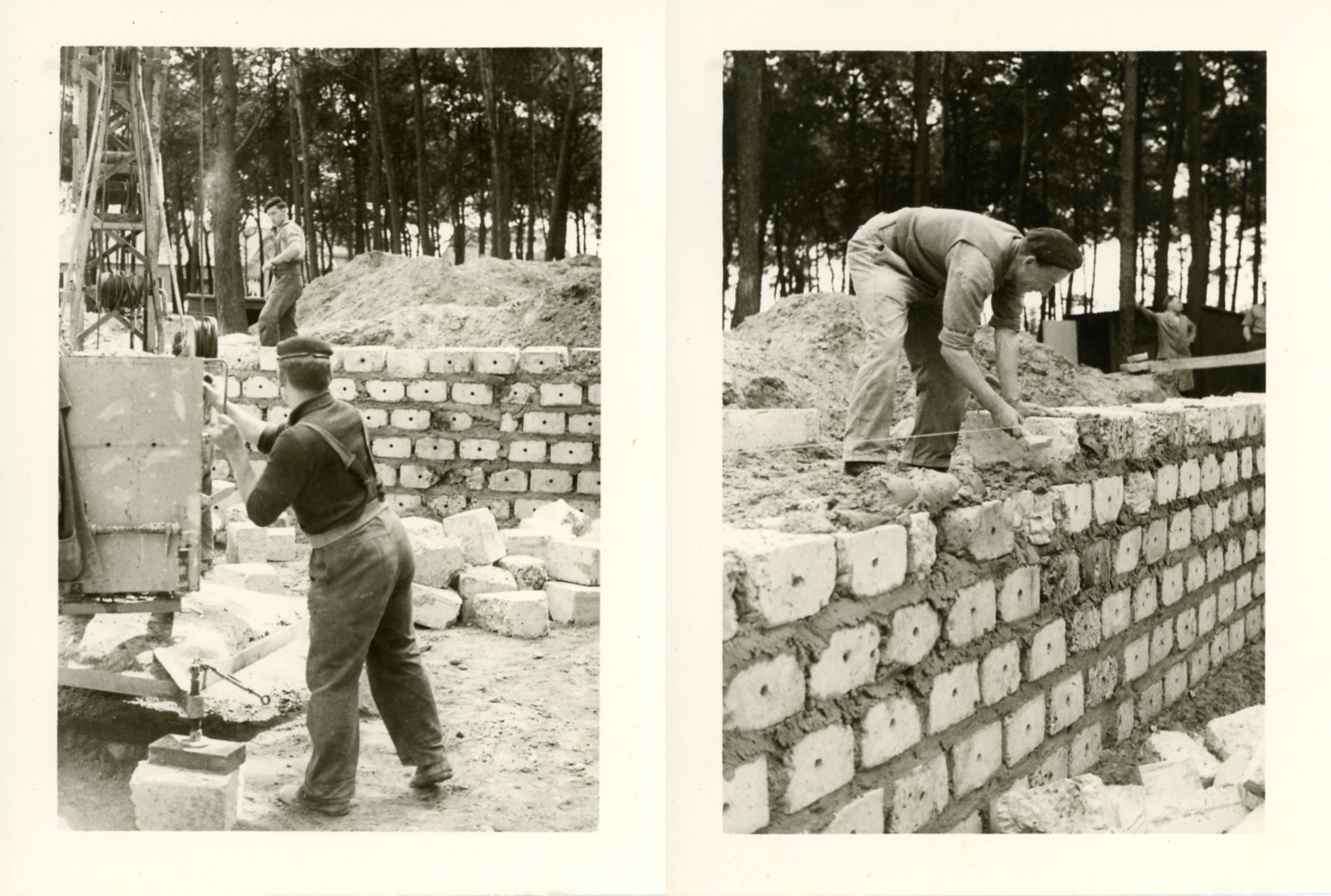
PROGRAMME:
H17:00 Institutional Greetings
Ilyas Azouzi (Istituto Svizzero)
H17:10 Introduction
Jacopo Zani (ETH Zurich)
H17:30 Anna Karla De Almeida Milani (EPFL Lausanne, TU Delft)
Mamma Dalmine: care and toxicity in an Italian company town
H17:50 Break
H18:00 Giorgio Bigatti (Uni Bocconi, Fondazione ISEC)
Milan, Metamorphosis of a Former Industrial City
H18:20 Rune Frandsen (ETH Zurich)
Secondary Infrastructures: Workers and the Landscapes of Postwar Dam Construction
H18:40 Discussion
H18:50 Break
H19:00 Roundtable & Discussion
Jacopo Zani is a doctoral candidate at the Institute of Landscape and Urban Studies (LUS) at ETH Zurich. Jacopo holds an MSc in Architecture from TU Delft and a BSc from Politecnico di Milano. He has worked as an architect in Belgium and Italy. In Rome, he is developing part of his doctoral research, which focuses on the relationship between movement and urban spaces in (post-)extractive territories, with a particular focus on Italian migration to mining settlements in post-war Belgium.
Anna Karla De Almeida Milani is a postdoctoral researcher at the Department of Urbanism at TU Delft, funded by the Swiss National Science Foundation, and a guest lecturer at EPFL. Her research examines how companies have historically shaped territory, with particular attention to company towns and industrial settlements. Trained as an architect and urban designer at UEMA, Brazil (2015), she holds a Master’s degree in Historical Sciences, Techniques, Heritage, and Industrial Territories from Université Panthéon-Sorbonne (2018), and a PhD in Architecture and the Sciences of the City from EPFL (2024). Between 2020 and 2025, she served on the Executive Board of the Habitat Research Center and coordinated the Productive Habitats research field.
Giorgio Bigatti is scientific director of Fondazione ISEC and professor of economic history at Bocconi University in Milan, is interested in the history of the territory, industry, and labor. For the national edition of Carlo Cattaneo’s works, he edited the two-volume edition of Notizie storiche e civili su la Lombardia (Historical and Civil News on Lombardy) (2014). His latest publications include Milano. Matrici e metamorfosi di una capitale industriale (Milan: Origins and Metamorphoses of an Industrial Capital) (2024) and the edited volumes Giunte rosse. Genova, Milano, Torino 1975-1990 (Red Councils: Genoa, Milan, Turin 1975-1990) (2023) and Lavoro, sicurezza e salute nell’Italia delle fabbriche (Work, Safety, and Health in Factory Italy) (2024).
Rune Frandsen (*1989) is a postdoctoral researcher at the Chair of Construction Heritage and Preservation at ETH Zurich, where his work focuses on the material, social, and administrative dimensions of large-scale construction, with particular attention to Alpine infrastructure. Trained as an architect at EPFL Lausanne (2015), he worked in architectural practices in Geneva between 2016 and 2019, alongside completing a Master of Advanced Studies in Architectural Theory and History at the GTA, ETH Zurich. He joined ETH Zurich in 2020 as a doctoral researcher in the SNSF-funded project Industrialization in the Alps, completing his PhD in 2023. He is currently involved in the project Architectural Heritage Year 2025: A Future for Whose Past?. He also writes for architecture magazines such as Tracé and TEC21, where he examines the impact of administrative and regulatory frameworks on contemporary architecture.
KADOC-KU Leuven