Narrating, Representing, and Interpreting History in the Renaissance
H10:30-18:30
“I Pomeriggi” series
H10:30-18:30
“I Pomeriggi” series
REGISTRATION HERE TO FOLLOW IN PERSON
REGISTRATION HERE TO FOLLOW ONLINE
The event will be held in Italian
Narrating, Representing, and Interpreting History in the Renaissance
The event is part of the series I Pomeriggi dedicated to the Fellows.
Curated by Amelia Juri (Fellow Roma Calling / Literature).
The Italian Wars (1494–1559) represent a crucial phase in the history of the Italian peninsula and of Europe and coincided with significant transformations, from the evolution of courtly structures to the emergence of modern states, from the spread of printing to religious reforms. These changes had a strong impact on cultural production and on Renaissance society: all forms of artistic and literary expression bear witness to the urgency of reflecting on history and on the relationship with the present, alongside the image of the Renaissance as a new golden age, that of an age of crisis, in which men of letters were compelled to regain a recognised social position.
In such a context, to achieve a full understanding of artistic, literary, and historiographical works, an interdisciplinary approach is essential, firmly grounded in historical reconstruction and in a precise knowledge of sources and of the intermediaries involved in the processes of production, dissemination, and reception. This is all the more true for the sixteenth century, marked by intense collaboration between humanists, artists, and power, as well as by the high mobility of actors and the territorial fragmentation of the peninsula. The main holders of political, military, economic, and religious power invested heavily in the construction of their public image through artistic and literary commissions, adapting languages and contexts according to their aims.
In this period, a consciousness and a historiography of an Italian scope emerged. Literature, particularly poetry, together with chronicles, took on the role of conveying information, thus configuring itself as a device of mediation — and manipulation — between power and the public. Image and text were combined especially in ephemeral apparatuses associated with festivities and ceremonies, central instruments of self-representation.
The study day aims to bring together scholars working on different materials in order to engage in dialogue on research projects and perspectives in this field. The initiative forms part of the FNS Ambizione project “Political Poetry at the Time of the Italian Wars (1494–1559): production, forms of circulation, centres of power”, University of Fribourg (CH).
The event may be photographed and/or video recorded for archival, educational, and related promotional purposes. By attending this event, you are giving your consent to be photographed and/or video recorded.
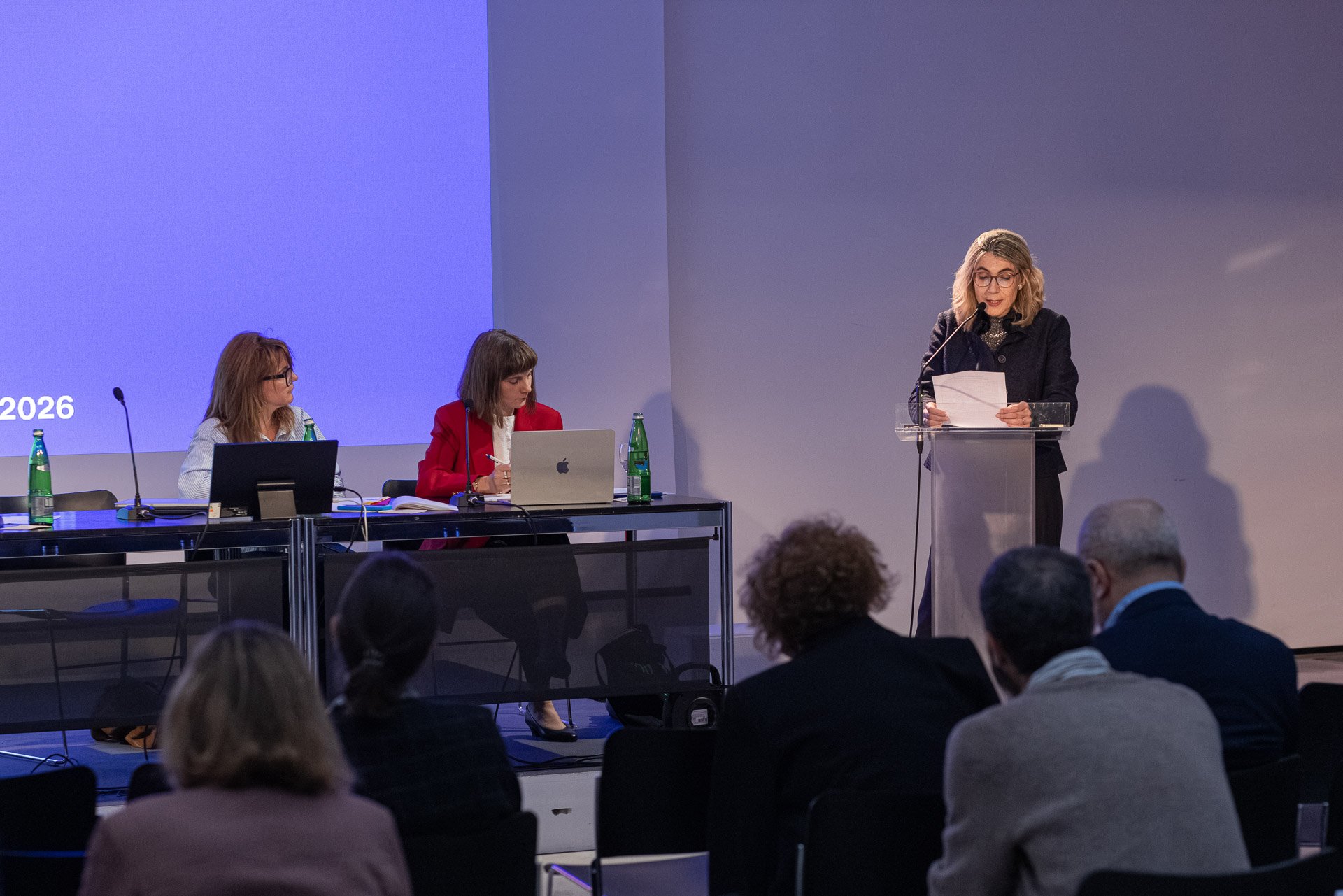
PROGRAMME:
H10:30–10:40
Ilyas Azouzi (Istituto Svizzero)
Institutional Greetings
H10:40–11:00
Amelia Juri (Università di Friburgo, Università di Losanna)
Introduction and presentation of the SNSF Ambizione project “La poesia politica al tempo delle Guerre d’Italia (1494–1559): produzione, forme di circolazione, centri di potere” and the database LyrHist
A humanistic premise
H11:00–11:30
Clémence Revest (CNRS – Centre Norbert Elias)
Guarino Veronese e la reinvenzione della retorica pretoriana
H11:30–12:00
Amelia Juri (Università di Friburgo, Università di Losanna)
Su alcuni codici di dedica miniati di provenienza veneta
H12:00–12:30
Elena Valeri (Sapienza Università di Roma)
Scrivere la storia d’Italia nel Cinquecento: testi e contesti
H12:30–13:15
Discussion
H13:15-15:00
Break
H15:00–15:30
Lana Martysheva (I Tatti – Florence Gould Fellow)
Identità d’autore e scrittura delle cose notabili dei suoi tempi in Camillo Capilupi (1531–1604)
H15:30–16:15
Flaminia Bardati (Sapienza Università di Roma), Francesca Mattei (Università degli Studi Roma Tre)
Costruire lo spazio del potere: inquietudini, narrazioni diplomatiche e architetture effimere nel Campo del Drappo d’Oro (Ardres, 1520)
H16:15–16:45
Discussion
H16:45–17:00
Break
H17:00–17:30
Enrico Parlato (Università degli Studi della Tuscia)
Le crociate dei Farnese, tra storia e attualità politica
H17:30–17:45
Discussion
H17:45–18:30
Round table on art, literature and power
With the participation of Patrizia Tosini (Università degli Studi Roma Tre) and Paolo Procaccioli (Università degli Studi della Tuscia)
Photo: Davide Palmieri
Photo: Davide Palmieri
Photo: Davide Palmieri
Photo: Davide Palmieri
Photo: Davide Palmieri
Photo: Davide Palmieri
Photo: Davide Palmieri
Photo: Davide Palmieri